How to Hit Your Number Without End-of-Quarter Panic | Donald C. Kelly - 1981
Episode
23 min
Read time
2 min
Topics
Career Growth, Productivity, Remote Work
AI-Generated Summary
Key Takeaways
- ✓Twelve Week Year Framework: Treat each 90-day quarter as a standalone year rather than one-fourth of an annual target. This mental shift creates urgency from day one instead of week ten. Salespeople who adopt this mindset report higher close rates because they carry fuller pipelines and negotiate without the desperation that kills deals in the final stretch.
- ✓Reverse-Engineer Your Quarter Metrics: A $300,000 quarterly target at a 25% close rate and $30,000 average deal size requires 40 qualified opportunities, 80 discovery calls, 400 conversations, and 1,200 outreach attempts. Calculating these numbers before week one begins gives daily mile markers to track rather than a single end-of-quarter revenue number to chase blindly.
- ✓Quarters Fail in Weeks One and Two: Pipeline neglect in the opening two weeks of a quarter predicts end-of-quarter shortfalls more reliably than any late-stage deal activity. Managers who monitor daily activity metrics during this window can identify underperforming reps early enough to course-correct rather than scrambling to salvage revenue in the final days.
- ✓90-Minute Non-Negotiable Prospecting Block: Schedule a minimum 90-minute daily time block exclusively for outbound pipeline creation. A sample daily structure includes 30 personalized outreaches, five follow-ups, two LinkedIn voice messages, and one video message. Reacting to Slack notifications and emails during this window is the primary structural reason most reps miss their numbers consistently.
- ✓Weekly Scoreboard Tracking: Measure five metrics every week without exception: outreach attempts, conversations held, meetings booked, new pipeline created, and deals advanced. Tracking these in a tool like ProspectPro.io generates predictive benchmarks over time, showing exactly what daily activity volume is required to reach a specific quarterly outcome based on individual historical conversion data.
What It Covers
Donald Kelly applies the Twelve Week Year framework to sales quota attainment, arguing that end-of-quarter panic stems from poor habits in weeks one through six, not the final stretch. He outlines a metric-driven daily execution system using activity tracking to build consistent pipeline and eliminate last-minute deal scrambling.
Key Questions Answered
- •Twelve Week Year Framework: Treat each 90-day quarter as a standalone year rather than one-fourth of an annual target. This mental shift creates urgency from day one instead of week ten. Salespeople who adopt this mindset report higher close rates because they carry fuller pipelines and negotiate without the desperation that kills deals in the final stretch.
- •Reverse-Engineer Your Quarter Metrics: A $300,000 quarterly target at a 25% close rate and $30,000 average deal size requires 40 qualified opportunities, 80 discovery calls, 400 conversations, and 1,200 outreach attempts. Calculating these numbers before week one begins gives daily mile markers to track rather than a single end-of-quarter revenue number to chase blindly.
- •Quarters Fail in Weeks One and Two: Pipeline neglect in the opening two weeks of a quarter predicts end-of-quarter shortfalls more reliably than any late-stage deal activity. Managers who monitor daily activity metrics during this window can identify underperforming reps early enough to course-correct rather than scrambling to salvage revenue in the final days.
- •90-Minute Non-Negotiable Prospecting Block: Schedule a minimum 90-minute daily time block exclusively for outbound pipeline creation. A sample daily structure includes 30 personalized outreaches, five follow-ups, two LinkedIn voice messages, and one video message. Reacting to Slack notifications and emails during this window is the primary structural reason most reps miss their numbers consistently.
- •Weekly Scoreboard Tracking: Measure five metrics every week without exception: outreach attempts, conversations held, meetings booked, new pipeline created, and deals advanced. Tracking these in a tool like ProspectPro.io generates predictive benchmarks over time, showing exactly what daily activity volume is required to reach a specific quarterly outcome based on individual historical conversion data.
Notable Moment
Kelly recounts conducting exit interviews with departing sales reps who were in tears, saying they never understood what was expected of them daily — despite Kelly assuming clarity existed. The lesson reshaped how he communicates activity expectations and became a core reason he built structured tracking tools.
Episode Transcript
This episode is brought to you in part by the following TSC sponsors. You don't become the world's most valuable women's sports franchise by accident. Angel City Football Club did it with a little help from HubSpot. When it started, data was housed across multiple system. HubSpot unified their website, email, and fan experience in one platform. This allowed their small team of three to build an entire website in just three days. Three days. The results? Nearly 350 new sign ups a week and 300% database growth in just two years. Visit hubspot.com to hear how HubSpot can help your team grow better. Finding the right lead can feel like an endless search for sellers. What if you could get to the right conversations faster? From finding new leads to strengthening existing relationships, LinkedIn Sales Navigator is your strategic AI powered partner. It cuts through the noise with real time data and insights backed by LinkedIn's network of over 1,000,000,000 professionals. Try it for free for sixty days at linkedin.com/tse. Terms and conditions apply. Many times salespeople find themselves in a whole heap of trouble when it comes to the end of the quarter like we're getting to right now in March. And the reason is, they wait until the very end to try to hit their numbers. But I have a simple strategy, a stupidly simple idea that you can apply that can help you to make sure that you're hitting your numbers consistently with the right habits that lead to the end result at the end of the quarter so you shatter your numbers. Check it out. Hey. Hey. Hey, everyone. Welcome to another great episode of the Sales Evangelist podcast. I'm your host, Donald c Clay, the sales evangelist, and I'm so excited for another great episode. I'm so excited to be here with you today. On this episode, we're gonna be talking about a concept called the twelve week year. Now many of you as salespeople, I know the scenario. You are working so hard. You're doing things on a day to day level. You're getting pulled in 6,000 directions. At the end of the quarter, you actually try to get everything done so you can hit the numbers. But what it all comes down to it, you realize that you just are not able to get everything that you want to get done in that short period of time. And it's just stressful at the last week of that quarter. You're trying to get any deal possible across the line. Now the issue happens now this is on the other side too. Some sales rep, they thrive in those scenarios. They start to close deals. And the reason is because there's an end. There's an accountability. But wouldn't it be so much better if you could do this throughout the whole quarter so that at the end of the quarter, life is good. You are naturally succeeding. You're not only hitting your quota, but …
Get the full transcript (4,735 words) + summary by email — free
One-time email with the complete transcript and AI summary of this episode. No account needed.
One email, no spam. We’ll also show you what SignalCast does.

You just read a 3-minute summary of a 20-minute episode.
Get The Sales Evangelist summarized like this every Monday — plus up to 2 more podcasts, free.
Pick Your Podcasts — FreeKeep Reading
More from The Sales Evangelist
Managing AI Agents Is Just Like Managing A New Employee | Kristie Jones - 2047
Oct 16 · 32 min

ChooseFI
Designing an Intentional Life | Tim Ferriss | Ep 558
Aug 4
More from The Sales Evangelist
4 Steps to Systematic Sales Growth | Jimmy Burgess - 2045
Oct 12 · 39 min

Software Engineering Daily
A Rust Framework to Simplify Distributed Systems
Sep 10
Books, tools, and gear mentioned in this episode
SignalCast may earn commission on purchases via these links. As an Amazon Associate, SignalCast earns from qualifying purchases.
Books
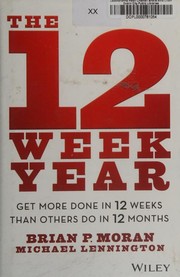 Twelve Week YearRecommended
“Donald Kelly applies the Twelve Week Year framework to sales quota attainment, arguing that end-of-quarter panic stems from poor habits in weeks one through six, not the final stretch.”
Tools
- ProspectPro.ioRecommended
“Tracking these in a tool like ProspectPro.io generates predictive benchmarks over time, showing exactly what daily activity volume is required to reach a specific quarterly outcome based on individual historical conversion data.”
by LinkedIn
“💼 SPONSORS [{"name": "LinkedIn Sales Navigator", "url": "https://linkedin.com/tse"}”
More from The Sales Evangelist
We summarize every new episode. Want them in your inbox?
Managing AI Agents Is Just Like Managing A New Employee | Kristie Jones - 2047
4 Steps to Systematic Sales Growth | Jimmy Burgess - 2045
The Top Three Issues Killing Your Sales Deals | George Bronten - 2044
How to Reach Decision-Makers When Selling to Enterprises | Erik Kostelnik - 2043
How I Handle Every Price Objection | Donald C. Kelly - 2042
Similar Episodes
Related episodes from other podcasts

ChooseFI
Aug 4
Designing an Intentional Life | Tim Ferriss | Ep 558

Software Engineering Daily
Sep 10
A Rust Framework to Simplify Distributed Systems

20VC (20 Minute VC)
Aug 17
20VC: Uber President on The Untold Uber Stories: Travis, China and Self-Driving | Why Autonomy Is Existential | How to Beat DoorDash to #1 in Food with Andrew MacDonald

The AI Breakdown
Jul 5
The Job Positions of the AI Future
20VC (20 Minute VC)
May 2
20VC: Inside Clay's Sales Playbook Scaling to $100M ARR | How to Set Sales Comp Plans | How to Read Sales Talent Linkedin Profiles | What Profiles to Hire & Fire | How to Increase Performance and Speed in Sales Teams with Becca Lindquist
Explore Related Topics
You're clearly into The Sales Evangelist.
Every Monday, we deliver AI summaries of the latest episodes from The Sales Evangelist and 192+ other podcasts. Free for one show.
Start My Monday DigestNo credit card · Unsubscribe anytime