Michelle Khare Is The Tom Cruise Of YouTube: How Anxiety Became Her Superpower
Episode
124 min
Read time
3 min
Topics
Career Growth, Health & Wellness, Relationships
AI-Generated Summary
Key Takeaways
- ✓Daring vs. Recklessness Framework: Khare distinguishes between being daring and being reckless by a single criterion: whether she can explain every safety measure and success rationale to her risk-averse father. Being daring means proceeding with full knowledge, expert teams, and documented preparation. Being reckless means acting without that foundation. This framework applies to any high-stakes decision — before committing, build the case as if presenting it to your most skeptical stakeholder.
- ✓Greenlight Criteria for Projects: Challenge Accepted evaluates every episode against three filters before committing resources: the core team must be genuinely excited, the challenge must produce measurable character transformation from start to finish using Snyder Beat story structure, and the premise must qualify as a milestone life experience. A practical test — pitch the idea at a social gathering and watch for follow-up questions rather than polite acknowledgment. Curiosity signals a viable story.
- ✓Coach, Mentor, Cheerleader Model: For any high-difficulty skill acquisition, Khare uses three distinct support roles simultaneously. A coach knows how to teach the skill. A mentor has personally experienced the same challenge and can provide emotional relatability. A cheerleader provides unconditional support regardless of outcome. These roles rarely overlap in one person. For early-stage creators with no budget, these roles can be filled by YouTube tutorials, observing peers one year ahead, and a trusted family member.
- ✓Fear-Setting Before Quitting Stable Employment: Nine months before leaving BuzzFeed, Khare executed a structured fear-setting exercise modeled on Tim Ferriss's Four Hour Workweek methodology. She moved into a studio apartment with a roommate, reduced living expenses, calculated minimum viable AdSense revenue needed to cover costs, and forced herself to produce videos every weekend without posting them — proving genuine commitment before financial exposure. She set a three-month runway deadline with a clear fallback plan.
- ✓Scarcity as Quality Signal: Producing roughly six episodes per year rather than maximizing output creates compounding advantages: advertiser demand increases, audience anticipation builds, and production teams can pursue stories that require months of genuine immersion. The 911 dispatch episode — filmed in a single day in Colorado — generated over 15 million views. High production budgets do not determine impact. Story stakes and authentic transformation do, which means fewer, more deliberate projects consistently outperform high-volume output strategies.
What It Covers
YouTube creator Michelle Khare, host of Challenge Accepted, discusses how chronic anxiety became a creative asset, how she built a production company from scratch, and the methodology behind executing high-stakes documentary challenges — from hanging off a C-130 aircraft to training for Taekwondo Nationals — while maintaining deliberate, slow-growth organizational infrastructure over seven years.
Key Questions Answered
- •Daring vs. Recklessness Framework: Khare distinguishes between being daring and being reckless by a single criterion: whether she can explain every safety measure and success rationale to her risk-averse father. Being daring means proceeding with full knowledge, expert teams, and documented preparation. Being reckless means acting without that foundation. This framework applies to any high-stakes decision — before committing, build the case as if presenting it to your most skeptical stakeholder.
- •Greenlight Criteria for Projects: Challenge Accepted evaluates every episode against three filters before committing resources: the core team must be genuinely excited, the challenge must produce measurable character transformation from start to finish using Snyder Beat story structure, and the premise must qualify as a milestone life experience. A practical test — pitch the idea at a social gathering and watch for follow-up questions rather than polite acknowledgment. Curiosity signals a viable story.
- •Coach, Mentor, Cheerleader Model: For any high-difficulty skill acquisition, Khare uses three distinct support roles simultaneously. A coach knows how to teach the skill. A mentor has personally experienced the same challenge and can provide emotional relatability. A cheerleader provides unconditional support regardless of outcome. These roles rarely overlap in one person. For early-stage creators with no budget, these roles can be filled by YouTube tutorials, observing peers one year ahead, and a trusted family member.
- •Fear-Setting Before Quitting Stable Employment: Nine months before leaving BuzzFeed, Khare executed a structured fear-setting exercise modeled on Tim Ferriss's Four Hour Workweek methodology. She moved into a studio apartment with a roommate, reduced living expenses, calculated minimum viable AdSense revenue needed to cover costs, and forced herself to produce videos every weekend without posting them — proving genuine commitment before financial exposure. She set a three-month runway deadline with a clear fallback plan.
- •Scarcity as Quality Signal: Producing roughly six episodes per year rather than maximizing output creates compounding advantages: advertiser demand increases, audience anticipation builds, and production teams can pursue stories that require months of genuine immersion. The 911 dispatch episode — filmed in a single day in Colorado — generated over 15 million views. High production budgets do not determine impact. Story stakes and authentic transformation do, which means fewer, more deliberate projects consistently outperform high-volume output strategies.
- •Postmortem Culture for Team Retention: After every shoot and every upload, Khare conducts structured postmortems with all department heads, soliciting specific actionable feedback — for example, requesting 45 minutes for lighting setup instead of 30. Early in the company's growth, she compensated for limited pay by solving solvable workplace frustrations: individualized meal orders instead of generic catering, dedicated tables for hair and makeup teams. These zero-cost gestures built loyalty that sustained the team through the company's slow-growth phase.
- •Slow Steady Growth Over J-Curve Acceleration: Khare observed peers who experienced rapid subscriber spikes subsequently hit organizational collapse — burnout, financial instability, no infrastructure. Her deliberate choice to slow down while peers accelerated meant building systems before scaling. The principle: when the team lacks infrastructure to absorb growth, speed becomes a liability. Creators and founders should treat organizational capacity as a constraint that must be expanded before increasing output velocity, not after problems surface.
Notable Moment
Khare revealed she applied to become a Red Bull sponsored athlete during her competitive cycling years, received a rejection, and then years later was announced as a Red Bull creator. She located the original rejected application when the partnership was announced. The same organization that turned her down as an athlete later partnered with her through an entirely different category she built herself.
Episode Transcript
We are running an audience survey over at richroll.com/survey, and I genuinely love for you to take a couple quick minutes with it. Here's why it matters to me. First, I wanna actually know you. Who's out there listening? What do you care about? What are the kinds of guests and the kinds of conversations and themes that land for you? Because the more that I understand that, the better I can make this show the thing you actually want it to be. And second, look, you know there are ads on this podcast. This is what makes this whole affair possible. But I'm incredibly selective about the brands that I work with, partnering with only the ones that I use myself and truly believe in, and I never want my sponsorships to feel intrusive or random. And the only way to get that right is to understand you a little bit better. Takes two minutes tops. It's genuinely one of the simplest most direct ways you can help us keep evolving the show and I don't take that help for granted. So check it out. Please visit richroll.com/survey to fill out our audience survey. I'm probably the most fearful daredevil that may exist on Earth. YouTube star Michelle Carre behind one of the most popular shows on YouTube, challenge accepted. In every episode, Michelle undertakes some truly absurd challenge that most people watching would never try and do. I find this fear very fascinating to confront. It's your willingness to walk through that fear that makes it so compelling. There's a difference between being daring and being reckless. Being daring is being bold with knowledge. So I would like to attempt to become the first woman too. My palms are sweating right now just thinking about this. I think the underappreciated aspect of what you do is your mastery over story. It's easy to look at your video in a passing way and say, oh, that's a crazy stunt that this person pulled off. But you have to break the story into its three act structure, and you have to know what the bottom of the second act is gonna look like even before you do it, not knowing what's gonna happen, but anticipating it enough to know that you can build tension and create these obstacles and intrigue and all the things that would go into a professional, you know, fictional narrative screenplay. I really appreciate you saying that. That is so kind. I mean, it's a reflection of an amazing team effort, of course. But what we like to do is with unscripted and with documentary, you can't script out what's going to happen, but we can create scenarios that will hopefully lead to that roller coaster of emotions. And so that's, you know, hand in hand with the green lighting process of, do we have enough stakes throughout the next couple of months of filming this that we feel will naturally fall into the roller coaster …
Get the full transcript (20,813 words) + summary by email — free
One-time email with the complete transcript and AI summary of this episode. No account needed.
One email, no spam. We’ll also show you what SignalCast does.

You just read a 3-minute summary of a 121-minute episode.
Get The Rich Roll Podcast summarized like this every Monday — plus up to 2 more podcasts, free.
Pick Your Podcasts — FreeKeep Reading
More from The Rich Roll Podcast
Terry Bradshaw On Lessons From Super Bowl & Broadcasting Stardom, Battling Depression & Surviving Cancer
Oct 26 · 123 min

The Tim Ferriss Show
#860: Daredevil Michelle Khare — How to Become a YouTube Superstar, Open Impossible Doors (FBI, Secret Service, etc.), Craft Jedi-Level Cold Emails, and Use Fear-Setting to Change Your Life
Apr 7
More from The Rich Roll Podcast
Tom Hopper On Getting Sober, Training For The Screen & Finding The Man Behind The Muscle
Oct 19 · 142 min

The Vergecast
Casey Neistat's guide to posting every day
Jun 1
Books, tools, and gear mentioned in this episode
SignalCast may earn commission on purchases via these links. As an Amazon Associate, SignalCast earns from qualifying purchases.
Books
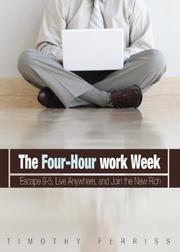 The Four Hour WorkweekRecommended
by Tim Ferriss
“Nine months before leaving BuzzFeed, Khare executed a structured fear-setting exercise modeled on Tim Ferriss's Four Hour Workweek methodology.”
other
- Snyder Beat story structureRecommended
“the challenge must produce measurable character transformation from start to finish using Snyder Beat story structure”
More from The Rich Roll Podcast
We summarize every new episode. Want them in your inbox?
Terry Bradshaw On Lessons From Super Bowl & Broadcasting Stardom, Battling Depression & Surviving Cancer
Tom Hopper On Getting Sober, Training For The Screen & Finding The Man Behind The Muscle
The Social Reckoning: Frances Haugen On What Facebook Knew & Why She Came Forward
Joe Manganiello On Getting Sober, The Mystery Illness That Almost Killed Him & The Trauma We Inherit
Journalist Anand Giridharadas On The Lost Art Of Empathy, Compassion, & Understanding Each Other
Similar Episodes
Related episodes from other podcasts

The Tim Ferriss Show
Apr 7
#860: Daredevil Michelle Khare — How to Become a YouTube Superstar, Open Impossible Doors (FBI, Secret Service, etc.), Craft Jedi-Level Cold Emails, and Use Fear-Setting to Change Your Life

The Vergecast
Jun 1
Casey Neistat's guide to posting every day
Accidental Tech Podcast
Oct 23
714: Get the Bigger Pizza

The Joe Rogan Experience
Oct 23
#2570 - Mystery Boys
The Vergecast
Oct 19
Why your favorite creator is building an app
Explore Related Topics
This podcast is featured in Best Health Podcasts (2026) — ranked and reviewed with AI summaries.
Read this week's Health & Longevity Podcast Insights — cross-podcast analysis updated weekly.
You're clearly into The Rich Roll Podcast.
Every Monday, we deliver AI summaries of the latest episodes from The Rich Roll Podcast and 192+ other podcasts. Free for one show.
Start My Monday DigestNo credit card · Unsubscribe anytime