Bruce Wagner Writes Transgressive Novels About Tragedy & Transcendence
Episode
122 min
Read time
3 min
Topics
Career Growth, Productivity, Health & Wellness
AI-Generated Summary
Key Takeaways
- ✓Transgressive exploration as spiritual practice: Wagner deliberately inhabits forbidden psychological territories—pedophiles, child killers, incest survivors—not for shock value but to dismantle bullshit and social conditioning. By exploring every infernal place within himself without hesitation, he accesses what he calls a "postictal state" of emptiness after descending to lower depths, which approximates the inner silence and transcendence found in spiritual practice. This approach requires viewing all characters as interchangeable aspects of oneself rather than moral judgments.
- ✓Three levels of Buddhist suffering in creative work: Wagner structures his narratives around Buddhist teachings on suffering: physical pain from birth and death, fluctuating moods underpinned by impermanence, and conditional suffering imposed by social order. His characters experience all three simultaneously—the Hollywood executive facing terminal illness while obsessing over status represents this intersection. Understanding these layers allows writers to create depth beyond simple tragedy, showing how societal structures amplify inherent human suffering and block paths to transcendence.
- ✓Castaneda's assemblage point theory for writers: The assemblage point—located outside the human luminous egg—determines how we perceive reality and moves during drug use, madness, and sleep. Castaneda taught that lucid dreaming exercises like "finding your hands" work not through discipline but by temporarily eclipsing the mind, which acts as saboteur. Writers can apply this by recognizing when their controlling mind blocks creative flow and developing practices that bypass analytical thinking to access non-ordinary reality.
- ✓The recapitulation practice for character development: Castaneda's recapitulation involves systematically re-experiencing every person encountered in life, starting with sexual partners (highest energetic charge) and working backward to parents, in fastidious detail that can take years. This creates a stand-in for your awareness that satisfies the metaphorical eagle that devours consciousness at death. Writers can adapt this by deeply inhabiting characters' complete histories, not just plot-relevant moments, creating authentic psychological depth that readers sense even in unexplained behaviors.
- ✓Publishing industry collapse requires identity shift: Book reviews in major outlets that once moved 6,000-7,000 copies now generate 3-4 sales. Writers reviewed in The New Yorker sell 100 copies total. Wagner addresses this by releasing attachment to writer identity and book sales, focusing instead on his "operatic romance with the English language" as the only sustainable motivation. He suggests AI will eventually write convincing novels in any author's style, making ego-driven legacy concerns absurd and forcing artists toward purer creative intentions.
What It Covers
Novelist Bruce Wagner discusses his 15-book career using Hollywood as a laboratory for human vanity and spiritual transcendence. Wagner explores his transgressive writing style, decade-long mentorship with Carlos Castaneda, childhood trauma in Beverly Hills, and how Buddhist concepts of suffering inform his darkly comic novels that examine celebrity culture, homelessness, and the search for meaning beyond social conditioning.
Key Questions Answered
- •Transgressive exploration as spiritual practice: Wagner deliberately inhabits forbidden psychological territories—pedophiles, child killers, incest survivors—not for shock value but to dismantle bullshit and social conditioning. By exploring every infernal place within himself without hesitation, he accesses what he calls a "postictal state" of emptiness after descending to lower depths, which approximates the inner silence and transcendence found in spiritual practice. This approach requires viewing all characters as interchangeable aspects of oneself rather than moral judgments.
- •Three levels of Buddhist suffering in creative work: Wagner structures his narratives around Buddhist teachings on suffering: physical pain from birth and death, fluctuating moods underpinned by impermanence, and conditional suffering imposed by social order. His characters experience all three simultaneously—the Hollywood executive facing terminal illness while obsessing over status represents this intersection. Understanding these layers allows writers to create depth beyond simple tragedy, showing how societal structures amplify inherent human suffering and block paths to transcendence.
- •Castaneda's assemblage point theory for writers: The assemblage point—located outside the human luminous egg—determines how we perceive reality and moves during drug use, madness, and sleep. Castaneda taught that lucid dreaming exercises like "finding your hands" work not through discipline but by temporarily eclipsing the mind, which acts as saboteur. Writers can apply this by recognizing when their controlling mind blocks creative flow and developing practices that bypass analytical thinking to access non-ordinary reality.
- •The recapitulation practice for character development: Castaneda's recapitulation involves systematically re-experiencing every person encountered in life, starting with sexual partners (highest energetic charge) and working backward to parents, in fastidious detail that can take years. This creates a stand-in for your awareness that satisfies the metaphorical eagle that devours consciousness at death. Writers can adapt this by deeply inhabiting characters' complete histories, not just plot-relevant moments, creating authentic psychological depth that readers sense even in unexplained behaviors.
- •Publishing industry collapse requires identity shift: Book reviews in major outlets that once moved 6,000-7,000 copies now generate 3-4 sales. Writers reviewed in The New Yorker sell 100 copies total. Wagner addresses this by releasing attachment to writer identity and book sales, focusing instead on his "operatic romance with the English language" as the only sustainable motivation. He suggests AI will eventually write convincing novels in any author's style, making ego-driven legacy concerns absurd and forcing artists toward purer creative intentions.
- •Predetermined behavior versus moral responsibility: Wagner's teacher Ramesh Balsekar taught that all actions are predetermined, which celebrities visiting him rejected because it removed their sense of agency. Wagner reconciles this with accountability by understanding his abusive father "could have done nothing else" while still corresponding to laws and consequences. This fatalistic view doesn't excuse behavior but reduces suffering by accepting that everyone draws certain cards—the father they get, the traumas they experience—without attaching meaning to randomness.
- •Scent-based creative selection over intellectual analysis: Wagner describes choosing books, mentors, and creative influences by "scent"—an intuitive attraction to certain perfumes of language and ideas rather than analytical evaluation. He stole books as a child and absorbed rather than read them, building a library based purely on this olfactory metaphor. Writers can develop this by noticing which works create visceral responses, trusting pre-rational attraction to certain styles, and recognizing that intellectual understanding of why something resonates matters less than the resonance itself.
Notable Moment
Wagner describes attending a Carlos Castaneda brunch after years of searching for the reclusive author, expecting a mystical guru figure but instead encountering someone hilariously contemporary and sardonic, comparable to Orson Welles in his cultural references and humor. This collision between expectation and reality—finding the spiritual teacher who wrote about Yaqui sorcery making Hollywood jokes—exemplifies the transgressive dismantling of guru mythology that characterized Wagner's entire apprenticeship and creative philosophy.
Episode Transcript
As a writer, I attack and destroy, bullshit. Bruce Wagner has had a prolific and eccentric career. Wagner just takes you straight to the contradiction. Apocalyptic yet ultimately spiritual view of humanity as seen through the lens of Hollywood. You are a fascinating character to me. I wanna enter the Wagner extended universe here. I never wrote for a reader, ever. I explore every forbidden place in myself, and there's only one thing I'm really worried about from the moment I put my head on the pillow, and it's book sales. What are my book sales? Bruce, I'm delighted to have you here today. As I mentioned to you a moment ago, I just I wanna enter the Wagner extended universe here and just kind of marinate in your ethos and sensibility. I mean, you're somebody who has written many books, some 15 now, 15 novels, something like that, and effectively used Hollywood, as you have mentioned, as this laboratory for need and vanity as your as your sort of palette, as this mirror for human behavior. Everybody has their longing and they are seeking. And what you're interested in is is that kind of spiritual journey towards transcendence. And it's the transcendent piece. It's the spirituality that is baked into all of this that interests me the most. Yeah. You know, I, my nature is fiery and it's operatic, theatrical. And, it's it's also, laser like for me in my, observational powers. The I've been thinking a lot about writer the scent of writers, like the scent of a woman, the scent of a writer, and, what attracts what is my scent and what themes or notions attract me. Hollywood had a perfect scent for me because, I was someone that was possessed by the notions of extremity, of extreme wealth and houselessness, or poverty that one is brutalized almost to death by. I was possessed by celebrity and renown and invisibility. And the tension between those poles you know I'm I've often think of a Buddhist story, a beautiful, a magnificent book called Liberation in the Palm of Your Hand or One's Hand. I, might have the title wrong. And in that book, they talk of so many, things. And one of the things that's said is that, vanity, the the need, to seek attention and approbation is one of the most difficult things to overcome. And the example they give is of a, a hermit who was in lived in a cave for thirty five years. And his mantra, his essence was he wanted to be the most well known Yeah. Hermit, you know. So I'm possessed by that and yet, you know, my my work early on was compared to Nathaniel West, Day of the Locust. I I didn't read that book until a few years ago because I had been compared to him so often that I was nervous about reading it. But the books that I did read, one had a tremendous influence on …
Get the full transcript (16,765 words) + summary by email — free
One-time email with the complete transcript and AI summary of this episode. No account needed.
One email, no spam. We’ll also show you what SignalCast does.

You just read a 3-minute summary of a 119-minute episode.
Get The Rich Roll Podcast summarized like this every Monday — plus up to 2 more podcasts, free.
Pick Your Podcasts — FreeKeep Reading
More from The Rich Roll Podcast
Tom Hopper On Getting Sober, Training For The Screen & Finding The Man Behind The Muscle
Oct 19 · 142 min

The Joe Rogan Experience
#2532 - Tim Robbins
Jul 29
More from The Rich Roll Podcast
The Social Reckoning: Frances Haugen On What Facebook Knew & Why She Came Forward
Oct 15 · 152 min

Dare to Lead with Brené Brown
Brené with Debbie Millman on Why Design Matters
Feb 21
Books, tools, and gear mentioned in this episode
SignalCast may earn commission on purchases via these links. As an Amazon Associate, SignalCast earns from qualifying purchases.
Books
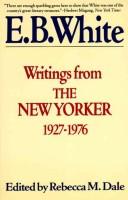
“Book reviews in major outlets that once moved 6,000-7,000 copies now generate 3-4 sales. Writers reviewed in The New Yorker sell 100 copies total.”
More from The Rich Roll Podcast
We summarize every new episode. Want them in your inbox?
Tom Hopper On Getting Sober, Training For The Screen & Finding The Man Behind The Muscle
The Social Reckoning: Frances Haugen On What Facebook Knew & Why She Came Forward
Joe Manganiello On Getting Sober, The Mystery Illness That Almost Killed Him & The Trauma We Inherit
Journalist Anand Giridharadas On The Lost Art Of Empathy, Compassion, & Understanding Each Other
Black-ish Creator Kenya Barris On Turning Down A $100 Million Netflix Deal, The Cost of Success & Curiosity As A Superpower With Malcolm Gladwell
Similar Episodes
Related episodes from other podcasts

The Joe Rogan Experience
Jul 29
#2532 - Tim Robbins

Dare to Lead with Brené Brown
Feb 21
Brené with Debbie Millman on Why Design Matters

Huberman Lab
Oct 19
What Makes Great Leaders & How to Live an Extraordinary Life | Dr. Jared Diamond

10% Happier with Dan Harris
Oct 12
Stressed, Anxious, or Drained at Work? Here's How To Follow Your Energy, Take Smart Risks, and Find Work You Actually Like | Molly Graham

Modern Wisdom
Oct 12
Why Life Feels So Dull All The Time (and how to fix it) - Robert Greene - #1162
Explore Related Topics
This podcast is featured in Best Health Podcasts (2026) — ranked and reviewed with AI summaries.
Read this week's Health & Longevity Podcast Insights — cross-podcast analysis updated weekly.
You're clearly into The Rich Roll Podcast.
Every Monday, we deliver AI summaries of the latest episodes from The Rich Roll Podcast and 192+ other podcasts. Free for one show.
Start My Monday DigestNo credit card · Unsubscribe anytime