Software as art
Episode
23 min
Read time
2 min
Topics
Startups, Fundraising & VC, Leadership
AI-Generated Summary
Key Takeaways
- ✓Refusing Customer Requests: Basecamp rejected Gantt chart requests for 20 years despite thousands of customer demands because their core premise defines project management as primarily communication, not charts and graphs, demonstrating commitment to product vision over feature accumulation.
- ✓Taste Development Process: Product principles emerge from execution, not planning. Build first based on gut instinct and accumulated taste, then extract and articulate the underlying principles afterward. The implicit feeling precedes explicit documentation, making retrospective analysis more honest than forward planning.
- ✓Fisher Price Easy Standard: 37signals uses this specific mental model to test whether features meet their clarity goals. Having concrete phrasings like this provides a measurable benchmark to evaluate whether current work aligns with intended product perspective and user experience aspirations.
- ✓Blue Ocean Strategy Framework: Companies succeed by making deliberate trade-offs, not excelling at everything. Google demonstrates massive profitability while scoring zero on customer service, proving organizations must choose which parameters to optimize and which to sacrifice when defining their competitive position.
What It Covers
37signals cofounders Jason Fried and David Heinemeier Hansson explain how they build opinionated software with strong perspectives, refuse popular feature requests like Gantt charts, and develop product vision through execution rather than upfront planning.
Key Questions Answered
- •Refusing Customer Requests: Basecamp rejected Gantt chart requests for 20 years despite thousands of customer demands because their core premise defines project management as primarily communication, not charts and graphs, demonstrating commitment to product vision over feature accumulation.
- •Taste Development Process: Product principles emerge from execution, not planning. Build first based on gut instinct and accumulated taste, then extract and articulate the underlying principles afterward. The implicit feeling precedes explicit documentation, making retrospective analysis more honest than forward planning.
- •Fisher Price Easy Standard: 37signals uses this specific mental model to test whether features meet their clarity goals. Having concrete phrasings like this provides a measurable benchmark to evaluate whether current work aligns with intended product perspective and user experience aspirations.
- •Blue Ocean Strategy Framework: Companies succeed by making deliberate trade-offs, not excelling at everything. Google demonstrates massive profitability while scoring zero on customer service, proving organizations must choose which parameters to optimize and which to sacrifice when defining their competitive position.
Notable Moment
David reveals Gmail has displayed a fuzzy, incorrect icon for three months because users assume Google will not respond to bug reports, illustrating how a company worth billions deliberately sacrifices customer service to optimize other priorities.
Episode Transcript
Welcome to Rework, a podcast by thirty seven Signals about the better way to work and run your business. I'm Kimberly Rhodes joined by the cofounders of thirty seven Signals, Jason Fried and David Heinner, Mara Hansen. This week, we are knocking out a customer question. This is a video question from Luke. Hi, guys. I'm building a tool that's not just about making a broken process better and trying to help people see the whole situation differently. And I keep coming back to this idea of thinking about software as art rather than design in the way that art can change how you actually see or think about the world, not just how you do things. So design helps you do things better, but art can actually change your perspective entirely. So what I wanted to ask is, have you guys ever approached software development in that way as something that can actually change a user's perspective fundamentally, not just help them solve a problem? And then if so, like, how do you hold on to that ideal in the mess of actually shipping features, making it usable, and selling it so that people get, okay. I wanna pay for that thing because it helps me. Whereas you might have a higher objective of, like, trying to help change their point of view at the same time. We'd love to hear David and Jason talk about that, software as art. So this is an interesting premise, thinking about software changing someone's perspective versus just solving a problem. Have you guys thought about it in that way at all? I think the art framing is interesting. I hadn't thought about it in that term, but I certainly have thought about changing people's minds with the software that we built. And that has been true right from the get go. When we first launched Basecamp, we thought, do you know what? This is a system that has a point of view. It has a certain approach to project management that's not completely open ended. We have a premise that is project management is primarily communication. It's not charts and graphs. It's not burned down mechanisms. It's not all of these other tools that are common in the project management space. We're not gonna do any of them. We're not even gonna do them if a thousand customers ask for it. In fact, perhaps the most rejected feature in the history of Basecamp is the Gantt chart. We got probably dozens of requests for the Gantt charts the first week Basecamp launched. And in the twenty years since, we have probably gotten thousands at this point, and we've refused to do it. It does not fit within that initial premise of project management is primarily communication. And that's a way of taking a stance and saying this product is for these things. It has this mission, vision, point of view, and sets of principles. And the other side of it is then …
Get the full transcript (4,749 words) + summary by email — free
One-time email with the complete transcript and AI summary of this episode. No account needed.
One email, no spam. We’ll also show you what SignalCast does.

You just read a 3-minute summary of a 20-minute episode.
Get The Rework Podcast summarized like this every Monday — plus up to 2 more podcasts, free.
Pick Your Podcasts — FreeKeep Reading
More from The Rework Podcast
One-way Doors
Aug 26 · 18 min

My First Million
DHH: $100M+ Advice That'll Piss Off Every Business Guru
Mar 17
More from The Rework Podcast
Competing with giants, the end of SaaS & other listener questions
Aug 19 · 26 min

David Senra
David Heinemeier Hansson (DHH), Co-founder of 37signals
Jul 26
Books, tools, and gear mentioned in this episode
SignalCast may earn commission on purchases via these links. As an Amazon Associate, SignalCast earns from qualifying purchases.
Books
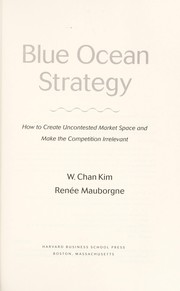
“Blue Ocean Strategy Framework: Companies succeed by making deliberate trade-offs, not excelling at everything. Google demonstrates massive profitability while scoring zero on customer service, proving organizations must choose which parameters to optimize and which to sacrifice when defining their competitive position.”
More from The Rework Podcast
We summarize every new episode. Want them in your inbox?
Similar Episodes
Related episodes from other podcasts

My First Million
Mar 17
DHH: $100M+ Advice That'll Piss Off Every Business Guru

David Senra
Jul 26
David Heinemeier Hansson (DHH), Co-founder of 37signals

This Week in Startups
May 23
From hypercars to cruise missiles: Lukas Czinger on the future of US defense | E2292
David Senra
Feb 15
Jason Fried, 37signals (makers of Basecamp, HEY and ONCE)

Huberman Lab
Oct 16
Essentials: How Your Brain Functions & Interprets the World | Dr. David Berson
Explore Related Topics
This podcast is featured in Best Business Podcasts (2026) — ranked and reviewed with AI summaries.
Read this week's Startups & Product Podcast Insights — cross-podcast analysis updated weekly.
You're clearly into The Rework Podcast.
Every Monday, we deliver AI summaries of the latest episodes from The Rework Podcast and 192+ other podcasts. Free for one show.
Start My Monday DigestNo credit card · Unsubscribe anytime