The Book Club: Wuthering Heights
Episode
21 min
Read time
2 min
Topics
Relationships, Fundraising & VC, Design & UX
AI-Generated Summary
Key Takeaways
- ✓Novel structure: Wuthering Heights operates through two nested narrators — outsider Mr. Lockwood and housekeeper Nellie Dean — creating deliberate distance from events. Readers who feel lost should recognise this framing device as intentional; the confusion mirrors Lockwood's own disorientation, and Nellie's retrospective account is where the actual story unfolds.
- ✓Deliberate name repetition: Emily Brontë assigns near-identical names across generations — two Cathys, a Linton Heathcliff — as a structural choice, not careless writing. This doubling signals that characters are trapped in inherited cycles of bitterness and obligation, functioning like Greek tragedy where hatred and jealousy pass mechanically from parent to child.
- ✓Heathcliff misread as romantic hero: Audiences and characters within the novel — particularly Isabella Linton — consistently romanticise Heathcliff based on his Byronic surface. The book deliberately punishes this misreading. Approaching Heathcliff as a cautionary figure rather than an idealised lover unlocks the novel's darker, more critical stance toward romantic obsession.
- ✓Emily Brontë's biography reframes the novel: Brontë lost her mother at three and two sisters before age seven, was raised by a volatile Irish father who carried a loaded gun and banned meat, and struggled socially throughout her adult life. Reading Wuthering Heights against this background of early trauma and emotional extremity makes the novel's violence and intensity historically grounded rather than melodramatic.
- ✓The Book Club format: Each Tuesday episode pairs author biography, social and historical context, and personal reader response. Episodes are designed to work whether or not listeners have read the book — covering the text fully enough that listeners can engage in informed conversation about canonical works without prior reading.
What It Covers
Dominic Sandbrook and Tabitha Syrett launch The Book Club podcast, a weekly Goldhanger show examining classic and contemporary literature. The debut episode covers Wuthering Heights by Emily Brontë, exploring the novel's structure, themes of cyclical vengeance, and the reclusive, contradictory life of its author.
Key Questions Answered
- •Novel structure: Wuthering Heights operates through two nested narrators — outsider Mr. Lockwood and housekeeper Nellie Dean — creating deliberate distance from events. Readers who feel lost should recognise this framing device as intentional; the confusion mirrors Lockwood's own disorientation, and Nellie's retrospective account is where the actual story unfolds.
- •Deliberate name repetition: Emily Brontë assigns near-identical names across generations — two Cathys, a Linton Heathcliff — as a structural choice, not careless writing. This doubling signals that characters are trapped in inherited cycles of bitterness and obligation, functioning like Greek tragedy where hatred and jealousy pass mechanically from parent to child.
- •Heathcliff misread as romantic hero: Audiences and characters within the novel — particularly Isabella Linton — consistently romanticise Heathcliff based on his Byronic surface. The book deliberately punishes this misreading. Approaching Heathcliff as a cautionary figure rather than an idealised lover unlocks the novel's darker, more critical stance toward romantic obsession.
- •Emily Brontë's biography reframes the novel: Brontë lost her mother at three and two sisters before age seven, was raised by a volatile Irish father who carried a loaded gun and banned meat, and struggled socially throughout her adult life. Reading Wuthering Heights against this background of early trauma and emotional extremity makes the novel's violence and intensity historically grounded rather than melodramatic.
- •The Book Club format: Each Tuesday episode pairs author biography, social and historical context, and personal reader response. Episodes are designed to work whether or not listeners have read the book — covering the text fully enough that listeners can engage in informed conversation about canonical works without prior reading.
Notable Moment
Dominic admits he initially dismissed Wuthering Heights as shallow teenage reading and found it inferior to Jane Eyre — then reversed his opinion entirely after engaging with it more carefully for the show, suggesting the novel rewards re-evaluation by readers who initially bounced off its fever-dream style.
Episode Transcript
Hello, everybody. It's Dominic here from The Rest is History, and I'm here to tell you about a thrilling new show that we have been working on here at Goldhanger. It is called The Book Club, and it is presented by me And me, Tabitha Syrett. And it will be coming out every Tuesday. And each week, we delve into some of the greatest, the most fascinating, the most intriguing books of all time. And it'll alternate every week between something a bit older, more classical, so for instance, Wuthering Heights, and then something maybe newer and a bit more contemporary, so The Secret History by Donna Tartt or Never Let Me Go by Kazuo Ishiguro. And we will be digging into the kind of secret hidden stories behind the story. We'll be uncovering the truth about the author themselves. We'll be delving into the context, the history behind the book, and also kind of unraveling the book itself a bit for you. Yes. So to explain the background to this, Tabby and I have been working together on The Rest is History for three glorious years, Tabby. Feels like thirty, but it's actually only been three. And we'd often be nattering about books when we're off doing our Rest is History tours and whatnot. And we decided that we would do a little bonus series for members of the Restless History Club, didn't we? So we did The Hobbit and In Cold Blood and The Handmaid's Tale and so on and so forth. And we were I think the technical term was blown away by the reaction to that from the club members. We were absolutely thrilled. Yeah. We were over the moon. And so we have spent the last couple of months putting together an exciting list of episodes for you. So we start with, of course, Wuthering Heights, the truth behind this iconic, famously kind of overwrought story and obviously reflecting a little bit on the new movie. Then we do Never Let Me Go by Kazuo Ishiguro. And then what comes next, Dominic? So we've got The Great Gatsby. We have Hamnet. We have Nineteen Eighty Four. So in two days' time, we're recording an episode of your favorite book, I think, of all time? No? Sarah j Maas's A Court of Thorns and Roses. So this has been a Don't pretend that wasn't your idea. So this is my first foray into the world of romantacy. So so, basically, each week, we're doing a different book, and it's a little bit like the rest is history. We will be talking about the author and their lives and the social context, when the book was written and so on. But also, it's a little bit more personal, I suppose, because we're also talking about our own reactions to the books. We're having arguments about which characters we liked and which we didn't. You have a unique identity, don't you? Because you're simultaneously ludicrously well read. Yeah. …
Get the full transcript (4,661 words) + summary by email — free
One-time email with the complete transcript and AI summary of this episode. No account needed.
One email, no spam. We’ll also show you what SignalCast does.

You just read a 3-minute summary of a 18-minute episode.
Get The Rest is History summarized like this every Monday — plus up to 2 more podcasts, free.
Pick Your Podcasts — FreeKeep Reading

Books, tools, and gear mentioned in this episode
SignalCast may earn commission on purchases via these links. As an Amazon Associate, SignalCast earns from qualifying purchases.
Books

by Emily Brontë
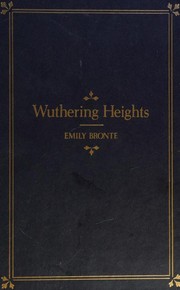
“Dominic admits he initially dismissed Wuthering Heights as shallow teenage reading and found it inferior to Jane Eyre — then reversed his opinion entirely after engaging with it more carefully for the show.”
 Wuthering HeightsRecommended
by Emily Brontë
“The debut episode covers Wuthering Heights by Emily Brontë, exploring the novel's structure, themes of cyclical vengeance, and the reclusive, contradictory life of its author.”
podcast
“Dominic Sandbrook and Tabitha Syrett launch The Book Club podcast, a weekly Goldhanger show examining classic and contemporary literature.”
More from The Rest is History
We summarize every new episode. Want them in your inbox?
716. King Arthur: The Truth Behind the Legend (Part 4)
715. King Arthur: The Mysteries of Merlin (Part 3)
714. King Arthur: Lancelot and the Round Table (Part 2)
713. King Arthur: The Once & Future King (Part 1)
712. The Terror: The Fall of Robespierre (Part 6)
Similar Episodes
Related episodes from other podcasts

The Vergecast
Oct 9
The AI is in the computer
The Vergecast
Oct 2
Dots get up in Muse's business

All-In with Chamath, Jason, Sacks & Friedberg
Sep 28
Daniel Ek: Life After Spotify, Broken Healthcare Incentives, Catching Disease Early & AI's Potential

We Study Billionaires
Sep 13
TIP846: Stock Picker: How to Live Off Your Portfolio w/ Ian Cassel

Pivot
Sep 8
Ina Garten’s Next Course? A Podcast | On With Kara Swisher
Explore Related Topics
This podcast is featured in Best History Podcasts (2026) — ranked and reviewed with AI summaries.
You're clearly into The Rest is History.
Every Monday, we deliver AI summaries of the latest episodes from The Rest is History and 192+ other podcasts. Free for one show.
Start My Monday DigestNo credit card · Unsubscribe anytime