652. London’s Golden Age: The Ghosts of Culloden (Part 3)
Episode
64 min
Read time
3 min
Topics
Personal Finance, Fundraising & VC, Leadership
AI-Generated Summary
Key Takeaways
- ✓Jacobite tourism as historical method: Johnson and Boswell deliberately chose the eastern Highland route through Inverness — rather than the direct western road — because it retraced Bonnie Prince Charlie's 1745 retreat to Culloden and subsequent flight to the Hebrides. Designing travel around historical trauma sites produces richer encounters with living memory, as demonstrated when they meet a Culloden veteran in Glen Morriston who fought from the prince's landing to the final defeat.
- ✓Clan disintegration follows a predictable pattern: Johnson identifies a three-stage collapse of Highland clan society post-Culloden: first, military disarmament and tartan prohibition by Hanoverian law; second, chiefs abandoning ancestral lands for Edinburgh, Glasgow, or London (Sir Alexander MacDonald was educated at Eton); third, clansmen emigrating to America. Seventy men had left Glen Morriston alone. Recognizing this sequence helps explain how cultural identity erodes under combined legal, economic, and social pressure.
- ✓Wealth inequality between regions accelerates cultural loss: Johnson observes that Scotland's Lowlands boomed economically after the 1707 Act of Union, joining a large single market, while the Highlands were simultaneously impoverished and stripped of autonomy. Prosperity in one region actively funded the suppression of another. Johnson frames this not as deliberate malice but as the structural consequence of commercialization — a dynamic applicable to any modernizing nation absorbing peripheral communities.
- ✓Biography requires manufactured situations: Boswell functions throughout as a documentary director, deliberately placing Johnson in provocative settings — a Highland croft, Macbeth's heath, Bonnie Prince Charlie's bed at Kingsborough — to generate quotable reactions. His method: remove a subject from familiar surroundings, introduce historically charged environments, and record responses. This produces the raw material for his eventual Life of Johnson, widely considered the first modern biography built on direct observation and recorded conversation.
- ✓Misery operates through slow erosion, not sudden catastrophe: Johnson's central thesis in A Journey to the Western Islands of Scotland holds that civilizations collapse not from dramatic military defeat but from sustained, low-visibility pressures — economic marginalization, legal restrictions, elite migration, and gradual depopulation. He argues the Hanoverian conquest mattered less than the corrosive domestic conditions that followed. This framework applies directly to any community experiencing slow demographic or cultural decline rather than a single identifiable rupture.
What It Covers
In August 1773, Samuel Johnson and James Boswell travel from Edinburgh through the Scottish Highlands to the Hebrides, tracing a route that mirrors Bonnie Prince Charlie's post-Culloden flight. Johnson documents a civilization in decline — Highland clan culture dismantled by Hanoverian repression, the Act of Union, and commercial modernization — while Boswell records everything for his eventual biography of Johnson.
Key Questions Answered
- •Jacobite tourism as historical method: Johnson and Boswell deliberately chose the eastern Highland route through Inverness — rather than the direct western road — because it retraced Bonnie Prince Charlie's 1745 retreat to Culloden and subsequent flight to the Hebrides. Designing travel around historical trauma sites produces richer encounters with living memory, as demonstrated when they meet a Culloden veteran in Glen Morriston who fought from the prince's landing to the final defeat.
- •Clan disintegration follows a predictable pattern: Johnson identifies a three-stage collapse of Highland clan society post-Culloden: first, military disarmament and tartan prohibition by Hanoverian law; second, chiefs abandoning ancestral lands for Edinburgh, Glasgow, or London (Sir Alexander MacDonald was educated at Eton); third, clansmen emigrating to America. Seventy men had left Glen Morriston alone. Recognizing this sequence helps explain how cultural identity erodes under combined legal, economic, and social pressure.
- •Wealth inequality between regions accelerates cultural loss: Johnson observes that Scotland's Lowlands boomed economically after the 1707 Act of Union, joining a large single market, while the Highlands were simultaneously impoverished and stripped of autonomy. Prosperity in one region actively funded the suppression of another. Johnson frames this not as deliberate malice but as the structural consequence of commercialization — a dynamic applicable to any modernizing nation absorbing peripheral communities.
- •Biography requires manufactured situations: Boswell functions throughout as a documentary director, deliberately placing Johnson in provocative settings — a Highland croft, Macbeth's heath, Bonnie Prince Charlie's bed at Kingsborough — to generate quotable reactions. His method: remove a subject from familiar surroundings, introduce historically charged environments, and record responses. This produces the raw material for his eventual Life of Johnson, widely considered the first modern biography built on direct observation and recorded conversation.
- •Misery operates through slow erosion, not sudden catastrophe: Johnson's central thesis in A Journey to the Western Islands of Scotland holds that civilizations collapse not from dramatic military defeat but from sustained, low-visibility pressures — economic marginalization, legal restrictions, elite migration, and gradual depopulation. He argues the Hanoverian conquest mattered less than the corrosive domestic conditions that followed. This framework applies directly to any community experiencing slow demographic or cultural decline rather than a single identifiable rupture.
- •Public persona diverges sharply from private character: Johnson's reputation as a xenophobic Little Englander who dismissed everything outside London masked a lifelong frustrated desire to travel — poverty, not prejudice, kept him in England. He had wanted to visit Italy, India, and the Great Wall of China for decades. Understanding that Johnson's anti-Scottish remarks were largely performative banter reframes how public intellectual positions should be read: stated prejudices often conceal genuine curiosity suppressed by circumstance.
Notable Moment
When Johnson impersonates a kangaroo for Edinburgh dinner guests — standing upright, extending his hands like feelers, and gathering his enormous coat to simulate a pouch before bounding across the room — he delivers what may be the first kangaroo impression ever performed in Britain, based on Joseph Banks's accounts from Captain Cook's recent Australian voyage.
Episode Transcript
Now with The Home Depot, receive twelve months special financing and free basic installation on carpet projects with Lifeproof, Lifeproof with PetProof Technology, Home Decorators Collection, and Traffic Master carpets. Bring a new look to your floors or give them a durable surface that stands up to life's tough messes. Get twelve months special financing on installed carpet projects right now at The Home Depot. Offer valid March 12 through 03/29/2026. Exclusions and additional charges may apply. For licenses, see homedepot.com/ license numbers. It's tax season. And at LifeLock, we know you're tired of numbers. But here's a big one you need to hear, billions. That's the amount of money and refunds the IRS has flagged for possible identity fraud. Now here's another big number. 100,000,000. That's how many data points LifeLock monitors every second. If your identity is stolen, we'll fix it guaranteed. One last big number. Save up to 40% your first year. Visit lifelock.com/podcast for the threats you can't control. Terms apply. It's crunch time at work, and you need to bring wings to your workday. Visit redbull.com/gettingitdone and answer a couple questions about your work style to get a Spotify customized playlist tuned to your productivity. Plus, score a can of Red Bull on us while you go from to do to done. And remember, Red Bull gives you wings. Supplies are limited. Terms apply. Visit the website for more information. I had desired to visit the Hebrides or Western Islands Of Scotland companion whose acuteness would help my inquiry, and whose gaiety of conversation and civility of manners are sufficient to counteract the inconveniences of travel in countries less hospitable than we have passed. On the August 18, we left Edinburgh. So that was the son of Lichfield, Samuel Johnson. And he is describing one of the great journeys in all history, one of certainly the most intrepid journeys, in all history. And he's describing it in his book A Journey to the Western Islands Of Scotland, which is actually one of the great classics of travel literature. And Johnson, the ultimate Englishman, is describing how, for the first time in his life, he ventured beyond England's borders. He goes up to the Hebrides, a journey that, in the eighteenth century, would have seemed to the average Englishman, especially a midlander like Johnson, to be going to the very ends of the earth, into the very heart of darkness and the den of savagery, because of course you're going to the most Scottish place imaginable. So Tom, the Western Islands. Have you been to the Western Islands? I have. Yes. Savage? Wet is my chief memory of them. Won't surprise people to hear. But, very interesting for all the reasons that Johnson will be discovering and Boswell will be discovering. That's good. Because you mentioned how to the average Englishman, the Western Isles, the Hebrides, are incredibly remote to, Scots in the lowlands. And this is something that Johnson points out in his book. He …
Get the full transcript (11,372 words) + summary by email — free
One-time email with the complete transcript and AI summary of this episode. No account needed.
One email, no spam. We’ll also show you what SignalCast does.

You just read a 3-minute summary of a 61-minute episode.
Get The Rest is History summarized like this every Monday — plus up to 2 more podcasts, free.
Pick Your Podcasts — FreeKeep Reading
More from The Rest is History
704. Roman Civil War: Master of the Republic (Part 4)
Sep 9 · 70 min

Up First (NPR)
BRICS Summit in India, Amazon Air Plane Crash, Federal Film Tax Bill
Sep 12
More from The Rest is History
703. Roman Civil War: Marching on the Senate (Part 3)
Sep 6 · 73 min

20VC (20 Minute VC)
20VC: 7 Predictions for How AI Changes the World: Labour, Engineering, Social Media, GrokBots Buying Cybercabs and more with Matteo Franceschetti, Co-Founder @ Eight Sleep
Sep 12
Books, tools, and gear mentioned in this episode
SignalCast may earn commission on purchases via these links. As an Amazon Associate, SignalCast earns from qualifying purchases.
Books

by Samuel Johnson
“Johnson's central thesis in A Journey to the Western Islands of Scotland holds that civilizations collapse not from dramatic military defeat but from sustained, low-visibility pressures”
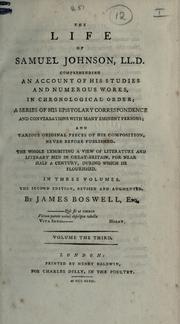
by James Boswell
“This produces the raw material for his eventual Life of Johnson, widely considered the first modern biography built on direct observation and recorded conversation.”
More from The Rest is History
We summarize every new episode. Want them in your inbox?
704. Roman Civil War: Master of the Republic (Part 4)
703. Roman Civil War: Marching on the Senate (Part 3)
702. Roman Civil War: The Barbarian Invasion (Part 2)
701. Roman Civil War: Rise of the General (Part 1)
700. The Troubles: Bloody Sunday (Part 4)
Similar Episodes
Related episodes from other podcasts

Up First (NPR)
Sep 12
BRICS Summit in India, Amazon Air Plane Crash, Federal Film Tax Bill

20VC (20 Minute VC)
Sep 12
20VC: 7 Predictions for How AI Changes the World: Labour, Engineering, Social Media, GrokBots Buying Cybercabs and more with Matteo Franceschetti, Co-Founder @ Eight Sleep

This Week in Startups
Sep 11
The Pentagon Wants Equity in AI Startups | E2336

All-In with Chamath, Jason, Sacks & Friedberg
Sep 11
AI Kills Everybody or Doomer Psyop? OpenAI's Math Breakthrough, Nike's $200B Collapse

Masters in Business
Sep 11
Finding Stability in Investing: Masters in Business with Seth Bernstein
Explore Related Topics
This podcast is featured in Best History Podcasts (2026) — ranked and reviewed with AI summaries.
You're clearly into The Rest is History.
Every Monday, we deliver AI summaries of the latest episodes from The Rest is History and 192+ other podcasts. Free for one show.
Start My Monday DigestNo credit card · Unsubscribe anytime