648. The Fall of the Incas: Battle for the Sacred City (Part 5)
Episode
67 min
Read time
3 min
Topics
Relationships, Fundraising & VC, Product & Tech Trends
AI-Generated Summary
Key Takeaways
- ✓Occupier miscalculation: Gonzalo and Juan Pizarro's decision to kidnap Manco's sister and seize his wife while Francisco was absent in Lima directly triggered the 1536 uprising. With only 200 Spaniards holding an empire of 12 million people, abusing the puppet ruler whose cooperation sustained their entire regime was a catastrophic strategic error that nearly ended Spanish rule in Peru entirely.
- ✓Asymmetric siege warfare: Manco's forces developed a specific counter-technology against Spanish fortifications: sling-launched stones wrapped in cotton and pre-heated in campfires, fired onto thatched rooftops. Combined with winds, this turned Cusco into a city-wide fire. The tactic nearly overwhelmed the garrison before African slaves stationed on rooftops with water buckets contained the spread to two stone buildings.
- ✓Native alliance dependency: Spanish survival in Cusco depended not on military superiority alone but on continuous support from indigenous groups hostile to Inca rule, including the Canari and Chachapoya peoples, plus several of Manco's own brothers who defected. Without these auxiliaries, fewer than 200 Spaniards could not have held the city against an estimated 100,000 besieging fighters for months.
- ✓Cavalry terrain limitation: For the first time during the conquest, Manco's forces neutralized Spanish cavalry by concentrating troops so densely that horses could not maneuver. This single tactical adaptation removed the Spaniards' primary battlefield advantage. The lesson: technological superiority is terrain-dependent, and a sufficiently large force can neutralize elite weapons by eliminating the physical space required to deploy them effectively.
- ✓Organizational capacity as military asset: Manco's ability to secretly mobilize approximately 100,000 fighters, arm them with clubs and slings, and supply them with food before the Spanish detected the operation demonstrated the Inca administrative system's residual power. John Hemming describes this as the last great tribute to Inca organizational genius — a top-down collectivist empire executing one final large-scale mobilization.
What It Covers
Part 5 of the Fall of the Incas series covers the 1536 Inca uprising led by Manco against roughly 200 Spanish soldiers in Cusco. The episode traces how Spanish abuse of Manco and his family triggered a coordinated rebellion of approximately 100,000 fighters, the brutal siege of Cusco, and the three-way standoff between Manco, Hernando Pizarro, and Diego de Almagro.
Key Questions Answered
- •Occupier miscalculation: Gonzalo and Juan Pizarro's decision to kidnap Manco's sister and seize his wife while Francisco was absent in Lima directly triggered the 1536 uprising. With only 200 Spaniards holding an empire of 12 million people, abusing the puppet ruler whose cooperation sustained their entire regime was a catastrophic strategic error that nearly ended Spanish rule in Peru entirely.
- •Asymmetric siege warfare: Manco's forces developed a specific counter-technology against Spanish fortifications: sling-launched stones wrapped in cotton and pre-heated in campfires, fired onto thatched rooftops. Combined with winds, this turned Cusco into a city-wide fire. The tactic nearly overwhelmed the garrison before African slaves stationed on rooftops with water buckets contained the spread to two stone buildings.
- •Native alliance dependency: Spanish survival in Cusco depended not on military superiority alone but on continuous support from indigenous groups hostile to Inca rule, including the Canari and Chachapoya peoples, plus several of Manco's own brothers who defected. Without these auxiliaries, fewer than 200 Spaniards could not have held the city against an estimated 100,000 besieging fighters for months.
- •Cavalry terrain limitation: For the first time during the conquest, Manco's forces neutralized Spanish cavalry by concentrating troops so densely that horses could not maneuver. This single tactical adaptation removed the Spaniards' primary battlefield advantage. The lesson: technological superiority is terrain-dependent, and a sufficiently large force can neutralize elite weapons by eliminating the physical space required to deploy them effectively.
- •Organizational capacity as military asset: Manco's ability to secretly mobilize approximately 100,000 fighters, arm them with clubs and slings, and supply them with food before the Spanish detected the operation demonstrated the Inca administrative system's residual power. John Hemming describes this as the last great tribute to Inca organizational genius — a top-down collectivist empire executing one final large-scale mobilization.
- •Factional rivalry as strategic vulnerability: Almagro's return from Chile with 600 Spaniards created a three-way standoff — Hernando Pizarro inside Cusco, Manco's forces outside, and Almagro's army arriving separately. Manco tested Almagro's loyalty by demanding he execute four Spanish scouts; Almagro refused, confirming to Manco that Spanish factions would ultimately unite against him. This realization ended Manco's negotiating options and forced his retreat into the Vilcabamba jungle.
Notable Moment
When Manco attempted to escape Cusco a second time, he deceived Hernando Pizarro by promising a giant golden statue of his father in exchange for permission to attend a religious festival. A separate conquistador on the road was then deflected with a story about hidden gold in nearby hills — both men immediately granted passage without question.
Episode Transcript
This episode is brought to you by Claude, by Anthropic. Now history lives in the contradictions. Yeah. I've always been fascinated by the great mysteries of history. Like what happened to the Maya civilization of Central America. Why were all those great cities deserted? But, Tom, there's one mystery that's always fascinated you, isn't there? Yes, Dominic. I've always been, fascinated by the question of how humans came to make and use fire. How did that originate? And a tremendous discovery was announced just last year that, the place where it seems fire was invented was Suffolk. Well, do you know one of the things that makes history so fascinating is the kind of back and forth between sources to try and explain these great mysteries. And you know what's built for that kind of thinking? Claude is built for that way of thinking. It doesn't smooth things over. It helps you dig into the disagreement to reveal something new. An anthropic just committed to not running adverts in Claude, so your thinking stays yours. Try Claude for free at claud.ai/restishistory. This episode is brought to you by TikTok. TikTok gives parents the visibility control they need to help shape an environment that makes sense for their teens. For starters, teens under 18 have a sixty minute screen time reminder in place. And with family pairing, parents can set their own screen time limits, see their teen's followers, whom they follow, and help restrict content that's not right for them. Because with peace of mind in place, discovery and creativity can follow. Learn more at tiktok.com/guardiansguide. This podcast is brought to you by Carvana. Car shopping shouldn't feel like preparing for a marathon of paperwork. That's why Carvana makes buying and financing your car easy. From start to finish, search thousands of vehicles with great prices, all online, all on your time. And when you're ready, your new car shows up right at your door. It doesn't get better than that. Buy your car the easy way on Carvana. Delivery fees may apply. The Incas my ancestors ruled from Chile to Quito, treating their vassals as their own children. They did not steal, and killed only when it served justice. They kept order and reason in the provinces. But now the bearded ones have entered our land. They preach one thing and do another. They have no fear of God and no shame. They treat us like dogs. Their greed is such that there is no temple they have not plundered. In fact, if all the snow turned to gold and silver, it would not satisfy them. They keep our sisters as their concubines, behaving like animals. They want to divide up all the provinces, giving one to each so that they can loot them. Their goal is to see us so downtrodden, so enslaved, that we will be fit only to find them precious metals and to give them our women. Which Spaniard have we injured? That they should …
Get the full transcript (12,709 words) + summary by email — free
One-time email with the complete transcript and AI summary of this episode. No account needed.
One email, no spam. We’ll also show you what SignalCast does.

You just read a 3-minute summary of a 64-minute episode.
Get The Rest is History summarized like this every Monday — plus up to 2 more podcasts, free.
Pick Your Podcasts — FreeKeep Reading
More from The Rest is History
704. Roman Civil War: Master of the Republic (Part 4)
Sep 9 · 70 min

Pivot
Apple Sues OpenAI, States Move to Block Paramount Deal, and McConnell Conspiracy Theories
Jul 14
More from The Rest is History
703. Roman Civil War: Marching on the Senate (Part 3)
Sep 6 · 73 min

How to Take Over the World
Adolf Hitler (Part 3)
May 13
Books, tools, and gear mentioned in this episode
SignalCast may earn commission on purchases via these links. As an Amazon Associate, SignalCast earns from qualifying purchases.
Books
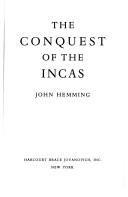
by John Hemming
“John Hemming describes this as the last great tribute to Inca organizational genius — a top-down collectivist empire executing one final large-scale mobilization.”
More from The Rest is History
We summarize every new episode. Want them in your inbox?
704. Roman Civil War: Master of the Republic (Part 4)
703. Roman Civil War: Marching on the Senate (Part 3)
702. Roman Civil War: The Barbarian Invasion (Part 2)
701. Roman Civil War: Rise of the General (Part 1)
700. The Troubles: Bloody Sunday (Part 4)
Similar Episodes
Related episodes from other podcasts

Pivot
Jul 14
Apple Sues OpenAI, States Move to Block Paramount Deal, and McConnell Conspiracy Theories

How to Take Over the World
May 13
Adolf Hitler (Part 3)

The Happiness Lab
Feb 16
How to Find "The One": The Science of Dating with Tim Molnar

Manager Tools
Dec 22
How to Set Annual Goals - HOF 2025

The Changelog
Aug 15
Oxide is crossing the chasm (Friends)
Explore Related Topics
This podcast is featured in Best History Podcasts (2026) — ranked and reviewed with AI summaries.
You're clearly into The Rest is History.
Every Monday, we deliver AI summaries of the latest episodes from The Rest is History and 192+ other podcasts. Free for one show.
Start My Monday DigestNo credit card · Unsubscribe anytime