Why Trump's Iran Strikes Are Unconstitutional — with David French
Episode
63 min
Read time
3 min
Topics
Career Growth, Personal Finance, Startups
AI-Generated Summary
Key Takeaways
- ✓Constitutional War Powers: The U.S. Constitution deliberately splits war authority — Congress declares war, the president wages it. Trump's Iran strikes violated this structure by bypassing congressional authorization entirely, with no UN Security Council resolution and no evidence of imminent attack. Historically, even Korea, Vietnam, Desert Storm, and both Iraq wars had some form of congressional or UN authorization before military action commenced.
- ✓Democratic Staying Power in War: Democracies that secure public support before entering conflict demonstrate significantly greater resilience during adversity than those that bypass the process. Without congressional authorization, there is no mechanism to build public understanding or consent. The Iran conflict illustrates this directly — no constitutional process produced no public patience, making the war strategically fragile regardless of whether the military objective was sound.
- ✓Just War Doctrine as Legal Foundation: Catholic just war doctrine, developed over roughly 1,000 years and codified after both World Wars, forms a foundational pillar of the U.S. Department of Defense's law of war manual. When Pope Leo XIV challenges Trump's military actions, he speaks as the intellectual heir to the tradition that underpins the entire post-WWII international legal order — not as a peripheral religious figure.
- ✓Combat Discipline and Civilian Protection: French's unit, the 2nd Squadron 3rd Armored Cavalry Regiment, faced enemy contact approximately 80% of operational days in Eastern Diyala Province during the 2007–2008 surge, yet caused fewer than five civilian casualties across the entire deployment. This outcome resulted from strict rules of engagement enforcement, not luck — demonstrating that military effectiveness and legal compliance are not competing priorities.
- ✓Democratic Party's Tent Problem: White evangelicals voted 82% for Trump while Black Protestants voted 88–90% for Harris, revealing that American Christianity is politically diverse but the Democratic Party consistently alienates theologically conservative voters. French cites Texas Democrat James Tallarico's model — explicitly welcoming pro-life voices while disagreeing on abortion — as the structural shift required. Movements that hunt for heretics rather than seek converts systematically shrink their coalition.
What It Covers
NYT columnist and Iraq War veteran David French joins Scott Galloway to examine the constitutional violations in Trump's Iran strikes, the intellectual roots of just war doctrine in international law, the theological divide within American Christianity over Trump, and why cultivating virtue over ambition is the defining framework for young men seeking direction.
Key Questions Answered
- •Constitutional War Powers: The U.S. Constitution deliberately splits war authority — Congress declares war, the president wages it. Trump's Iran strikes violated this structure by bypassing congressional authorization entirely, with no UN Security Council resolution and no evidence of imminent attack. Historically, even Korea, Vietnam, Desert Storm, and both Iraq wars had some form of congressional or UN authorization before military action commenced.
- •Democratic Staying Power in War: Democracies that secure public support before entering conflict demonstrate significantly greater resilience during adversity than those that bypass the process. Without congressional authorization, there is no mechanism to build public understanding or consent. The Iran conflict illustrates this directly — no constitutional process produced no public patience, making the war strategically fragile regardless of whether the military objective was sound.
- •Just War Doctrine as Legal Foundation: Catholic just war doctrine, developed over roughly 1,000 years and codified after both World Wars, forms a foundational pillar of the U.S. Department of Defense's law of war manual. When Pope Leo XIV challenges Trump's military actions, he speaks as the intellectual heir to the tradition that underpins the entire post-WWII international legal order — not as a peripheral religious figure.
- •Combat Discipline and Civilian Protection: French's unit, the 2nd Squadron 3rd Armored Cavalry Regiment, faced enemy contact approximately 80% of operational days in Eastern Diyala Province during the 2007–2008 surge, yet caused fewer than five civilian casualties across the entire deployment. This outcome resulted from strict rules of engagement enforcement, not luck — demonstrating that military effectiveness and legal compliance are not competing priorities.
- •Democratic Party's Tent Problem: White evangelicals voted 82% for Trump while Black Protestants voted 88–90% for Harris, revealing that American Christianity is politically diverse but the Democratic Party consistently alienates theologically conservative voters. French cites Texas Democrat James Tallarico's model — explicitly welcoming pro-life voices while disagreeing on abortion — as the structural shift required. Movements that hunt for heretics rather than seek converts systematically shrink their coalition.
- •Virtue Over Ambition Framework: Benjamin Franklin maintained a list of 13 virtues and graded his daily adherence to each. The founders broadly prioritized what David Brooks calls "eulogy virtues" — character traits described at death — over "resume virtues," which are career accomplishments. French argues young men should pursue virtue cultivation as a lifelong practice because character development remains within personal control in a way that status and wealth outcomes never are.
Notable Moment
French describes how women in Eastern Diyala Province were coerced into becoming suicide bombers through sexual violence — perpetrators told victims the only path to restored honor was self-detonation at checkpoints, restaurants, or hospitals. This proto-ISIS tactic, witnessed firsthand by French, was what he describes as his single greatest motivating force during the entire deployment.
Episode Transcript
What does it take to be prepared for disaster? You have to be confident. You have to be calm. Will you be perfect? No. But the idea is that you'll have your bearings, and this won't be something new to you. This week on Explain It to Me, how to stay ready so you don't have to get ready. New episode Sundays wherever you get your podcasts. For years, if you ran a media company, you obsessed about Google because Google could send a fire hose of traffic your way, but now things are changing fast. So last year, I told all of our teams, you need to plan your businesses around there being no serve. And if you don't have a plan for that, you may not have a business. I think it was very effective. That's Roger Lynch, the CEO of Conde Nast, the home of fabled magazines like the New Yorker and Vogue. And if you wanna hear how Lynch is thinking about Google and AI companies and who's gonna replace his most famous editors, good news. You can hear all of that on channels with Peter Kafka. That's out now everywhere. Hey. It's Francis Lam, host of The Splendid Table podcast. Every week on our show, we celebrate the intersection of food and life. And this month, we're releasing a new series called Culinary Masters. It highlights some of the most iconic people in the food world, and we're revisiting conversations with people who have fundamentally changed how many of us cook and think about food. People like Jacques Pepin, Claudia Rodin, and Tony Bourdain, to name a few. You can listen to this special series now. Just search for The Splendid Table in your podcast app. Episode 397. Three nine is the country code, Ridley. In 1997, Netflix was founded. I recently watched the documentary on Netflix on subliminal persuasion. It is terrible. I finally I finally turned it off after eleven seasons. Get it? I can do better than that. So there's also a documentary on a woman's g spot, but I swear I couldn't find it. Go. Go. Go. Welcome to the three hundred ninety seventh episode of the prop g pod. 397. I don't remember what I had for breakfast. I can't remember. We've done 397 of these things. They're all starting to mix together. I don't get it. Anyways, I remember the ZipRecruiter ads. I remember those. Yeah. Other than that, I don't remember much. Anyways, what's happening? In today's episode, we speak with David French, an American political commentator and columnist for The New York Times. David touches on topics we talk a lot about here on Pravji, law, culture, religion, and armed conflict. I'm a big fan. I like the way he thinks. You've probably read his work. Just a clear blue flame thinker. Anyways, with that, we hope you enjoy our conversation with David French. Also, before we get into this episode, a quick heads up. This conversation …
Get the full transcript (11,331 words) + summary by email — free
One-time email with the complete transcript and AI summary of this episode. No account needed.
One email, no spam. We’ll also show you what SignalCast does.

You just read a 3-minute summary of a 60-minute episode.
Get The Prof G Pod summarized like this every Monday — plus up to 2 more podcasts, free.
Pick Your Podcasts — FreeKeep Reading
More from The Prof G Pod
Who Profits When Everyone Is Recording? (ft. Kyla Scanlon)
Oct 7 · 34 min

The Daily (NYT)
'The Opinions': General Stanley McChrystal on Iran
Apr 4
More from The Prof G Pod
Why Young Americans Are Rejecting Capitalism, and the Money Behind the Obesity Crisis
Oct 5 · 26 min

Pivot
Ellison's Rebrand, Netflix's Struggles, and Elon's Breakup
Oct 6
Books, tools, and gear mentioned in this episode
SignalCast may earn commission on purchases via these links. As an Amazon Associate, SignalCast earns from qualifying purchases.
Books
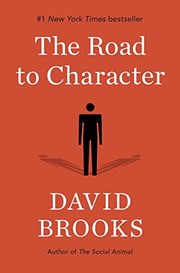
by David Brooks
“The founders broadly prioritized what David Brooks calls 'eulogy virtues' — character traits described at death — over 'resume virtues,' which are career accomplishments.”
More from The Prof G Pod
We summarize every new episode. Want them in your inbox?
Who Profits When Everyone Is Recording? (ft. Kyla Scanlon)
Why Young Americans Are Rejecting Capitalism, and the Money Behind the Obesity Crisis
No Mercy / No Malice: Less for More
The Week: An IPO False Start, an Agent That Goes Shopping, and a War We Keep Paying For
Timothy Snyder on America’s Superpower Suicide
Similar Episodes
Related episodes from other podcasts

The Daily (NYT)
Apr 4
'The Opinions': General Stanley McChrystal on Iran

Pivot
Oct 6
Ellison's Rebrand, Netflix's Struggles, and Elon's Breakup

The Diary of a CEO
May 4
Scott Galloway: AI Wasn’t Built For You. The Rich Don’t Need You Anymore!
Pivot
Dec 2
Holiday Spending Surge, Fed Chair Future, and Melania's Production Company
Pivot
Oct 21
Colleges Push Back, Ozempic Price Promise, and White House vs. Anthropic
Explore Related Topics
This podcast is featured in Best Business Podcasts (2026) — ranked and reviewed with AI summaries.
Read this week's Startups & Product Podcast Insights — cross-podcast analysis updated weekly.
You're clearly into The Prof G Pod.
Every Monday, we deliver AI summaries of the latest episodes from The Prof G Pod and 192+ other podcasts. Free for one show.
Start My Monday DigestNo credit card · Unsubscribe anytime