America Has a Moral Problem, Not a Political One — with David Brooks
Episode
55 min
Read time
2 min
Topics
Leadership, Artificial Intelligence, Software Development
AI-Generated Summary
Key Takeaways
- ✓Resentment Mechanics: Resentment follows a predictable pattern: perceived social exclusion triggers feelings of impotence, which then escalate into a full rejection of higher human values like kindness and generosity, reframing them as weakness or performance. Brooks identifies Trump as the clearest embodiment of this psychological progression, where selfishness becomes the only "real" motivation.
- ✓Moral Inarticulation Crisis: Philosopher Alasdair MacIntyre's framework explains how privatizing morality — telling individuals to construct their own ethical systems — leaves most people unable to reason through moral dilemmas. Sociologist Christian Smith found college students couldn't define a moral dilemma at all, and some assault survivors lacked language to articulate why rape was worse than a nosebleed.
- ✓Emotional Granularity as a Cognitive Tool: Yale researcher Mark Brackett's "mood meter" framework maps emotional states across four quadrants of pleasure and energy levels — anxiety being low-pleasure/high-energy, tranquility being high-pleasure/low-energy. Regularly labeling your emotional state makes emotions advisers rather than masters, improving decision-making and self-awareness measurably.
- ✓AI Cognitive Atrophy Risk: New research indicates that people who rely on AI for thinking tasks show a massive decline in motivation and capacity for independent reasoning. Brooks estimates 80% of people are natural "cognitive misers" who will use AI as a substitute for thinking, creating a two-tier cognitive caste system between the 20% who use AI to amplify thinking and the majority who outsource it entirely.
- ✓Moral Formation Revival Framework: Brooks outlines three concrete tools for rebuilding moral character: studying exemplars like Frances Perkins or George Marshall to make excellence admirable; exposing students to structured moral traditions including Stoicism, Confucianism, and rationalism; and prioritizing theater participation, which research identifies as the single school activity most likely to increase emotional awareness in young people.
What It Covers
David Brooks joins Scott Galloway to examine America's moral decline, arguing the country faces a subpolitical crisis rooted in lost moral formation, rising resentment culture, and weakened social skills — with 58% of college students reporting no sense of life purpose — rather than a fixable political problem.
Key Questions Answered
- •Resentment Mechanics: Resentment follows a predictable pattern: perceived social exclusion triggers feelings of impotence, which then escalate into a full rejection of higher human values like kindness and generosity, reframing them as weakness or performance. Brooks identifies Trump as the clearest embodiment of this psychological progression, where selfishness becomes the only "real" motivation.
- •Moral Inarticulation Crisis: Philosopher Alasdair MacIntyre's framework explains how privatizing morality — telling individuals to construct their own ethical systems — leaves most people unable to reason through moral dilemmas. Sociologist Christian Smith found college students couldn't define a moral dilemma at all, and some assault survivors lacked language to articulate why rape was worse than a nosebleed.
- •Emotional Granularity as a Cognitive Tool: Yale researcher Mark Brackett's "mood meter" framework maps emotional states across four quadrants of pleasure and energy levels — anxiety being low-pleasure/high-energy, tranquility being high-pleasure/low-energy. Regularly labeling your emotional state makes emotions advisers rather than masters, improving decision-making and self-awareness measurably.
- •AI Cognitive Atrophy Risk: New research indicates that people who rely on AI for thinking tasks show a massive decline in motivation and capacity for independent reasoning. Brooks estimates 80% of people are natural "cognitive misers" who will use AI as a substitute for thinking, creating a two-tier cognitive caste system between the 20% who use AI to amplify thinking and the majority who outsource it entirely.
- •Moral Formation Revival Framework: Brooks outlines three concrete tools for rebuilding moral character: studying exemplars like Frances Perkins or George Marshall to make excellence admirable; exposing students to structured moral traditions including Stoicism, Confucianism, and rationalism; and prioritizing theater participation, which research identifies as the single school activity most likely to increase emotional awareness in young people.
Notable Moment
Brooks describes a student who told him the character development course made him significantly sadder — and Brooks considered this a complete success. The student had mastered external achievement metrics but had never been asked to examine his internal life until that point.
Episode Transcript
Support for this show comes from Odoo. Running a business is hard enough, so why make it harder with a dozen different apps that don't talk to each other? Introducing Odoo. It's the only business software you'll ever need. It's an all in one fully integrated platform that makes your work easier. CRM, accounting, inventory, e commerce and more. And the best part? Odoo replaces multiple expensive platforms for a fraction of the cost. That's why over thousands of businesses have made the switch. So why not you? Try Odoo for free at odoo.com. That's odoo.com. Recommendations can be great. Maybe someone recommended this podcast, and here you are. But home projects are a little different. If the podcast isn't your thing, you might lose a few minutes from your day. But if you hire your cousin's neighbor to mount your TV, you might end up with a lopsided screen and wall damage. I know a guy isn't a good strategy for your home. That's why Thumbtack works so well. It matches you with top rated local pros with photos, reviews, and credentials, all in one convenient place. For your next home project, try Thumbtack. Hire the right pro today. When you use the trusted investing and savings app Betterment to help grow your money automatically, you have more time for new niche hobbies, like collecting miniatures. The joy that brings helps you sleep better at night and even motivates you to always use always use your PM moisturizer. Now you've got a dewy glow and a sense of balance to match. Not worrying where your money is growing, that's the Betterment effect. Get started today at betterment.com. Investing involves risk performance, not guaranteed. Episode 393. 303 is the country code for Kosovo. 1993, Jurassic Park hit theaters and Michael Jordan won his third straight NBA title. What do Michael Jordan and first lady of Melania Trump have in common? They both make a shit ton of money playing with orange balls. Things are getting desperate around here. Go. Go. Go. Welcome to the three hundred ninety third episode of the Prop GPod. What's happening? Today, we're speaking with David Brooks, a writer now at The Atlantic, formerly in The New York Times, and author of several books, including How to Know a Person, The Second Mountain, and The Road to Character. I'm just an enormous fan of David Brooks. I love I love a old white straight dude who starts talking about his emotions, and I find he has such a a moral base, a moral compass, and he's unafraid of criticism. And he, I don't know, just love a guy who I think David would describe himself as a conservative, although he probably excused any real label. But he talks a lot about community and decency. I think he's not afraid. I love Brooks and Capehart on I think it's on PBS. I admire somebody who has that kind of footprint, who's not afraid to talk about emotions …
Get the full transcript (10,958 words) + summary by email — free
One-time email with the complete transcript and AI summary of this episode. No account needed.
One email, no spam. We’ll also show you what SignalCast does.

You just read a 3-minute summary of a 52-minute episode.
Get The Prof G Pod summarized like this every Monday — plus up to 2 more podcasts, free.
Pick Your Podcasts — FreeKeep Reading
More from The Prof G Pod
Can We Coexist With AI? — with Ethan Mollick
Oct 22 · 59 min

Pivot
Pivot Extra: America at 250 — with Heather Cox Richardson
Oct 18
More from The Prof G Pod
How America Became Addicted to Debt — with Morgan Housel
Oct 21 · 21 min

The Jordan Harbinger Show
1250: Scott Galloway | Notes on Being a Man
Dec 2
Books, tools, and gear mentioned in this episode
SignalCast may earn commission on purchases via these links. As an Amazon Associate, SignalCast earns from qualifying purchases.
Books
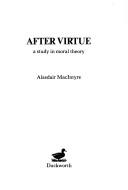
by Alasdair MacIntyre
“Philosopher Alasdair MacIntyre's framework explains how privatizing morality — telling individuals to construct their own ethical systems — leaves most people unable to reason through moral dilemmas.”
Tools
by Yale Center for Emotional Intelligence / Mark Brackett
“Yale researcher Mark Brackett's 'mood meter' framework maps emotional states across four quadrants of pleasure and energy levels — anxiety being low-pleasure/high-energy, tranquility being high-pleasure/low-energy.”
More from The Prof G Pod
We summarize every new episode. Want them in your inbox?
Can We Coexist With AI? — with Ethan Mollick
How America Became Addicted to Debt — with Morgan Housel
Why Optimization Culture Is Making You Miserable
Can OpenAI and Anthropic Justify Their Valuations? + Flock, Privacy, and Plummeting Crime
No Mercy / No Malice: Each Other
Similar Episodes
Related episodes from other podcasts

Pivot
Oct 18
Pivot Extra: America at 250 — with Heather Cox Richardson

The Jordan Harbinger Show
Dec 2
1250: Scott Galloway | Notes on Being a Man

Conversations with Tyler
Aug 20
David Brooks on Audacity, AI, and the American Psyche (Live at 92NY)
Pivot
Oct 20
Trump's Putin Play, Elon's SpaceX Stock Pledge, and Netflix's Staffing Shakeup

Acquired
Oct 19
Seinfeld
Explore Related Topics
This podcast is featured in Best Business Podcasts (2026) — ranked and reviewed with AI summaries.
Read this week's AI & Machine Learning Podcast Insights — cross-podcast analysis updated weekly.
You're clearly into The Prof G Pod.
Every Monday, we deliver AI summaries of the latest episodes from The Prof G Pod and 192+ other podcasts. Free for one show.
Start My Monday DigestNo credit card · Unsubscribe anytime