The New Right’s Very Old Vision of Men
Episode
103 min
Read time
3 min
Topics
Career Growth, Productivity, Relationships
AI-Generated Summary
Key Takeaways
- ✓Masculinism as MAGA's unifying ideology: While the MAGA coalition fractures on trade, Iran, and Israel, opposition to feminism functions as its single consensus position. Figures like Scott Yenor propose concrete policy mechanisms — including legally reinstating workplace discrimination to preferentially hire and promote married men — as the structural path toward restoring a single-breadwinner household economy modeled on an idealized 1950s template that never uniformly existed.
- ✓Bronze Age Pervert's political reach: Costin Alamarju's self-published *Bronze Age Mindset* circulated widely among young Trump White House staffers and received a formal writeup in the Claremont Review of Books. Its core argument — that testosterone is the biological substrate of civilization-building thymos, and that liberal democracy chemically and institutionally suppresses it — provides the pseudo-scientific framework underpinning much of the broader New Right gender ideology.
- ✓The "longhouse" metaphor operates without historical referent: Lomas's widely cited essay invoking matriarchal "longhouse" societies as a cautionary model for feminized bureaucracy explicitly acknowledges it refers to no specific historical society. The author states the concept must remain undefined to preserve its rhetorical force. Recognizing this pattern — ideological claims wrapped in deliberately unfalsifiable historical imagery — is essential for evaluating similar arguments across this literature.
- ✓Declining male metrics are real but causally misread: Measurable declines in male testosterone levels, sperm count, and sperm quality across multiple countries over decades are documented phenomena. Simultaneously, men are five times more likely than in the 1990s to report having no close friends and four times more likely to die by suicide. These trends are real policy concerns, but masculinist literature attributes them exclusively to feminism rather than to endocrine-disrupting chemicals, social media architecture, or structural economic shifts.
- ✓Cancellation as a female phenomenon fails the evidence test: Helen Andrews's viral Atlantic essay argues that organizational cancellation culture is an epiphenomenon of demographic feminization — that when women exceed roughly 60% of a workforce, indirect punishment replaces direct conflict. Lewis's fact-checking finds this collapses under scrutiny: the Larry Summers ouster occurred when four-fifths of Harvard's tenured faculty were male, and the Trump administration's mass firings over DEI language use represent cancellation executed by a male-dominated structure.
What It Covers
Ezra Klein and Atlantic staff writer Helen Lewis map the ideological movement Lewis terms "masculinism" — a coordinated New Right project involving figures like Bronze Age Pervert, Doug Wilson, and Scott Yenor that seeks to restructure American law, economics, and culture around pre-feminist gender hierarchies, and examine why it resonates despite its intellectual contradictions.
Key Questions Answered
- •Masculinism as MAGA's unifying ideology: While the MAGA coalition fractures on trade, Iran, and Israel, opposition to feminism functions as its single consensus position. Figures like Scott Yenor propose concrete policy mechanisms — including legally reinstating workplace discrimination to preferentially hire and promote married men — as the structural path toward restoring a single-breadwinner household economy modeled on an idealized 1950s template that never uniformly existed.
- •Bronze Age Pervert's political reach: Costin Alamarju's self-published *Bronze Age Mindset* circulated widely among young Trump White House staffers and received a formal writeup in the Claremont Review of Books. Its core argument — that testosterone is the biological substrate of civilization-building thymos, and that liberal democracy chemically and institutionally suppresses it — provides the pseudo-scientific framework underpinning much of the broader New Right gender ideology.
- •The "longhouse" metaphor operates without historical referent: Lomas's widely cited essay invoking matriarchal "longhouse" societies as a cautionary model for feminized bureaucracy explicitly acknowledges it refers to no specific historical society. The author states the concept must remain undefined to preserve its rhetorical force. Recognizing this pattern — ideological claims wrapped in deliberately unfalsifiable historical imagery — is essential for evaluating similar arguments across this literature.
- •Declining male metrics are real but causally misread: Measurable declines in male testosterone levels, sperm count, and sperm quality across multiple countries over decades are documented phenomena. Simultaneously, men are five times more likely than in the 1990s to report having no close friends and four times more likely to die by suicide. These trends are real policy concerns, but masculinist literature attributes them exclusively to feminism rather than to endocrine-disrupting chemicals, social media architecture, or structural economic shifts.
- •Cancellation as a female phenomenon fails the evidence test: Helen Andrews's viral Atlantic essay argues that organizational cancellation culture is an epiphenomenon of demographic feminization — that when women exceed roughly 60% of a workforce, indirect punishment replaces direct conflict. Lewis's fact-checking finds this collapses under scrutiny: the Larry Summers ouster occurred when four-fifths of Harvard's tenured faculty were male, and the Trump administration's mass firings over DEI language use represent cancellation executed by a male-dominated structure.
- •The incremental policy pathway mirrors the Roe strategy: Rather than pursuing headline rollbacks like repealing the 19th Amendment, masculinist policy goals advance through small regulatory and legislative nudges — tax code adjustments favoring single-breadwinner households, Heritage Foundation proposals against daycare subsidies and single-parent benefits, EEOC reorientation toward white male discrimination claims, and Project 2025 provisions restricting abortion pill distribution. This mirrors the decades-long incremental strategy that preceded *Dobbs*.
- •The movement's self-help framing severs urge from purpose: Much masculinist content functions as self-help — the dominant media genre of the era — but detached from prosocial outcomes. The "looksmaxxing" phenomenon, exemplified by streamer Clavicular's documented infertility and inability to sustain relationships, illustrates the pathology: the drive toward physical optimization is severed from the reproductive and relational purposes that drive would serve. Lewis and Klein identify this as a failure of mainstream liberalism to offer a competing, vital vision of male flourishing.
Notable Moment
Lewis notes that many women who participated in or promoted New Right masculinist spaces — sometimes dismissing feminist concerns as left-wing overreach — eventually discovered the misogyny was entirely literal, not ironic. The implicit promise of exemption for ideologically compliant women dissolved on contact with how the men around them actually behaved, echoing philosopher Kate Manne's framework of misogyny offering conditional exemptions to "good girls."
Episode Transcript
I'm Wenna Liu. I write the game Connections, one of the puzzles from New York Times games, and I love horror movies. I love my dog, and I love trying to trick you. I'm Tracy Bennett. I get to pick the Wordle word every day, which is not as easy as it sounds. A fun fact about me is that I am descended from a witch who was put on trial in Salem. New York Times games are made by people, like the ones you just heard from. Go to nytimes.com/games to start playing today. If you travel deep into the New Right, what you find at the moment is a constant yearning for something very old. Not just a time when America was great, but a time when men were great, when men were men. You hear it in Kostin Vlad Alamarju, who's better known as the Bronze Age Pervert. You hear it in his longing for the Bronze Age. I am here just to spread the political, views of the ancient Hittite empire or the ancient Mitanni empire. You hear it when the pastor Doug Wilson yearns for the time before the nineteenth amendment. The net effect of women's suffrage was not an advance in women's rights, but rather part of a push to replace covenanted entities like families with raw individualism. You hear it in the increasingly constant idealization of nineteen fifties America. Why wouldn't you design a system consistent with nature? Mhmm. What would that look like to you? It would look like what we had before Betty Fordain wrote The Feminine Mystique, before lifestyle feminism dominated every institution in the West. There's a time when all this could be dismissed as a fringe movement on the fever swamps of the Internet. But bronze age pervert is a favorite of young Trump staffers. Defense secretary Pete Hegseth invited Doug Wilson to preach at the Pentagon. Tucker Carlson is, well, he's Tucker Carlson. These are not all fringe figures, and it's not just them. It's a much broader thing on the new right, which increasingly wants a return, is theorizing for how to create a return to very old ideas of how men should be, to very old policies that centralize the power they wield and the way society is ordered. Helen Lewis is a staff writer at The Atlantic and the author of Difficult Women, a History of Feminism in 11 Fights and The Genius Myth. She's just written a great cover story for The Atlantic mapping this world. She calls it masculinism, talking to many of its key figures, trying to understand its core ideas. So I want to have her on the show to talk about it. As always, my email is our clientshow@nytimes.com. Helen Lewis, welcome to the show. Thank you. So I wanna start with a clip from Scott Yenor, a professor at Boys State University that I think is a a good place to start. Our independent women seek their purpose …
Get the full transcript (19,978 words) + summary by email — free
One-time email with the complete transcript and AI summary of this episode. No account needed.
One email, no spam. We’ll also show you what SignalCast does.

You just read a 3-minute summary of a 100-minute episode.
Get The Ezra Klein Show summarized like this every Monday — plus up to 2 more podcasts, free.
Pick Your Podcasts — FreeKeep Reading

Books, tools, and gear mentioned in this episode
SignalCast may earn commission on purchases via these links. As an Amazon Associate, SignalCast earns from qualifying purchases.
Books
- Bronze Age MindsetBy guest
by Costin Alamarju
“Costin Alamarju's self-published *Bronze Age Mindset* circulated widely among young Trump White House staffers and received a formal writeup in the Claremont Review of Books. Its core argument — that testosterone is the biological substrate of civilization-building thymos, and that liberal democracy chemically and institutionally suppresses it — provides the pseudo-scientific framework underpinning much of the broader New Right gender ideology.”
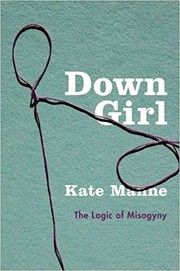
by Kate Manne
“Lewis notes that many women who participated in or promoted New Right masculinist spaces eventually discovered the misogyny was entirely literal, not ironic. The implicit promise of exemption for ideologically compliant women dissolved on contact with how the men around them actually behaved, echoing philosopher Kate Manne's framework of misogyny offering conditional exemptions to "good girls."”
newsletter
“Costin Alamarju's self-published *Bronze Age Mindset* circulated widely among young Trump White House staffers and received a formal writeup in the Claremont Review of Books.”
More from The Ezra Klein Show
We summarize every new episode. Want them in your inbox?
Similar Episodes
Related episodes from other podcasts


Explore Related Topics
This podcast is featured in Best Politics Podcasts (2026) — ranked and reviewed with AI summaries.
You're clearly into The Ezra Klein Show.
Every Monday, we deliver AI summaries of the latest episodes from The Ezra Klein Show and 192+ other podcasts. Free for one show.
Start My Monday DigestNo credit card · Unsubscribe anytime