PEL Presents Closereads: Hegel's "Unhappy Consciousness"
Episode
57 min
Read time
2 min
Topics
Psychology & Behavior, Philosophy & Wisdom, Science & Discovery
AI-Generated Summary
Key Takeaways
- ✓Translation comparison methodology: Reading the same Hegel passage across Pinkard, Inwood, and Miller translations reveals Miller interprets rather than literally translates, using phrases like "identifies itself with" instead of "takes the side of," making complex philosophical concepts accessible without sacrificing accuracy. This interpretive approach proves most effective for understanding dense German idealism.
- ✓Unhappy consciousness structure: The unhappy consciousness emerges from skepticism's internal contradiction, creating a split where one part recognizes itself as changeable and inessential while another part represents the unchangeable essence. This division differs from master-slave dynamics because both consciousnesses exist within a single individual rather than between two separate people.
- ✓Kantian epistemological roots: The unhappy consciousness reflects Kant's division between phenomena (accessible appearances) and noumena (inaccessible things-in-themselves). One side of consciousness accesses only appearances while remaining troubled by inability to reach the transcendent beyond, creating perpetual alienation. This epistemological problem becomes a lived psychological condition rather than abstract theory.
- ✓Cycling between opposites: Consciousness attempts to ascend to the unchangeable essence but inevitably imports changeableness into that process, restarting the cycle of struggle. When consciousness identifies with either the essential unchangeable or the inessential changeable, it immediately generates awareness of the opposite, preventing resolution. Victory over one side becomes defeat through loss in its contrary.
- ✓Religious consciousness preview: The unhappy consciousness section unexpectedly introduces priests and religious devotion before the book's formal religion chapter, suggesting medieval Christianity's asceticism and prayer represent attempts to bridge the gap between human changeability and divine unchangeability. This historical manifestation precedes the systematic treatment of religion, indicating Hegel views religious consciousness as pathological self-division.
What It Covers
Mark and Wes conduct a close reading of Hegel's "Unhappy Consciousness" section from Phenomenology of Spirit, comparing three translations (Pinkard, Inwood, and Miller). They analyze how consciousness divides itself between unchangeable essence and changeable existence, ultimately determining Miller's translation provides the clearest rendering of Hegel's notoriously difficult prose.
Key Questions Answered
- •Translation comparison methodology: Reading the same Hegel passage across Pinkard, Inwood, and Miller translations reveals Miller interprets rather than literally translates, using phrases like "identifies itself with" instead of "takes the side of," making complex philosophical concepts accessible without sacrificing accuracy. This interpretive approach proves most effective for understanding dense German idealism.
- •Unhappy consciousness structure: The unhappy consciousness emerges from skepticism's internal contradiction, creating a split where one part recognizes itself as changeable and inessential while another part represents the unchangeable essence. This division differs from master-slave dynamics because both consciousnesses exist within a single individual rather than between two separate people.
- •Kantian epistemological roots: The unhappy consciousness reflects Kant's division between phenomena (accessible appearances) and noumena (inaccessible things-in-themselves). One side of consciousness accesses only appearances while remaining troubled by inability to reach the transcendent beyond, creating perpetual alienation. This epistemological problem becomes a lived psychological condition rather than abstract theory.
- •Cycling between opposites: Consciousness attempts to ascend to the unchangeable essence but inevitably imports changeableness into that process, restarting the cycle of struggle. When consciousness identifies with either the essential unchangeable or the inessential changeable, it immediately generates awareness of the opposite, preventing resolution. Victory over one side becomes defeat through loss in its contrary.
- •Religious consciousness preview: The unhappy consciousness section unexpectedly introduces priests and religious devotion before the book's formal religion chapter, suggesting medieval Christianity's asceticism and prayer represent attempts to bridge the gap between human changeability and divine unchangeability. This historical manifestation precedes the systematic treatment of religion, indicating Hegel views religious consciousness as pathological self-division.
Notable Moment
The hosts discover Miller's own commentary reduces the entire complex section to one sentence: unhappy consciousness cannot unite with its unchangeable essence without importing changeableness into that essence, restarting the cycle. This radical simplification after struggling through three translations demonstrates how Hegel's difficulty stems from poor writing rather than inherent conceptual complexity.
Episode Transcript
Hey there, Partially Examined Life listeners. It has come to my attention that many of you are not subscribed to Close Reads, Philosophy with Mark and Wes. In fact, I think there's some confusion around that in that I do occasionally put episodes from that in the Partially Examined Life feed. More often, I put them in the Partially Examined Life supporter feeds if they're particularly relevant to what we're talking about on Partially Examined Life at the time. But to clarify, Wes and I have been recording these pretty much weekly. We've now done a 124 recordings as of this one. And whether or not you wanna support this effort financially, the best way I think to get all that is go to patreon.com/closereadsphilosophy where you can either follow us at the free tier and get all the public episodes entirely ad free. Our standard public feed is available at closereadsphilosophy.com or search us on Apple Podcasts or wherever. Now if you wanna get all the Close Reads content, if you wanna get the part two and part three that we're gonna have to this very episode, you'll have to give us money either through that Close Reads Patreon or if you already support us or we're thinking of supporting Partially Examined Life at patreon.com/partiallyexaminedlife, there is a combo deal that'll be a little better deal than supporting us separately in different places. Now I wanted to put this close reads episode in particular in all the feeds for you because pretty soon after all this Graham Harmon business, we're gonna be returning on Partially Examined Life to Hegel's phenomenology. And I wanted to show you really what the text is like, how difficult it is. And added to that, we grapple with different translations in this episode. So we start with the Terry Pinkard and go to the Michael Inwood and end up with the Miller, which is the peach copy that we've used for all the other episodes. So thanks for listening. Hope you enjoy this close reads format. Hope you enjoy our treatment of this book. We've returned to it on two different occasions on close reads within the last year, and I'm sure this won't be our last time because it is a brilliant book packed with good stuff and a uniquely challenging style that we enjoy. This is Close Reads, a philosophy podcast with Mark and Wes. I'm Wes Ahlwin. And I'm Mark Lintzenmeyer. It is a new dawn for Close Reads, but yet more of the same on Partially Examined Life. We have just now started reading more of Hegel's phenomenology of spirit and, in fact, have rejected the the the peach copy, the Miller translation, in favor, at least temporarily, for the, Terry Pinkard version, which is one that is available online. And I wanted to look at, another part of the, self consciousness chapter. So we sort of started our whole treatment on partially examined life with a self consciousness chapter, …
Get the full transcript (9,826 words) + summary by email — free
One-time email with the complete transcript and AI summary of this episode. No account needed.
One email, no spam. We’ll also show you what SignalCast does.

You just read a 3-minute summary of a 54-minute episode.
Get The Partially Examined Life summarized like this every Monday — plus up to 2 more podcasts, free.
Pick Your Podcasts — FreeKeep Reading
More from The Partially Examined Life
Ep. 402: Plato Talks Homer: Hippias Minor and Ion (Part Two)
Oct 19 · 55 min

20VC (20 Minute VC)
20VC: Cerebras CEO on the Future of Data Centres, Token Costs and Memory | We are Not in an Infra Bubble & Dario Got a Bad Deal with Elon for Compute | Should US Companies Sell to China & Why Most Layoffs are AI Washed with Andrew Feldman
May 26
More from The Partially Examined Life
PEL Presents NEM#262: Bruce Cockburn Expands Political/Spiritual Folk
Oct 18 · 66 min
20VC (20 Minute VC)
20VC: Instinct Raises $1B at $10B Valuation | AMD Buys Fei-Fei Li's World Labs for $8.2B | Meta Poaches MongoDB's CEO | Bessemer Raises $5.75B | Oura Pulls IPO & Nubank Eyes $8–12B Monzo Takeover
Oct 1
Books, tools, and gear mentioned in this episode
SignalCast may earn commission on purchases via these links. As an Amazon Associate, SignalCast earns from qualifying purchases.
Books
by G.W.F. Hegel, translated by Peter Pinkard
“Reading the same Hegel passage across Pinkard, Inwood, and Miller translations reveals Miller interprets rather than literally translates”
by G.W.F. Hegel, translated by Michael Inwood
“Reading the same Hegel passage across Pinkard, Inwood, and Miller translations reveals Miller interprets rather than literally translates”
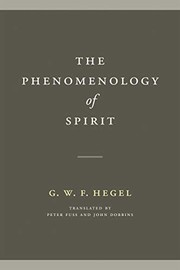
by G.W.F. Hegel
“Mark and Wes conduct a close reading of Hegel's "Unhappy Consciousness" section from Phenomenology of Spirit, comparing three translations (Pinkard, Inwood, and Miller).”
- Phenomenology of Spirit (Miller translation)Recommended
by G.W.F. Hegel, translated by A.V. Miller
“They analyze how consciousness divides itself between unchangeable essence and changeable existence, ultimately determining Miller's translation provides the clearest rendering of Hegel's notoriously difficult prose.”
More from The Partially Examined Life
We summarize every new episode. Want them in your inbox?
Ep. 402: Plato Talks Homer: Hippias Minor and Ion (Part Two)
PEL Presents NEM#262: Bruce Cockburn Expands Political/Spiritual Folk
PEL Presents PMP#232: Obsession (for Men?)
Ep. 402: Plato Talks Homer: Hippias Minor and Ion (Part One)
PEL Presents Closereads: Gilbert Ryle on Self-Knowledge (Part One)
Similar Episodes
Related episodes from other podcasts

20VC (20 Minute VC)
May 26
20VC: Cerebras CEO on the Future of Data Centres, Token Costs and Memory | We are Not in an Infra Bubble & Dario Got a Bad Deal with Elon for Compute | Should US Companies Sell to China & Why Most Layoffs are AI Washed with Andrew Feldman
20VC (20 Minute VC)
Oct 1
20VC: Instinct Raises $1B at $10B Valuation | AMD Buys Fei-Fei Li's World Labs for $8.2B | Meta Poaches MongoDB's CEO | Bessemer Raises $5.75B | Oura Pulls IPO & Nubank Eyes $8–12B Monzo Takeover

All-In with Chamath, Jason, Sacks & Friedberg
Sep 4
GPT-6 Hits AGI? Tech Euphoria 2.0, SF Mansion Shortage, NYC Bans AI in Schools & Venezuela Oil Deal

The Joe Rogan Experience
Aug 25
#2545 - Jesse Michels

No Priors: Artificial Intelligence | Technology | Startups
Aug 20
From Restoring Sight to Reimagining the Brain, with Max Hodak
Explore Related Topics
This podcast is featured in Best Philosophy Podcasts (2026) — ranked and reviewed with AI summaries.
You're clearly into The Partially Examined Life.
Every Monday, we deliver AI summaries of the latest episodes from The Partially Examined Life and 192+ other podcasts. Free for one show.
Start My Monday DigestNo credit card · Unsubscribe anytime