Ep. 386: Hegel on Society (Part One)
Episode
50 min
Read time
2 min
Topics
Productivity, Relationships, Software Development
AI-Generated Summary
Key Takeaways
- ✓Hegel's Metaphysical Unit: For Hegel, the fundamental metaphysical unit is not the individual but the social group. Every ethical intuition, cognitive category, and personal goal is drawn from the community a person inhabits. Even those who believe they think independently are operating within socially constructed frameworks — a point Hegel extends to critique Kantian morality itself as culturally embedded rather than truly universal.
- ✓Divine vs. Human Law Framework: Hegel divides the ethical world into two strands: divine law, associated with family, burial rites, and unarticulated custom, and human law, the explicitly legislated rules of civic society. Understanding this distinction is essential for reading the Antigone analysis that follows, where the conflict between these two law types drives the breakdown of ancient Greek ethical harmony.
- ✓Spirit as Developmental Process: Reading Hegel's spirit as analogous to an individual human developing from infancy to adulthood — rather than as an abstract metaphysical entity — makes the Phenomenology significantly more navigable. Each stage involves a tension or contradiction that forces progression forward, mirroring how mythological creation narratives move from undifferentiated chaos toward increasingly specific, self-conscious forms.
- ✓Secondary Source Strategy for Dense Texts: Roger Stern's Routledge Guidebook to Hegel's Phenomenology of Spirit (2001, second edition 2013) provides section-by-section one-line summaries and an interpretive framework that makes the text coherent before attempting close reading. Robert C. Solomon's In the Spirit of Hegel serves as a complementary resource, particularly for the ethics and practical reason sections preceding the Spirit chapter.
- ✓Custom vs. Reflective Ethics: At the stage Hegel describes in sections 438–463, ethical behavior operates through unreflective custom rather than deliberate choice. People act because that is what the community does, not because they have reasoned through alternatives. Hegel treats this as a structurally unstable condition — the absence of reflective ethical agency is precisely what makes the internal contradiction between divine and human law eventually unavoidable.
What It Covers
The Partially Examined Life hosts Mark Linsenmayer, Seth Paskin, Wes Allenby, and Dylan Casey open a multi-part reading of Hegel's Phenomenology of Spirit sections 438–463, examining what Hegel means by "spirit" as society's collective consciousness and how it grounds all individual thought and ethics.
Key Questions Answered
- •Hegel's Metaphysical Unit: For Hegel, the fundamental metaphysical unit is not the individual but the social group. Every ethical intuition, cognitive category, and personal goal is drawn from the community a person inhabits. Even those who believe they think independently are operating within socially constructed frameworks — a point Hegel extends to critique Kantian morality itself as culturally embedded rather than truly universal.
- •Divine vs. Human Law Framework: Hegel divides the ethical world into two strands: divine law, associated with family, burial rites, and unarticulated custom, and human law, the explicitly legislated rules of civic society. Understanding this distinction is essential for reading the Antigone analysis that follows, where the conflict between these two law types drives the breakdown of ancient Greek ethical harmony.
- •Spirit as Developmental Process: Reading Hegel's spirit as analogous to an individual human developing from infancy to adulthood — rather than as an abstract metaphysical entity — makes the Phenomenology significantly more navigable. Each stage involves a tension or contradiction that forces progression forward, mirroring how mythological creation narratives move from undifferentiated chaos toward increasingly specific, self-conscious forms.
- •Secondary Source Strategy for Dense Texts: Roger Stern's Routledge Guidebook to Hegel's Phenomenology of Spirit (2001, second edition 2013) provides section-by-section one-line summaries and an interpretive framework that makes the text coherent before attempting close reading. Robert C. Solomon's In the Spirit of Hegel serves as a complementary resource, particularly for the ethics and practical reason sections preceding the Spirit chapter.
- •Custom vs. Reflective Ethics: At the stage Hegel describes in sections 438–463, ethical behavior operates through unreflective custom rather than deliberate choice. People act because that is what the community does, not because they have reasoned through alternatives. Hegel treats this as a structurally unstable condition — the absence of reflective ethical agency is precisely what makes the internal contradiction between divine and human law eventually unavoidable.
Notable Moment
The hosts note that even explicit opponents of a society's dominant norms — such as new atheists arguing against religion — still argue within the conceptual vocabulary and rhetorical structures of that same culture, illustrating Hegel's claim that spirit encompasses even its own internal critics.
Episode Transcript
It never happens at a good time. The pipe bursts at midnight. The heater quits on the coldest night. Suddenly, you're overwhelmed. That's when HomeServe is here. For $4.99 a month, you're never alone. Just call their 247 hotline and a local pro is on the way. Trusted by millions, HomeServe delivers peace of mind when you need it most. For plans starting at just $4.99 a month, go to homeserve.com. That's homeserve.com. Not available everywhere. Most plans range between $4.99 to $11.99 a month your first year. Terms apply on covered repairs. Shipping, billing, admin, payroll, marketing. You're managing all the things, so why waste time sending important documents the old fashioned way? Mail and ship when you want, how you want with stamps.com. Print postage on demand twenty four seven and schedule pickups from your office or home. Save up to 90% with automated rate shopping. That's why over 1,000,000 small businesses trust stamps.com. Go to stamps.com and use code podcast to try stamps.com risk free for sixty days. This episode is sponsored by Gusto, all in one online payroll and benefit software built for small businesses. You are listening to the partially examined life, a podcast by some guys who at one point set on doing philosophy for a living, but then thought better of it. Our question for episode 386 is something like, what is society? And we read the beginning of the spirit section from Georg Wilhelm Friedrich Hegel's, the phenomenology of spirit published in eighteen o seven. Specifically, we read sections four thirty eight through four sixty three. For more information about the text and the podcast, please see partiallyexaminelife.com. This is Mark Linsenmeyer, rending asunder universal being to take my share from it in Madison, Wisconsin. This is Seth Paskin, not yet having liberated my being from my negative unity in Austin, Texas. This is Wes Ollen by day and unshaken righteous self identity by night, a fragmented being in Cambridge, Massachusetts. This is Dylan Casey considering that as a citizen of a nation, I'm part of spirit as an actual consciousness. Madison, Wisconsin. We have at last returned to this whirlwind of a book that we've treated several years ago last. Although, I did actually this is this is news to you guys probably. Put Wes and I recorded a close reads on the unhappy consciousness section. Actually, it's gonna take us about five hours to get through the whole thing of that. But through the first couple of sections of that where we actually investigated the three translations, I put that in the public feed. So if people are not just ignoring everything that doesn't have a PEL next to it in the public feed, then they will have gotten a real taste of how difficult this text is. And the beginning of the section we assigned ourselves, which is just kind of what is spirit, we finally, halfway into the book, get to find out what spirit is that is …
Get the full transcript (8,938 words) + summary by email — free
One-time email with the complete transcript and AI summary of this episode. No account needed.
One email, no spam. We’ll also show you what SignalCast does.

You just read a 3-minute summary of a 47-minute episode.
Get The Partially Examined Life summarized like this every Monday — plus up to 2 more podcasts, free.
Pick Your Podcasts — FreeKeep Reading
More from The Partially Examined Life
Ep. 402: Plato Talks Homer: Hippias Minor and Ion (Part Two)
Oct 19 · 55 min

The Vergecast
What the AI overlords get wrong about being alive
Sep 1
More from The Partially Examined Life
PEL Presents NEM#262: Bruce Cockburn Expands Political/Spiritual Folk
Oct 18 · 66 min

How I Built This
Advice Line: "Strategy Sessions"
Aug 6
Books, tools, and gear mentioned in this episode
SignalCast may earn commission on purchases via these links. As an Amazon Associate, SignalCast earns from qualifying purchases.
Books
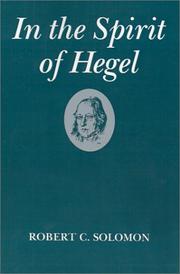 In the Spirit of HegelRecommended
by Robert C. Solomon
“Robert C. Solomon's In the Spirit of Hegel serves as a complementary resource, particularly for the ethics and practical reason sections preceding the Spirit chapter.”
by Roger Stern
“Roger Stern's Routledge Guidebook to Hegel's Phenomenology of Spirit (2001, second edition 2013) provides section-by-section one-line summaries and an interpretive framework that makes the text coherent before attempting close reading.”
 Phenomenology of SpiritRecommended
by Hegel
“The Partially Examined Life hosts Mark Linsenmayer, Seth Paskin, Wes Allenby, and Dylan Casey open a multi-part reading of Hegel's Phenomenology of Spirit sections 438–463, examining what Hegel means by 'spirit' as society's collective consciousness.”
More from The Partially Examined Life
We summarize every new episode. Want them in your inbox?
Ep. 402: Plato Talks Homer: Hippias Minor and Ion (Part Two)
PEL Presents NEM#262: Bruce Cockburn Expands Political/Spiritual Folk
PEL Presents PMP#232: Obsession (for Men?)
Ep. 402: Plato Talks Homer: Hippias Minor and Ion (Part One)
PEL Presents Closereads: Gilbert Ryle on Self-Knowledge (Part One)
Similar Episodes
Related episodes from other podcasts

The Vergecast
Sep 1
What the AI overlords get wrong about being alive

How I Built This
Aug 6
Advice Line: "Strategy Sessions"

Odd Lots
Apr 17
Planet Money Turned Everyday Annoyances Into an Economics Book

The Founders Podcast
Sep 28
#435 Mark Zuckerberg's Empire

All-In with Chamath, Jason, Sacks & Friedberg
Sep 26
Anthropic IPO at Risk, Meta's Muse Pop, Token Prices Fall, Open Source Gains Share, Alignment Fails
Explore Related Topics
This podcast is featured in Best Philosophy Podcasts (2026) — ranked and reviewed with AI summaries.
Read this week's Software Engineering Podcast Insights — cross-podcast analysis updated weekly.
You're clearly into The Partially Examined Life.
Every Monday, we deliver AI summaries of the latest episodes from The Partially Examined Life and 192+ other podcasts. Free for one show.
Start My Monday DigestNo credit card · Unsubscribe anytime