Ep. 385: Guest Graham Harman on Object vs. Continuum (Part Two)
Episode
61 min
Read time
3 min
Topics
Health & Wellness, Software Development, Psychology & Behavior
AI-Generated Summary
Key Takeaways
- ✓Skepticism's self-defeating structure: Any theory claiming mediated access to reality must already assume some direct access to motivate that claim. Hegel's move to "doubt the doubt" captures this: without assuming bodies, eyes, light, and causality as real, there is no basis for arguing that perception mediates reality. Skeptical frameworks undermine themselves by relying on the very phenomena they claim are unreliable.
- ✓Undermining vs. overmining as a diagnostic tool: Harman's framework identifies two default explanatory moves — reducing a thing to its components (undermining) or exhausting it through its effects and uses (overmining). Neither captures the object itself. Gatorade's chemical composition misses emergent properties; its functional uses are inexhaustible. Objects occupy a mezzanine level between these two forms of literal explanation, making complete knowledge structurally impossible.
- ✓Dual mining as scientific materialism's blind spot: Scientific materialism typically combines both failures simultaneously — positing fundamental particles (undermining) while claiming mathematical exhaustion of those particles (overmining). Harman calls this dual mining. Recognizing this pattern reveals why even the most rigorous scientific frameworks cannot fully capture the objects they describe, a structural limitation rather than a temporary gap in knowledge.
- ✓Continua vs. discrete objects in causation: Two discrete objects — Harman uses billiard balls — cannot make direct contact. They interact only through a continuous medium such as space. This means causal interaction requires both discrete objects and a continuum, neither alone is sufficient. The collision cannot be described without reference to a larger system, but that system need not extend to the entire universe.
- ✓Fictional and sensual objects are categorically distinct from real ones: All sensual objects, including perceptions that correspond to real things, are different objects from the real things they represent. Harman clarifies that object-oriented ontology is not a sorting exercise separating real perceptions from unreal ones. Rather, it establishes a structural rift between two object types. Fictional objects like Sherlock Holmes can become real in a limited sense when they develop objective, contestable properties exceeding any single interpretation.
What It Covers
Graham Harman joins the Partially Examined Life hosts for part two of a discussion on his book *Waves and Stones*, covering object-oriented ontology's core tension between discrete objects and continua, the limits of skepticism, how undermining and overmining fail to exhaust objects, and whether any direct access to reality is philosophically defensible.
Key Questions Answered
- •Skepticism's self-defeating structure: Any theory claiming mediated access to reality must already assume some direct access to motivate that claim. Hegel's move to "doubt the doubt" captures this: without assuming bodies, eyes, light, and causality as real, there is no basis for arguing that perception mediates reality. Skeptical frameworks undermine themselves by relying on the very phenomena they claim are unreliable.
- •Undermining vs. overmining as a diagnostic tool: Harman's framework identifies two default explanatory moves — reducing a thing to its components (undermining) or exhausting it through its effects and uses (overmining). Neither captures the object itself. Gatorade's chemical composition misses emergent properties; its functional uses are inexhaustible. Objects occupy a mezzanine level between these two forms of literal explanation, making complete knowledge structurally impossible.
- •Dual mining as scientific materialism's blind spot: Scientific materialism typically combines both failures simultaneously — positing fundamental particles (undermining) while claiming mathematical exhaustion of those particles (overmining). Harman calls this dual mining. Recognizing this pattern reveals why even the most rigorous scientific frameworks cannot fully capture the objects they describe, a structural limitation rather than a temporary gap in knowledge.
- •Continua vs. discrete objects in causation: Two discrete objects — Harman uses billiard balls — cannot make direct contact. They interact only through a continuous medium such as space. This means causal interaction requires both discrete objects and a continuum, neither alone is sufficient. The collision cannot be described without reference to a larger system, but that system need not extend to the entire universe.
- •Fictional and sensual objects are categorically distinct from real ones: All sensual objects, including perceptions that correspond to real things, are different objects from the real things they represent. Harman clarifies that object-oriented ontology is not a sorting exercise separating real perceptions from unreal ones. Rather, it establishes a structural rift between two object types. Fictional objects like Sherlock Holmes can become real in a limited sense when they develop objective, contestable properties exceeding any single interpretation.
- •Aristotle's physics-metaphysics split as a key interpretive move: Harman argues, against standard Aristotle commentary, that the *Physics* addresses the continuous while the *Metaphysics* addresses the discrete. This reframing places the continuous-discrete opposition at the center of Aristotle's philosophy. It also clarifies why Aristotle rejects pure flux: change requires persistent unities to change, making process-only ontologies incoherent without discrete substances as their substrate.
Notable Moment
Harman pushes back on the idea that mathematical objects can be fully known, citing Lakatos's *Proofs and Refutations* to argue that mathematical truth undergoes theory-change resembling scientific paradigm shifts. This challenges the common assumption that a simple geometric object like a three-inch square could ever be completely and permanently exhausted by description.
Episode Transcript
I'm US transportation secretary Sean Duffy. We all get distracted when we drive, but how we handle these distractions can be a matter of life or death. Please put your phones on silent and take a mental note to focus on driving. Paid for by NHTSA. Please for the love of everything good in this world, stop. With Mint, you can get premium wireless for just $15 a month. Of course, if you enjoy overpaying no judgments, but that's weird. Okay. One judgment. Anyway, give it a try at mintmobile.com/switch. Upfront payment of $45 per three month plan, equivalent to $15 per month required. Intro rate first three months only, then full price plan options available. Taxes and fees extra. See full terms at mintmobile.com. You're listening to the Partially Examined Life. This is episode 385 part two discussing Grand Harmon's waves and stones with Graham himself as well as whatever was issues were hanging on us from the object oriented ontology, a new theory of everything that we discussed in our last episode. Wes, you want to start us off with some talk about the thing in itself? Sure. I did used to get a lot of flack for being a Kantian on this podcast. Now I have to say I I'm more sympathetic to the idea that we have direct access to reality or at least to the reality that matters in part because of Hegel, in part because of Aristotle. And really, I don't know that I ever considered myself a Kantian. I just thought he he was an important point of departure for understanding everything that came after. And in in fact, in a way, I think the central preoccupation of epistemology since Kant on both the analytic and the continental side of things is whether we can make sense of things in themselves. And if so, how? The criticisms of that idea started immediately with people like Jacobi and Schultz. And one of the important criticisms was that well, the whole model of the thing in itself assumes a kind of causal interaction between the thing in itself and the mind. And causality is one of the things that was supposed to be reduced to the level of of a phenomenon. It's supposed to become something of another thing that was like a secondary quality along with space and time and all the other categories. And that, I think, that kind of critique can be expanded. And I in a way, I thought it was in Hegel, and I and I think it also has a legacy in, say, Wittgenstein's uncertainty and then Moore's, you know, Moore in propositions. And the idea is that there's something importantly self limiting about skepticism. And if we don't like that word, we could just say about any theory that suggests that we have a have mediated access to reality. And that's because our intuitions about skepticism are predicated about observations about phenomena, about things that are supposed to …
Get the full transcript (12,318 words) + summary by email — free
One-time email with the complete transcript and AI summary of this episode. No account needed.
One email, no spam. We’ll also show you what SignalCast does.

You just read a 3-minute summary of a 58-minute episode.
Get The Partially Examined Life summarized like this every Monday — plus up to 2 more podcasts, free.
Pick Your Podcasts — FreeKeep Reading
More from The Partially Examined Life
Ep. 402: Plato Talks Homer: Hippias Minor and Ion (Part Two)
Oct 19 · 55 min

WorkLife with Adam Grant
How to survive a life quake with Chip Conley
Sep 22
More from The Partially Examined Life
PEL Presents NEM#262: Bruce Cockburn Expands Political/Spiritual Folk
Oct 18 · 66 min
WorkLife with Adam Grant
Bryce Dallas Howard on the realities of being handed a head start
Sep 15
Books, tools, and gear mentioned in this episode
SignalCast may earn commission on purchases via these links. As an Amazon Associate, SignalCast earns from qualifying purchases.
Books
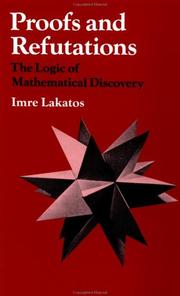
by Imre Lakatos
“Harman pushes back on the idea that mathematical objects can be fully known, citing Lakatos's *Proofs and Refutations* to argue that mathematical truth undergoes theory-change resembling scientific paradigm shifts.”
- Waves and StonesBy guest
by Graham Harman
“Graham Harman joins the Partially Examined Life hosts for part two of a discussion on his book *Waves and Stones*, covering object-oriented ontology's core tension between discrete objects and continua”
More from The Partially Examined Life
We summarize every new episode. Want them in your inbox?
Ep. 402: Plato Talks Homer: Hippias Minor and Ion (Part Two)
PEL Presents NEM#262: Bruce Cockburn Expands Political/Spiritual Folk
PEL Presents PMP#232: Obsession (for Men?)
Ep. 402: Plato Talks Homer: Hippias Minor and Ion (Part One)
PEL Presents Closereads: Gilbert Ryle on Self-Knowledge (Part One)
Similar Episodes
Related episodes from other podcasts

WorkLife with Adam Grant
Sep 22
How to survive a life quake with Chip Conley
WorkLife with Adam Grant
Sep 15
Bryce Dallas Howard on the realities of being handed a head start

How I Built This
Aug 6
Advice Line: "Strategy Sessions"

Masters of Scale
Jul 23
Author Jim Collins on unlocking your potential

All-In with Chamath, Jason, Sacks & Friedberg
Jul 20
Mark Cuban on the AI Bubble: Who Actually Gets Wiped Out?
Explore Related Topics
This podcast is featured in Best Philosophy Podcasts (2026) — ranked and reviewed with AI summaries.
Read this week's Health & Longevity Podcast Insights — cross-podcast analysis updated weekly.
You're clearly into The Partially Examined Life.
Every Monday, we deliver AI summaries of the latest episodes from The Partially Examined Life and 192+ other podcasts. Free for one show.
Start My Monday DigestNo credit card · Unsubscribe anytime