Ep. 379: Egyptian Philosophy with Chike Jeffers (Part Two)
Episode
71 min
Read time
2 min
Topics
Personal Finance, Design & UX, Software Development
AI-Generated Summary
Key Takeaways
- ✓Strategic Silence as Virtue: Ancient Egyptian wisdom texts advocate silence over speech in disputes regardless of opponent's social status. The principle holds that remaining silent allows adversaries to condemn themselves through their own words, while premature speech without complete knowledge and self-control leads to defeat in legal and social conflicts.
- ✓Meritocracy Through Wealthy Bureaucracy: The Instruction to King Merikare argues officials should receive substantial compensation to prevent corruption. Poor officials accept bribes because they lack resources, compromising equal justice. Enriching the bureaucracy ensures impartial law enforcement where wealth does not determine legal outcomes, creating functional meritocracy within hierarchical society.
- ✓Official Corruption Multiplies Wrongdoing: The Eloquent Peasant distinguishes ordinary crime from governmental corruption. Individual crimes exist within a justice system designed to address them. When officials themselves become corrupt, the entire ethical framework collapses because those meant to enforce justice instead model wrongdoing, setting precedent that nobles can exploit the poor without consequence.
- ✓Legacy as Earthly Immortality: Egyptian texts emphasize reputation and memorial as forms of eternal life beyond physical death. How successors remember and continue one's work determines true happiness. Scheming for immediate gain destroys long-term legacy. The concept of maat connects proper living to enduring positive remembrance across generations.
- ✓Psychological Wholeness Through Ba Dialogue: The Man and His Ba text represents internal psychological fragmentation during depression as conversation between self and soul. Suicide emerges not from suffering itself but from narcissistic injury and desire to preserve an idealized self-image. Resolution comes through mourning, accepting life's limitations, and integrating conflicting parts into wholeness.
What It Covers
The Partially Examined Life examines ancient Egyptian philosophical texts with guest Chike Jeffers, analyzing instructional literature like Ptahotep's teachings, the Eloquent Peasant tale, and the Dialogue of a Man and His Ba.
Key Questions Answered
- •Strategic Silence as Virtue: Ancient Egyptian wisdom texts advocate silence over speech in disputes regardless of opponent's social status. The principle holds that remaining silent allows adversaries to condemn themselves through their own words, while premature speech without complete knowledge and self-control leads to defeat in legal and social conflicts.
- •Meritocracy Through Wealthy Bureaucracy: The Instruction to King Merikare argues officials should receive substantial compensation to prevent corruption. Poor officials accept bribes because they lack resources, compromising equal justice. Enriching the bureaucracy ensures impartial law enforcement where wealth does not determine legal outcomes, creating functional meritocracy within hierarchical society.
- •Official Corruption Multiplies Wrongdoing: The Eloquent Peasant distinguishes ordinary crime from governmental corruption. Individual crimes exist within a justice system designed to address them. When officials themselves become corrupt, the entire ethical framework collapses because those meant to enforce justice instead model wrongdoing, setting precedent that nobles can exploit the poor without consequence.
- •Legacy as Earthly Immortality: Egyptian texts emphasize reputation and memorial as forms of eternal life beyond physical death. How successors remember and continue one's work determines true happiness. Scheming for immediate gain destroys long-term legacy. The concept of maat connects proper living to enduring positive remembrance across generations.
- •Psychological Wholeness Through Ba Dialogue: The Man and His Ba text represents internal psychological fragmentation during depression as conversation between self and soul. Suicide emerges not from suffering itself but from narcissistic injury and desire to preserve an idealized self-image. Resolution comes through mourning, accepting life's limitations, and integrating conflicting parts into wholeness.
Notable Moment
The king orders officials to withhold justice from an eloquent peasant solely to hear more beautiful speeches, even having him beaten between petitions, revealing how arbitrary power operates even when ultimately delivering justice, raising questions about accountability.
Episode Transcript
You're listening to the Partially Examined Life. This is episode 379 part two. We've got guest, Chike Jeffers, co author of the Africana section of the History Philosophy Without Any Gaps podcast, who is here. We're talking about the instructional literature now, kings instructing their sons, viziers instructing the king, instructing their sons, something like that. And we're talking about the older of the two that we considered here the instruction of Tahotep. Ptahotep. You just you just told me You just instructed me in how to say it, and now look. Yes. We were commenting how it sort of starts in a more modest way than you would think. You you should look for knowledge. It might be hidden among the the the poorest people, the most the thing the people that you would find most foolish. Wisdom could be hiding anywhere, so don't be so, snooty about it and thinking maybe this pointed toward some sort of not egalitarianism, but at least a reaction to probably what was a very intense class division. Well, so the section right after that, he is does does sort of lay that this down. Look. Okay. If if you meet a disputant into action, a powerful man superior to you, how do you deal with that? Well, maybe just let his own words condemn him. Whereas if you meet somebody who's on your level Same thing. Well, it does yeah. If you meet someone who's not on who's lower than you, kind of the same. I mean, there are nuance distinctions. Silence is the virtue. Yeah. Yeah. The Nuance distinctions between these different sections. But, yes, the virtue of silence, which is a strange thing to say if you're giving advice on how to be a powerful rhetorician. It's like, better to be silent and be thought a fool than to open your mouth and prove it. Mhmm. But I think in this context, the gist of it is particularly if you're a king or a magistrate, right, is that silence here You're not a king or a magistrate. You're being judged by a magistrate. Right? You're one of the disputants whose dispute is being judged. Interesting. Okay. I think I didn't catch that. I didn't understand that. But I think the point is still the same that Mhmm. Basically, speech can be your undoing if you are not wholly and completely in control of your faculties and the facts and all that sort of thing. So if you're in a dispute with somebody, just be quiet and they'll fuck it up eventually. Just let them make the mistake, essentially. But there's a sense in which that's also a good leadership principle. There's a wonderful scene in one of Kurosawa's movies, which is the one where he Is it Ron? Is that the one where he The double, the old king is sick and they bring in the guy who looks like him to just pretend to be him? The King Lear …
Get the full transcript (13,325 words) + summary by email — free
One-time email with the complete transcript and AI summary of this episode. No account needed.
One email, no spam. We’ll also show you what SignalCast does.

You just read a 3-minute summary of a 68-minute episode.
Get The Partially Examined Life summarized like this every Monday — plus up to 2 more podcasts, free.
Pick Your Podcasts — FreeKeep Reading
More from The Partially Examined Life
Ep. 402: Plato Talks Homer: Hippias Minor and Ion (Part Two)
Oct 19 · 55 min

The Art of Manliness
Ecclesiastes on Enjoying Our Weirdly Unsatisfying Lives
Feb 10
More from The Partially Examined Life
PEL Presents NEM#262: Bruce Cockburn Expands Political/Spiritual Folk
Oct 18 · 66 min

10% Happier with Dan Harris
A Stoic Mantra For Your Sh*ttiest Moments (And Other Ancient Wisdom That Holds Up) | Jonathan Haidt
Oct 19
Books, tools, and gear mentioned in this episode
SignalCast may earn commission on purchases via these links. As an Amazon Associate, SignalCast earns from qualifying purchases.
Books

“analyzing instructional literature like Ptahotep's teachings, the Eloquent Peasant tale, and the Dialogue of a Man and His Ba”
“The Instruction to King Merikare argues officials should receive substantial compensation to prevent corruption.”
“analyzing instructional literature like Ptahotep's teachings, the Eloquent Peasant tale, and the Dialogue of a Man and His Ba”
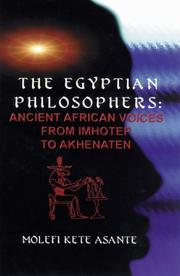
“analyzing instructional literature like Ptahotep's teachings”
More from The Partially Examined Life
We summarize every new episode. Want them in your inbox?
Ep. 402: Plato Talks Homer: Hippias Minor and Ion (Part Two)
PEL Presents NEM#262: Bruce Cockburn Expands Political/Spiritual Folk
PEL Presents PMP#232: Obsession (for Men?)
Ep. 402: Plato Talks Homer: Hippias Minor and Ion (Part One)
PEL Presents Closereads: Gilbert Ryle on Self-Knowledge (Part One)
Similar Episodes
Related episodes from other podcasts

The Art of Manliness
Feb 10
Ecclesiastes on Enjoying Our Weirdly Unsatisfying Lives

10% Happier with Dan Harris
Oct 19
A Stoic Mantra For Your Sh*ttiest Moments (And Other Ancient Wisdom That Holds Up) | Jonathan Haidt

The Joe Rogan Experience
Oct 7
#2562 - Dan McClellan

The Tim Ferriss Show
Oct 2
#885: How to Simplify Your Life — Tips from Oliver Burkeman, Chip Conley, Elizabeth Gilbert, and More

Pivot
Sep 4
Apple Bows to Trump, Bond Market Sounds the Alarm, and Kalshi Bans George Santos
Explore Related Topics
This podcast is featured in Best Philosophy Podcasts (2026) — ranked and reviewed with AI summaries.
Read this week's Software Engineering Podcast Insights — cross-podcast analysis updated weekly.
You're clearly into The Partially Examined Life.
Every Monday, we deliver AI summaries of the latest episodes from The Partially Examined Life and 192+ other podcasts. Free for one show.
Start My Monday DigestNo credit card · Unsubscribe anytime