Ep. 378: Aquinas on God and Mind (Part One)
Episode
48 min
Read time
2 min
Topics
Productivity, Crypto & Web3, Psychology & Behavior
AI-Generated Summary
Key Takeaways
- ✓Ontological Argument Rejection: Aquinas refutes Anselm's claim that God's existence is self-evident from definition alone. He argues that defining God as "that which nothing greater can be thought" requires proving something exists before drawing conclusions from its definition, avoiding circular reasoning.
- ✓Cosmological Proof Method: God's existence can be demonstrated through observable effects in nature, similar to scientific reasoning from phenomena to underlying causes. This approach accepts imperfect knowledge of God rather than demanding complete comprehension before affirming existence, making proof accessible through empirical observation.
- ✓Incommensurability Problem: The objection that finite effects cannot reveal an infinite cause parallels mathematical incommensurability between rational and irrational numbers. Aquinas resolves this by distinguishing between proving existence versus achieving comprehensive knowledge, arguing effects suffice for the former without requiring the latter.
- ✓Self-Evident Truth Distinction: While general truth is self-evident through the law of non-contradiction, the existence of a first truth or ultimate cause is not. Humans possess an implicit awareness of God through the universal desire for happiness, but rational investigation remains necessary to move from phenomenon to essence.
What It Covers
The Partially Examined Life examines Thomas Aquinas' Summa Theologica, focusing on his arguments for God's existence, the ontological versus cosmological approaches, negative theology, and how humans can know divine reality through effects rather than essence.
Key Questions Answered
- •Ontological Argument Rejection: Aquinas refutes Anselm's claim that God's existence is self-evident from definition alone. He argues that defining God as "that which nothing greater can be thought" requires proving something exists before drawing conclusions from its definition, avoiding circular reasoning.
- •Cosmological Proof Method: God's existence can be demonstrated through observable effects in nature, similar to scientific reasoning from phenomena to underlying causes. This approach accepts imperfect knowledge of God rather than demanding complete comprehension before affirming existence, making proof accessible through empirical observation.
- •Incommensurability Problem: The objection that finite effects cannot reveal an infinite cause parallels mathematical incommensurability between rational and irrational numbers. Aquinas resolves this by distinguishing between proving existence versus achieving comprehensive knowledge, arguing effects suffice for the former without requiring the latter.
- •Self-Evident Truth Distinction: While general truth is self-evident through the law of non-contradiction, the existence of a first truth or ultimate cause is not. Humans possess an implicit awareness of God through the universal desire for happiness, but rational investigation remains necessary to move from phenomenon to essence.
Notable Moment
The hosts debate whether the argument from change requires an unmoved mover or whether self-contained systems with internal energy differences could generate change without external triggers, challenging Aristotelian assumptions about potentiality requiring external actualization to become reality.
Episode Transcript
This podcast is sponsored by Talkspace. Last year, I went through many different life changes. I needed to take a pause and examine how I was feeling in the inside to better show up for the ones who need me to be my best version of myself. When you're navigating life's changes, Talkspace can help. Talkspace is the number one rated online therapy, bringing you professional support from licensed therapists and psychiatry providers that you can access anytime, anywhere. Living a busy life, navigating a long distance relationship, becoming a first step father, Talkspace made all of those journeys possible. I could speak with my therapist in the office. I could speak with my therapist in the comfort of my home. I was never alone. Talkspace works with most major insurers, and most insured members have a $0 co pay. No insurance. No problem. Now get $80 off your first month with promo code space 80 when you go to talkspace.com. Matched with a licensed therapist today at talkspace.com. Save $80 with code space 80 at talkspace.com. Picture this. You're on a date, and then bad breath happens. Confidence, gone. Here's the truth. Most gums and mints are just bad breath band aids, but not Zellman's minty mouth. The functional breath freshener you swallow, tiny dual action capsules with mint on the outside, parsley seed oil inside, clinically tested to fight the toughest offenders, even garlic and onions. It's only available online. Go to zellman's.com, zelmins. Zelmans.com, code fresh for 15% off. You're listening to the partially examined life, a podcast by some guys who at one point set on doing philosophy for a living, but then thought better of it. Our question for episode three seventy eight is something like, how does humanity fit into the universe? And we read selections mostly from Thomas Aquinas' Summa Theologica written around December as presented in Oxford's Thomas Aquinas selected philosophical writings compiled by Timothy McDermott in 1993. For more information about the text and the podcast, please see partiallyexaminedlife.com. This is Mark Linson Meyer, just a fool saying stuff in my heart in Madison, Wisconsin. This is Seth Paschen, Compelled by Reason's Violence in Austin, Texas. This is Wes Ollen trying to make my nouns adequate to God in Cambridge, Massachusetts. This is Dylan Casey being transformed by love rather than merely assimilated by knowledge in Madison, Wisconsin. So this is one of the most influential, important philosophers ever in your top 20 overall philosophers, and yet many years it took us to we we've done some of this before. In fact, I thought maybe we had done an arguments for the existence of god episode, and I thought maybe we would exclude that from here. But instead, we're leading off with that. That there was I think we did, like, two pages of him before, and at least we're getting the context now. This is a very interesting presentation. Right? That some of it is from the the summa, some …
Get the full transcript (9,162 words) + summary by email — free
One-time email with the complete transcript and AI summary of this episode. No account needed.
One email, no spam. We’ll also show you what SignalCast does.

You just read a 3-minute summary of a 45-minute episode.
Get The Partially Examined Life summarized like this every Monday — plus up to 2 more podcasts, free.
Pick Your Podcasts — FreeKeep Reading
More from The Partially Examined Life
PEL Presents PvI#124: Navel Evaluation (Our Season 5 Finale)
Sep 12 · 53 min

10% Happier with Dan Harris
The Science Of Building The Life You Want | Arthur Brooks
Sep 7
More from The Partially Examined Life
PEL Presents NEM#260: Jacqui Hunt (Single Gun Theory) Now Master of Her Synth Domain
Sep 11 · 64 min

Feel Better, Live More
How To Live Longer and Better: The Secret to Super Ageing with Dr Eric Topol #626
Feb 18
Books, tools, and gear mentioned in this episode
SignalCast may earn commission on purchases via these links. As an Amazon Associate, SignalCast earns from qualifying purchases.
Books
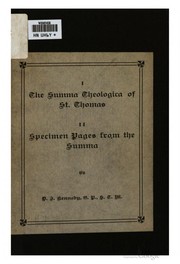 Summa TheologicaBy guest
by Thomas Aquinas
“The Partially Examined Life examines Thomas Aquinas' Summa Theologica, focusing on his arguments for God's existence, the ontological versus cosmological approaches, negative theology, and how humans can know divine reality through effects rather than essence.”
Tools
More from The Partially Examined Life
We summarize every new episode. Want them in your inbox?
PEL Presents PvI#124: Navel Evaluation (Our Season 5 Finale)
PEL Presents NEM#260: Jacqui Hunt (Single Gun Theory) Now Master of Her Synth Domain
Ep. 399: Dan Dennett's Model of Mind (Part Two)
PEL Presents Closereads: Donald Davidson on Self-Knowledge (Part One)
PEL Presents PMP#229: What's Spider-Man Up To?
Similar Episodes
Related episodes from other podcasts

10% Happier with Dan Harris
Sep 7
The Science Of Building The Life You Want | Arthur Brooks

Feel Better, Live More
Feb 18
How To Live Longer and Better: The Secret to Super Ageing with Dr Eric Topol #626

The Founders Podcast
Jan 25
#410 Excellent Advice for Living

Stacking Benjamins
Jan 23
How to Afford Life Without Living Like a Monk (SB1794)

This Week in Startups
Jan 16
Avoiding buzzwords and marketing-speak (feat. Thomas McInerney) | E2236
Explore Related Topics
This podcast is featured in Best Philosophy Podcasts (2026) — ranked and reviewed with AI summaries.
You're clearly into The Partially Examined Life.
Every Monday, we deliver AI summaries of the latest episodes from The Partially Examined Life and 192+ other podcasts. Free for one show.
Start My Monday DigestNo credit card · Unsubscribe anytime