Ep. 371: Christine Korsgaard on Normativity (Part Two)
Episode
55 min
Read time
2 min
Topics
Software Development, Psychology & Behavior, Philosophy & Wisdom
AI-Generated Summary
Key Takeaways
- ✓Autonomy as Self-Legislation: Freedom requires following laws we create ourselves rather than external impulses. The will must be ruled by self-generated principles to avoid heteronomy, where objects or external forces control our actions, making autonomy the only path to genuine freedom.
- ✓Practical Identity Framework: Our obligations stem from identities we cannot abandon without psychological annihilation. When actions violate fundamental self-conceptions like being a parent or professional, we lose integrity and purpose, making certain obligations unconditional because identity loss equals practical death.
- ✓Private Language Argument Application: Reasons function like meanings in requiring public accessibility. Just as private sensations cannot create language without communicability criteria, individual reasons must be shareable to count as genuine reasons, making moral obligations inherently social rather than derivable from self-interest.
- ✓Universal Human Identity Foundation: Local identities like nationality or profession must be grounded in shared humanity to have moral force. The categorical imperative works because recognizing our own humanity as valuable requires recognizing the same value in others, creating reciprocal obligations.
What It Covers
The Partially Examined Life concludes their discussion of Christine Korsgaard's The Sources of Normativity, examining how Kant's concept of autonomy grounds moral obligations through practical identity and the inherently public nature of reasons.
Key Questions Answered
- •Autonomy as Self-Legislation: Freedom requires following laws we create ourselves rather than external impulses. The will must be ruled by self-generated principles to avoid heteronomy, where objects or external forces control our actions, making autonomy the only path to genuine freedom.
- •Practical Identity Framework: Our obligations stem from identities we cannot abandon without psychological annihilation. When actions violate fundamental self-conceptions like being a parent or professional, we lose integrity and purpose, making certain obligations unconditional because identity loss equals practical death.
- •Private Language Argument Application: Reasons function like meanings in requiring public accessibility. Just as private sensations cannot create language without communicability criteria, individual reasons must be shareable to count as genuine reasons, making moral obligations inherently social rather than derivable from self-interest.
- •Universal Human Identity Foundation: Local identities like nationality or profession must be grounded in shared humanity to have moral force. The categorical imperative works because recognizing our own humanity as valuable requires recognizing the same value in others, creating reciprocal obligations.
Notable Moment
Korsgaard explains how simply calling someone's name creates an obligation that intrudes on their consciousness, demonstrating that we occupy a shared linguistic space where others' reasons have the same standing as our own desires, requiring deliberate consideration or psychological cost.
Episode Transcript
Ever see an idea so clearly in your head, but struggle to make it real? We've all been there. With Wix, you can build a website for your business just the way you pictured it. Get the best of both worlds with AI and drag and drop tools all in one place. Stay Stay in your creative flow and use AI when you want, how you want. Create a website your way. Try it out at wix.com. Picture this. You're on a date and then bad breath happens. Confidence gone. Here's the truth. Most gums and mints are just bad breath band aids, but not Zelleman's minty mouth. The functional breath freshener you swallow, tiny dual action capsules with mint on the outside, parsley seed oil inside, clinically tested to fight the toughest offenders, clinically tested to fight the toughest offenders, even garlic and onions. It's only available online. Go to zelmins.com, zelmins, zelmans.com, code fresh for 15% off. You're listening to the Partially Examined Life episode 371 part two, finishing up our treatment of Christine Korsgaard's The Sources of Normativity. We're in the maybe three point two point four, so we're still in the third lecture there, around page 99 where she's explicating Kant and trying to really make Kant you know, it's like she's teaching us as we're undergrads, and she's trying to teach us basic Kant and not just give us here's the formula to remember, but I want you to understand, like, why this is actually true. I wanna really pitch this to you in a very direct way. And so if I want to make decisions at all and make them in a way that seems free to me, then I need to have my will be ruled by a law. Any law, but just a law. So this seems like a very peculiar thing. It just means I need to have reasons. Someone's gotta be the ruler. Right? Otherwise, you're just just reacting It's either gonna be heteronomy. Right? Yep. It's gonna be Mhmm. Objects ruling you, you responding just by impulse to objects, or it's gonna be a ruler. It's gonna be a king or this or that. So we have to find somewhere where the buck stops. The ruler is where the buck stops. The regrowth stops. And there's only one way to do that without ending up enslaved to some external principle, and that's to make use of a law that we produce ourselves. And that's what autonomy means. Right? So it's nomos is law, and the autonomy just means the law comes from us. And it's a it's, yeah, it's a little clever workaround. It's like a little loophole in the system where we think we might, okay, maybe we can be free after all. It's not that we can be free of all constraints. Of course, we can't. We can't be free of causal laws And reasoning, of course, we're kind of bound to reasons if we're reasoning. So …
Get the full transcript (10,329 words) + summary by email — free
One-time email with the complete transcript and AI summary of this episode. No account needed.
One email, no spam. We’ll also show you what SignalCast does.

You just read a 3-minute summary of a 52-minute episode.
Get The Partially Examined Life summarized like this every Monday — plus up to 2 more podcasts, free.
Pick Your Podcasts — FreeKeep Reading
More from The Partially Examined Life
PEL Presents PvI#124: Navel Evaluation (Our Season 5 Finale)
Sep 12 · 53 min

The School of Greatness
Why Your Retirement Plan Is Wasting Your Life | Bill Perkins
Jun 5
More from The Partially Examined Life
PEL Presents NEM#260: Jacqui Hunt (Single Gun Theory) Now Master of Her Synth Domain
Sep 11 · 64 min

Modern Wisdom
#1062 - Dave Evans - It’s time to rethink your entire life plan
Feb 21
Books, tools, and gear mentioned in this episode
SignalCast may earn commission on purchases via these links. As an Amazon Associate, SignalCast earns from qualifying purchases.
Books
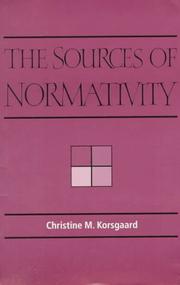 The Sources of NormativityBy guest
by Christine Korsgaard
“The Partially Examined Life concludes their discussion of Christine Korsgaard's The Sources of Normativity, examining how Kant's concept of autonomy grounds moral obligations through practical identity and the inherently public nature of reasons.”
More from The Partially Examined Life
We summarize every new episode. Want them in your inbox?
PEL Presents PvI#124: Navel Evaluation (Our Season 5 Finale)
PEL Presents NEM#260: Jacqui Hunt (Single Gun Theory) Now Master of Her Synth Domain
Ep. 399: Dan Dennett's Model of Mind (Part Two)
PEL Presents Closereads: Donald Davidson on Self-Knowledge (Part One)
PEL Presents PMP#229: What's Spider-Man Up To?
Similar Episodes
Related episodes from other podcasts

The School of Greatness
Jun 5
Why Your Retirement Plan Is Wasting Your Life | Bill Perkins

Modern Wisdom
Feb 21
#1062 - Dave Evans - It’s time to rethink your entire life plan

The Art of Manliness
Feb 10
Ecclesiastes on Enjoying Our Weirdly Unsatisfying Lives

Found My Fitness
Feb 9
#109 How To Boost NAD Levels To Fight Inflammation, Improve Recovery, and Slow Aging | Dr. Charles Brenner

HBR IdeaCast
Feb 3
The Cognitive Science Behind Sudden Change
Explore Related Topics
This podcast is featured in Best Philosophy Podcasts (2026) — ranked and reviewed with AI summaries.
Read this week's Software Engineering Podcast Insights — cross-podcast analysis updated weekly.
You're clearly into The Partially Examined Life.
Every Monday, we deliver AI summaries of the latest episodes from The Partially Examined Life and 192+ other podcasts. Free for one show.
Start My Monday DigestNo credit card · Unsubscribe anytime