Ep. 369: Philippa Foot's Naturalistic Ethics (Part Two)
Episode
47 min
Read time
2 min
Topics
Software Development, Psychology & Behavior, Philosophy & Wisdom
AI-Generated Summary
Key Takeaways
- ✓Species Norm Framework: Foot argues moral goodness in humans follows the same evaluative structure as biological assessments of plants and animals, where defects are measured against characteristic life cycle patterns and functional capacities of the species.
- ✓Practical Rationality Distinction: Humans uniquely comprehend ends and means through language, enabling debate about choices using pros and cons. This capacity for linguistic deliberation about action separates human rationality from animal appetitive inclinations, even when animals display decision-making behavior.
- ✓Promise Keeping as Social Foundation: Cooperative institutions like promise keeping constitute essential features of human social life. Foot maintains these practices are not merely useful conventions but necessary conditions for fully human existence, making their violation a species-level defect.
- ✓Final Shoulds Override Desires: When all considerations are weighed, the resulting all things considered should creates rational obligation independent of desire. Acting against this final should indicates defective practical rationality, similar to how malformed roots indicate plant defects.
What It Covers
The Partially Examined Life examines Philippa Foot's Natural Goodness, exploring her naturalistic ethics framework that grounds human morality in species norms analogous to evaluating plants and animals, while addressing practical rationality's role.
Key Questions Answered
- •Species Norm Framework: Foot argues moral goodness in humans follows the same evaluative structure as biological assessments of plants and animals, where defects are measured against characteristic life cycle patterns and functional capacities of the species.
- •Practical Rationality Distinction: Humans uniquely comprehend ends and means through language, enabling debate about choices using pros and cons. This capacity for linguistic deliberation about action separates human rationality from animal appetitive inclinations, even when animals display decision-making behavior.
- •Promise Keeping as Social Foundation: Cooperative institutions like promise keeping constitute essential features of human social life. Foot maintains these practices are not merely useful conventions but necessary conditions for fully human existence, making their violation a species-level defect.
- •Final Shoulds Override Desires: When all considerations are weighed, the resulting all things considered should creates rational obligation independent of desire. Acting against this final should indicates defective practical rationality, similar to how malformed roots indicate plant defects.
Notable Moment
The anthropologist example challenges utilitarian thinking: refusing to photograph a sleeping guide despite no consequences demonstrates that promise keeping holds intrinsic value beyond utility calculations, revealing how character dispositions matter independently of outcomes.
Episode Transcript
Picture this. You're on a date, and then bad breath happens. Confidence gone. Here's the truth. Most gums and mints are just bad breath band aids, but not Zelleman's minty mouth. The functional breath freshener you swallow, tiny dual action capsules with mint on the outside, parsley seed oil inside, clinically tested to fight the toughest offenders, even garlic and onions. It's only available online. Go to zellman's.com, zelmins, zellman's.com, code fresh for 15% off. Okay. Only 10 more presents to wrap. You're almost at the finish line. But first there. The last one. Enjoy a Coca Cola for a pause that refreshes. Today's episode is brought to you by IDOU. For a limited time, IDOU is offering our listeners 15% off-site wide. Go to idou.com/pel. You're listening to the Partially Examined Life episode 369, part two. We've been discussing a Phillip Foote's book, Natural Goodness, and we've given a lot of overview. I think we wanna dive more and more into the actual text and giving quotes and things and not just taking our word for the fact that some of this is confusing. So I think we're still in chapter one here, just about 11 pages in. So I think the next, she's gonna say that, you know, as we've said, goodness has to be built into practical rationality from the ground up. And she'll make the claim on pages 14 to 15 that no one can act with full practical rationality in pursuit of a bad end even if they do it really well. Right? Even if it's done, quote, unquote, rationally, like I said, with the knife being good at robbing someone, for instance, and pulling all that off perfectly. So morality and this is where she says she agrees with Kant. Morality is concerned specifically with goodness of the will, but she wants to ground that in essential features of a specifically human life. And that's what's gonna lead us to this analogy with plants and animals where we can talk about rationality or the will as a a characteristic of human beings that we can treat on analogy to, say, roots in a plant, and we can say whether it's functioning properly or not on that analogy. Right. So even though Kant takes his his first step, that only morality all always has to come from a goodwill. The the goodwill is the defining character. I think we should take goodwill here in more of an Aristotelian sense, a well functioning will. What does that mean for a human being? And she does eventually get in chapter five and further, you know, into bringing forward the kind of arguments that we should be all for getting into more of the meat of doing moral theorizing as opposed to metaethics, which I think is what our focus is here. That if you are able to resist temptation, if you're focused according to right? She asked these questions like, what would for Aristotle, a good will …
Get the full transcript (8,438 words) + summary by email — free
One-time email with the complete transcript and AI summary of this episode. No account needed.
One email, no spam. We’ll also show you what SignalCast does.

You just read a 3-minute summary of a 44-minute episode.
Get The Partially Examined Life summarized like this every Monday — plus up to 2 more podcasts, free.
Pick Your Podcasts — FreeKeep Reading
More from The Partially Examined Life
PEL Presents PvI#126: Waiting for Cluckman w/ Anthony LeBlanc
Oct 23 · 50 min

In Our Time
Philippa Foot
Jun 13
More from The Partially Examined Life
Ep. 402: Plato Talks Homer: Hippias Minor and Ion (Part Two)
Oct 19 · 55 min

David Senra
Building the Streetwear Empire Kith | Ronnie Fieg
Sep 27
Books, tools, and gear mentioned in this episode
SignalCast may earn commission on purchases via these links. As an Amazon Associate, SignalCast earns from qualifying purchases.
Books
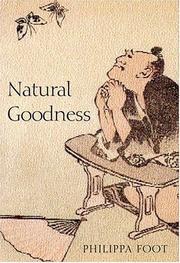 Natural GoodnessBy guest
by Philippa Foot
“The Partially Examined Life examines Philippa Foot's Natural Goodness, exploring her naturalistic ethics framework that grounds human morality in species norms analogous to evaluating plants and animals”
Products
More from The Partially Examined Life
We summarize every new episode. Want them in your inbox?
PEL Presents PvI#126: Waiting for Cluckman w/ Anthony LeBlanc
Ep. 402: Plato Talks Homer: Hippias Minor and Ion (Part Two)
PEL Presents NEM#262: Bruce Cockburn Expands Political/Spiritual Folk
PEL Presents PMP#232: Obsession (for Men?)
Ep. 402: Plato Talks Homer: Hippias Minor and Ion (Part One)
Similar Episodes
Related episodes from other podcasts

In Our Time
Jun 13
Philippa Foot

David Senra
Sep 27
Building the Streetwear Empire Kith | Ronnie Fieg

10% Happier with Dan Harris
Sep 14
What's Worth Living For? | Dr. Atul Gawande
10% Happier with Dan Harris
Aug 21
The Evidence for Aliens, the Afterlife, Bigfoot, Sea Monsters, and More | Miguel Sancho
10% Happier with Dan Harris
Aug 19
You Can Stop Fixing Yourself: Buddhist Advice on Boundaries, Rituals, and Dropping Your Self-Aggression | Susan Piver
Explore Related Topics
This podcast is featured in Best Philosophy Podcasts (2026) — ranked and reviewed with AI summaries.
Read this week's Software Engineering Podcast Insights — cross-podcast analysis updated weekly.
You're clearly into The Partially Examined Life.
Every Monday, we deliver AI summaries of the latest episodes from The Partially Examined Life and 192+ other podcasts. Free for one show.
Start My Monday DigestNo credit card · Unsubscribe anytime