How To Force Yourself To Be Consistent And Do Hard Things
Episode
18 min
Read time
2 min
Topics
Health & Wellness, Relationships, Software Development
AI-Generated Summary
Key Takeaways
- ✓Motivation vs. Consistency: Motivation functions like a sugar rush — brief and unpredictable — while consistency operates as a permanent system. Planning daily action around the assumption that motivation will be absent, rather than present, produces more reliable long-term results across any goal.
- ✓100-Day Single-Habit Rule: Choose exactly one small, repeatable habit and commit to it for 100 consecutive days. Attempting multiple simultaneous changes shocks the system and triggers subconscious resistance. One anchor habit — waking early, exercising, eating well — naturally generates additional positive behaviors without deliberate effort.
- ✓Action Precedes Motivation: Psychologists find motivation follows action, not the other way around. Starting movement — even reluctantly — triggers endorphins and early wins that generate further drive. The first few reps or calls are hardest; momentum builds automatically once initial resistance is overcome through action.
- ✓Miss-One-Not-Two Rule (James Clear): Missing a single day is acceptable and expected. Missing two consecutive days begins forming a new habit of non-compliance. Track progress visually on a calendar, treat each completed day as a vote toward the person you intend to become, and recover immediately after any lapse.
What It Covers
Rob Dial argues that motivation is unreliable and fleeting, while consistency is the true driver of long-term success. He presents a 100-day single-habit framework to build discipline, momentum, and self-confidence across fitness, business, and relationships.
Key Questions Answered
- •Motivation vs. Consistency: Motivation functions like a sugar rush — brief and unpredictable — while consistency operates as a permanent system. Planning daily action around the assumption that motivation will be absent, rather than present, produces more reliable long-term results across any goal.
- •100-Day Single-Habit Rule: Choose exactly one small, repeatable habit and commit to it for 100 consecutive days. Attempting multiple simultaneous changes shocks the system and triggers subconscious resistance. One anchor habit — waking early, exercising, eating well — naturally generates additional positive behaviors without deliberate effort.
- •Action Precedes Motivation: Psychologists find motivation follows action, not the other way around. Starting movement — even reluctantly — triggers endorphins and early wins that generate further drive. The first few reps or calls are hardest; momentum builds automatically once initial resistance is overcome through action.
- •Miss-One-Not-Two Rule (James Clear): Missing a single day is acceptable and expected. Missing two consecutive days begins forming a new habit of non-compliance. Track progress visually on a calendar, treat each completed day as a vote toward the person you intend to become, and recover immediately after any lapse.
Notable Moment
Dial and his wife, at 11:30 PM after a full travel day and event, laid hotel towels on the floor as makeshift yoga mats to complete their required 30-minute workout — refusing to break a 60-day consistency challenge.
Episode Transcript
Welcome to today's episode of the Mindset Mentor podcast. I'm your host, Rob Dial. If you have not yet done so, hit that subscribe button so you never miss another podcast episode. Today, I'm gonna be talking about how consistency is the key to your success. Now I will put all of my money all of the time on a consistent person over a motivated person. What's really interesting is that people always ask me how to get more motivated, but very rarely do people ask me the question of how do I just stay consistent. For some reason, everybody thinks that they want to be motivated. And I'm here to tell you, you don't want to be motivated. If you're sitting there thinking that you need to be motivated before you take any action, you will not get what you want in this world. But you're not searching for motivation. You're searching for consistency. You're searching for how can I be the person that shows up for myself, for my business, for other people every single day? Because motivation is kind of like it's kinda like a sugar rush. Right? It gives you a quick burst of energy, and then it just fades as quick as it came in. If you rely on motivation, you'll only take action when you, quote, unquote, feel like it. And if you only take action when you if I only took action when I felt like it, I would not be anywhere where I wanna be. And I don't think any person would be where they wanna be if they only took action when they feel like it. That is the fastest way to fail. Success doesn't come from waiting for the right feeling. It comes from moving forward, especially when you don't feel like it. It comes from saying, hey. I said I was going to do this. I need to get it done. I don't necessarily feel like it, but my feelings should not dictate my actions because my actions are gonna dictate the life that I want. So I need to take the right actions. So what you want is you want to be consistent. Consistency wins. When I look at someone who is extremely successful, whether it's in business, whether it's in the relationship, whether it's a professional athlete, it is the person who is the most consistent that always wins. I will always bet, and I'm not a betting man. But if I were a betting man, I would always bet on the consistent person over the motivated one. Motivation is fleeting. Motivation is fleeting. It's sometimes here. Most of the time, it's not. But I wanna be the person who's consistent, who shows up every single day. Think of, like, the gym, for instance. The person who works out three times a week for an entire year will always beat the person who works out seven days a week for a month and then quits. Motivation is …
Get the full transcript (3,748 words) + summary by email — free
One-time email with the complete transcript and AI summary of this episode. No account needed.
One email, no spam. We’ll also show you what SignalCast does.

You just read a 3-minute summary of a 15-minute episode.
Get The Mindset Mentor summarized like this every Monday — plus up to 2 more podcasts, free.
Pick Your Podcasts — FreeKeep Reading
More from The Mindset Mentor
How to Create a Powerful Self-Image
Apr 2 · 20 min

We Study Billionaires
BTC250: Is This Bitcoin Bull Market Over w/ Tuur Demeester (Bitcoin Podcast)
Sep 3
More from The Mindset Mentor
9 Habits That Build Wealth
Apr 1 · 20 min

Philosophize This!
Episode #198 ... The truth is in the process. - Zizek pt. 3 (ideology, dialectics)
Mar 24
Books, tools, and gear mentioned in this episode
SignalCast may earn commission on purchases via these links. As an Amazon Associate, SignalCast earns from qualifying purchases.
Books
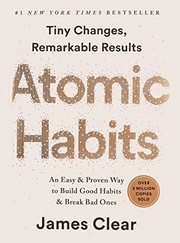 Atomic HabitsRecommended
by James Clear
“Miss-One-Not-Two Rule (James Clear): Missing a single day is acceptable and expected. Missing two consecutive days begins forming a new habit of non-compliance.”
More from The Mindset Mentor
We summarize every new episode. Want them in your inbox?
Similar Episodes
Related episodes from other podcasts

We Study Billionaires
Sep 3
BTC250: Is This Bitcoin Bull Market Over w/ Tuur Demeester (Bitcoin Podcast)

Philosophize This!
Mar 24
Episode #198 ... The truth is in the process. - Zizek pt. 3 (ideology, dialectics)

20VC (20 Minute VC)
Oct 12
20VC: Atlassian CEO on Why Agents Won't Replace Interfaces | Why Enterprises Won't Trust Chinese Models | Why The Jury Is Still Out On The Benefits of Specialised Models with Mike Cannon-Brookes

Modern Wisdom
Oct 5
4 Men Share How They Hit Rock Bottom (and got out) - Dr K, Joe Hudson & Connor Beaton - #1159
Modern Wisdom
Oct 3
Willpower Expert: The Secret To Effortless Discipline - Angela Duckworth - #1158
Explore Related Topics
This podcast is featured in Best Mindset Podcasts (2026) — ranked and reviewed with AI summaries.
Read this week's Health & Longevity Podcast Insights — cross-podcast analysis updated weekly.
You're clearly into The Mindset Mentor.
Every Monday, we deliver AI summaries of the latest episodes from The Mindset Mentor and 192+ other podcasts. Free for one show.
Start My Monday DigestNo credit card · Unsubscribe anytime