If You’re Feeling Stuck in Life, Listen to This
Episode
50 min
Read time
2 min
Topics
Career Growth, Productivity, Health & Wellness
AI-Generated Summary
Key Takeaways
- ✓Trap 1 — The Decision Threshold: Feeling stuck in regret, past relationships, or unfulfilling work is not a motivation problem — it is a decision problem. The Latin root of "decide" means to cut off other possibilities. Making a clear, declarative statement like "I am moving into a creative career within twelve months" creates forward momentum that vague intentions cannot generate.
- ✓Trap 2 — The Hot 15 Framework: Overcomplicating a goal creates paralysis. The fix is reducing any change — career pivot, fitness, creative project — to one repeatable action completable in fifteen minutes daily. For job seekers specifically, reaching out to five new contacts every single day creates enough meeting momentum to replace the structure a job previously provided.
- ✓Trap 3 — Implementation Intentions: Hesitation dissolves when an action is paired with a specific time cue rather than motivation. Research supports anchoring new habits to existing routines — for example, "after crocheting, I walk fifteen minutes." The time of day becomes the trigger, removing the need to decide whether to act each day.
- ✓Career Reinvention — Stanford's Odyssey Plan: Stanford professors Dave Evans and Bill Burnett, whose "Designing Your Life" curriculum now runs at 600 universities, argue there is no single correct career path. Their core principle: treat career decisions as low-stakes prototypes — take the class, shadow someone, apply for the role — because clarity builds through action, not prior planning.
- ✓Identity-Based Habit Formation: James Clear's Atomic Habits framework reframes goal pursuit around identity rather than outcomes. Each fifteen-minute writing session, walk, or job application is a vote for the person you intend to become. One client Clear worked with spent an entire month simply driving to the gym, entering, and leaving — mastering the identity of showing up before adding any workout.
What It Covers
Mel Robbins identifies three specific traps that keep people stuck — not being ready to change, overcomplicating next steps, and hesitation — using real listener questions to diagnose which trap applies and prescribing a concrete solution for each one.
Key Questions Answered
- •Trap 1 — The Decision Threshold: Feeling stuck in regret, past relationships, or unfulfilling work is not a motivation problem — it is a decision problem. The Latin root of "decide" means to cut off other possibilities. Making a clear, declarative statement like "I am moving into a creative career within twelve months" creates forward momentum that vague intentions cannot generate.
- •Trap 2 — The Hot 15 Framework: Overcomplicating a goal creates paralysis. The fix is reducing any change — career pivot, fitness, creative project — to one repeatable action completable in fifteen minutes daily. For job seekers specifically, reaching out to five new contacts every single day creates enough meeting momentum to replace the structure a job previously provided.
- •Trap 3 — Implementation Intentions: Hesitation dissolves when an action is paired with a specific time cue rather than motivation. Research supports anchoring new habits to existing routines — for example, "after crocheting, I walk fifteen minutes." The time of day becomes the trigger, removing the need to decide whether to act each day.
- •Career Reinvention — Stanford's Odyssey Plan: Stanford professors Dave Evans and Bill Burnett, whose "Designing Your Life" curriculum now runs at 600 universities, argue there is no single correct career path. Their core principle: treat career decisions as low-stakes prototypes — take the class, shadow someone, apply for the role — because clarity builds through action, not prior planning.
- •Identity-Based Habit Formation: James Clear's Atomic Habits framework reframes goal pursuit around identity rather than outcomes. Each fifteen-minute writing session, walk, or job application is a vote for the person you intend to become. One client Clear worked with spent an entire month simply driving to the gym, entering, and leaving — mastering the identity of showing up before adding any workout.
Notable Moment
A habit researcher's client spent a full month visiting the gym daily without exercising once — just walking in and walking out. This counterintuitive approach of separating the identity of showing up from the outcome of performance proved more effective for building lasting consistency than attempting full workouts immediately.
Episode Transcript
Hey. It's your friend, Mel, and welcome to the Mel Robbins podcast. You know, lately, I have been hearing from so many listeners around the world who have been writing in and saying, I feel stuck. I feel lost. Or even while I've been out on tour, I've been out on tour doing a live show in Australia and New Zealand and now in The United States. And as I'm meeting you in person, so many of you keep saying, I'm just in this rut, and I can't seem to get out of it. So that's what we're gonna talk about today. We're gonna talk about being stuck, and I need you to hear this. Feeling stuck is one of the single most misunderstood experiences in life. When you feel stuck, it doesn't mean you're broken. It means you're built for something more. And stuckness is this tension between the life that you currently have and the life you have yet to create. That's what stuck is. It's a signal. And today, I'm gonna teach you something really life changing. There are three traps that are keeping you stuck. And if you don't know which one of the traps is in your way, it's impossible to move forward. It's almost like you're trying to solve the wrong problem. I want you to think about it like you got a problem with your car, and you think you can fix it by filling the gas tank, but the real issue is the battery's dead. No matter how much gas you pour into that sucker, it's not gonna go anywhere because you're focused on the wrong problem. And when you feel stuck, it's easy to focus on the wrong problem. And that's why our conversation today is gonna be very different. I am going to not only teach you these three traps that make you feel stuck and how to get unstuck, but I'm also going to play questions from your fellow listeners around the world. And together, you and I are gonna work together to figure out which one of the three traps is your fellow listener in. So by the end of this conversation, you're not gonna only be able to spot these traps in yourself and the people that you love. You're gonna know exactly what to do depending upon which trap you're dealing with to get unstuck. And finally, start moving forward and feeling great again. This message is brought to you by Apple Card. Spring always feels like a reset. Clearing things out, simplifying what you don't need. Apple Card is built with that same idea in mind. No annual fee, no late fees, and no foreign transaction fees. No fees, period. Get started and apply in the Wallet app on your iPhone today, subject to credit approval. Variable APRs for Apple Card range from 17.49% to 27.74% based on creditworthiness. Rates as of 01/01/2026, existing customers can view their variable APR in the Wallet app or …
Get the full transcript (9,519 words) + summary by email — free
One-time email with the complete transcript and AI summary of this episode. No account needed.
One email, no spam. We’ll also show you what SignalCast does.

You just read a 3-minute summary of a 47-minute episode.
Get The Mel Robbins Podcast summarized like this every Monday — plus up to 2 more podcasts, free.
Pick Your Podcasts — FreeKeep Reading
More from The Mel Robbins Podcast
Body Language Expert: 6 Psychological Tricks to Turn Awkwardness into Confidence
Sep 26 · 82 min

The School of Greatness
The Psychology Behind Why You're Still Broke | George Kamel
Jun 3
More from The Mel Robbins Podcast
The Ultimate Guide to Divorce (For You & The People You Love)
Sep 24 · 86 min

The Sales Evangelist
10 Rookies Mistake You Must Avoid In 2026 | Donald C. Kelly - 1969
Jan 19
Books, tools, and gear mentioned in this episode
SignalCast may earn commission on purchases via these links. As an Amazon Associate, SignalCast earns from qualifying purchases.
Books
- Designing Your LifeRecommended
by Dave Evans and Bill Burnett
“Stanford professors Dave Evans and Bill Burnett, whose "Designing Your Life" curriculum now runs at 600 universities, argue there is no single correct career path.”
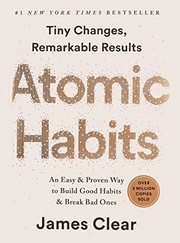 Atomic HabitsRecommended
by James Clear
“James Clear's Atomic Habits framework reframes goal pursuit around identity rather than outcomes. Each fifteen-minute writing session, walk, or job application is a vote for the person you intend to become.”
course
- Odyssey PlanRecommended
by Stanford
“Career Reinvention — Stanford's Odyssey Plan: Stanford professors Dave Evans and Bill Burnett, whose "Designing Your Life" curriculum now runs at 600 universities, argue there is no single correct career path. Their core principle: treat career decisions as low-stakes prototypes.”
More from The Mel Robbins Podcast
We summarize every new episode. Want them in your inbox?
Body Language Expert: 6 Psychological Tricks to Turn Awkwardness into Confidence
The Ultimate Guide to Divorce (For You & The People You Love)
Let Them: How to Handle Difficult People & Take Back Your Peace and Power
Oprah Winfrey: How to Find Your Unique Purpose, Authentic Power, and Calling In Life
How to Protect Your Focus, Motivation, & Mental Health: The $17.1 Billion Wake-Up Call
Similar Episodes
Related episodes from other podcasts

The School of Greatness
Jun 3
The Psychology Behind Why You're Still Broke | George Kamel

The Sales Evangelist
Jan 19
10 Rookies Mistake You Must Avoid In 2026 | Donald C. Kelly - 1969
The School of Greatness
Apr 8
The Real Reason You Keep Stopping Before You Succeed | Dean Graziosi

The Jefferson Fisher Podcast
Feb 17
The 3 Signs You’re Being Gaslit (And What to Do About It)
The Sales Evangelist
Feb 13
How to Get Quality Referrals To Skyrocket Your Sales | Donald C. Kelly - 1976
Explore Related Topics
This podcast is featured in Best Mindset Podcasts (2026) — ranked and reviewed with AI summaries.
Read this week's Health & Longevity Podcast Insights — cross-podcast analysis updated weekly.
You're clearly into The Mel Robbins Podcast.
Every Monday, we deliver AI summaries of the latest episodes from The Mel Robbins Podcast and 192+ other podcasts. Free for one show.
Start My Monday DigestNo credit card · Unsubscribe anytime