Preparing the Workforce That Will Shape Pharma’s Future with ISPE President & CEO Mike Martin
Episode
42 min
Read time
2 min
Topics
Career Growth, Startups, Fundraising & VC
AI-Generated Summary
Key Takeaways
- ✓Preskilling over reskilling: Rather than waiting for automation to displace workers and then reacting, pharma companies should proactively influence university and technical programs to produce talent aligned with future needs. Martin distinguishes "preskilling" — shaping the workforce pipeline before hiring — from reactive reskilling, arguing passive industry response to automation waves will leave organizations behind.
- ✓Trust formula for technical professionals: Martin endorses a concrete framework where trust equals character multiplied by competence. A professional with competence but poor character earns no trust; strong character without competence produces the same result. Pharma professionals should audit both dimensions in themselves and their teams, not treat trust as an abstract leadership concept.
- ✓Deep technical expertise prevents AI errors: Professionals must maintain domain-specific depth precisely because AI produces plausible but incorrect outputs. Without foundational knowledge, engineers and operators cannot identify when AI-generated answers are wrong. Martin recommends treating AI outputs like work from an entry-level hire — always reviewed against established expertise before implementation.
- ✓Microlearning matches modern consumption patterns: Training programs structured as multi-hour sessions misalign with how current and incoming workers absorb information. Martin draws a parallel to Netflix's shift from disc delivery to streaming to episodic content, recommending organizations redesign continuous learning into five-to-fifteen-minute modules delivered systematically, with embedded comprehension checks replacing traditional long-form training blocks.
- ✓Innovation as a compliance accelerator: Martin reframes the perceived tension between innovation and quality by arguing that well-designed process innovation directly strengthens compliance outcomes. He cites the automation of aseptic filling operations — previously performed manually with tweezers — as a case where technological advancement produced measurably superior sterility assurance and regulatory standing simultaneously.
What It Covers
Mike Martin, President & CEO of ISPE, outlines how Pharma 4.0 — driven by advanced robotics, AI, and integrated automation — is reshaping workforce requirements across pharmaceutical manufacturing, and what organizations, educators, and professionals must do now to build the talent pipeline pharma needs.
Key Questions Answered
- •Preskilling over reskilling: Rather than waiting for automation to displace workers and then reacting, pharma companies should proactively influence university and technical programs to produce talent aligned with future needs. Martin distinguishes "preskilling" — shaping the workforce pipeline before hiring — from reactive reskilling, arguing passive industry response to automation waves will leave organizations behind.
- •Trust formula for technical professionals: Martin endorses a concrete framework where trust equals character multiplied by competence. A professional with competence but poor character earns no trust; strong character without competence produces the same result. Pharma professionals should audit both dimensions in themselves and their teams, not treat trust as an abstract leadership concept.
- •Deep technical expertise prevents AI errors: Professionals must maintain domain-specific depth precisely because AI produces plausible but incorrect outputs. Without foundational knowledge, engineers and operators cannot identify when AI-generated answers are wrong. Martin recommends treating AI outputs like work from an entry-level hire — always reviewed against established expertise before implementation.
- •Microlearning matches modern consumption patterns: Training programs structured as multi-hour sessions misalign with how current and incoming workers absorb information. Martin draws a parallel to Netflix's shift from disc delivery to streaming to episodic content, recommending organizations redesign continuous learning into five-to-fifteen-minute modules delivered systematically, with embedded comprehension checks replacing traditional long-form training blocks.
- •Innovation as a compliance accelerator: Martin reframes the perceived tension between innovation and quality by arguing that well-designed process innovation directly strengthens compliance outcomes. He cites the automation of aseptic filling operations — previously performed manually with tweezers — as a case where technological advancement produced measurably superior sterility assurance and regulatory standing simultaneously.
Notable Moment
Martin recounts leading a plant startup in China with a workforce representing over 25 countries, describing it as his most difficult career assignment. He credits Stephen Covey's principle of seeking first to understand as the primary reason diverse teams succeed or fail — not technical skill.
Episode Transcript
Hello, everyone. Welcome to the Life Science Rundown. That is the podcast where we discuss current regulatory complexities facing the life science industry and explore innovative ways to overcome those challenges. I am your host, Nicholas Catman, president and CEO of the FDA Group. Before we get started, here's a quick word about who we are. The FDA Group is a consulting firm that helps life science companies in the areas of regulatory submissions, audit projects, mock inspections, staff augmentation, and remediation. So if you ever find yourself in need, just head over to the f e a group dot com to check us out and get in touch. So today, I am speaking with Mike Martin. Hey, Mike. How are you doing? Hey. Good, Nick. It's good to see you again. Absolutely. Appreciate you, joining me on this podcast. So, before we jump into the topic, would you kindly introduce yourself? Sure. I'm, my name is Mike Martin. I'm the president and CEO for ISPE. I've been in the, life science industry for nearly forty years. Thirty plus years of that spent at Lilly, various roles around the world. And then, almost seven years in a consulting company called CAI. Also doing projects around the world. And this last year, I've been serving as ISBE's CEO, for its global organization. K. Excellent. Thank you. So today, we're gonna be talking about how can we prepare today's workforce to shape the future of pharma. So, I would say, you know, from your vantage point as ISP's president and CEO, what are the biggest forces reshaping the pharmaceutical industry today, and how are they changing the expectations for our workforce? Yeah. So, Nick, I think that the pharma industry is in a industrial revolution of sorts. So, we call it pharma four point zero, at ISPE. That's a a term that we use. But if you look at at the other industries in the world like the automotive industry, it's gone through a number of different cycles of automation. And in typical, terminology when we we describe for, industry four point zero or industrial revolution four point zero. It's usually about some type of very integrated automation with with smart devices and a lot of, very deep control systems. And I think that's where pharma is steering, lately in the last five years or so. There's a lot of advanced robotics being applied to jobs and and tasks that used to be done by operators. And even more recently, a lot of AI driving, some of the repetitive tasks, to be done by computer or by machine. And I think that's a big change for the industry. I think that's gonna accelerate. I I think, Nick, those types of, job changes drive a different skill set requirement for the people that work in our industry. And I think, like across history, some roles get eliminated as that happens and new roles get created. And then that means that the industry has …
Get the full transcript (7,261 words) + summary by email — free
One-time email with the complete transcript and AI summary of this episode. No account needed.
One email, no spam. We’ll also show you what SignalCast does.

You just read a 3-minute summary of a 39-minute episode.
Get The Life Science Rundown summarized like this every Monday — plus up to 2 more podcasts, free.
Pick Your Podcasts — FreeKeep Reading
More from The Life Science Rundown
QA Is Not a Gate — It’s a Technical Partner, with Dr. Andrea Bell
Sep 1 · 28 min

In Good Company with Nicolai Tangen
HIGHLIGHTS: Albert Bourla - CEO of Pfizer
May 22
More from The Life Science Rundown
Managing AI Risk Across Global Quality Systems
Aug 17 · 32 min

Beyond Biotech
Top 5 trends that will drive biopharma in the next decade with Tim Opler
Jan 23
Books, tools, and gear mentioned in this episode
SignalCast may earn commission on purchases via these links. As an Amazon Associate, SignalCast earns from qualifying purchases.
Books
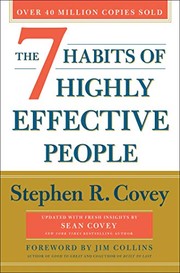 The 7 Habits of Highly Effective PeopleRecommended
by Stephen Covey
“He credits Stephen Covey's principle of seeking first to understand as the primary reason diverse teams succeed or fail”
More from The Life Science Rundown
We summarize every new episode. Want them in your inbox?
QA Is Not a Gate — It’s a Technical Partner, with Dr. Andrea Bell
Managing AI Risk Across Global Quality Systems
The Case for Engaging Regulatory Early
Why Quality and R&D Default to Conflict (and How to Fix It)
Leading Through the AI Shift with ASQ's CEO Sid Bhatnagar
Similar Episodes
Related episodes from other podcasts

In Good Company with Nicolai Tangen
May 22
HIGHLIGHTS: Albert Bourla - CEO of Pfizer

Beyond Biotech
Jan 23
Top 5 trends that will drive biopharma in the next decade with Tim Opler

Biotech 2050 Podcast
Jan 20
Christophe Bourdon, LEO Pharma CEO, on Dermatology Innovation, Rare Disease & Scalable Growth

The Jordan Harbinger Show
Sep 16
1209: Michael Israetel | The Future Belongs to the Medically Enhanced

Pathfinders in Biopharma
Feb 7
Uncertainty reigns, but opportunity persists for biotech’s 2025
Explore Related Topics
This podcast is featured in Best Science Podcasts (2026) — ranked and reviewed with AI summaries.
Read this week's Startups & Product Podcast Insights — cross-podcast analysis updated weekly.
You're clearly into The Life Science Rundown.
Every Monday, we deliver AI summaries of the latest episodes from The Life Science Rundown and 192+ other podcasts. Free for one show.
Start My Monday DigestNo credit card · Unsubscribe anytime