The Mindset That Unlocks Your Full Potential | Dr. Gio Valiante
Episode
69 min
Read time
3 min
Topics
Career Growth, Productivity, Relationships
AI-Generated Summary
Key Takeaways
- ✓Central Governor Hypothesis: The human brain contains built-in suppression mechanisms designed for survival, not excellence. Comfort-seeking is biologically hardwired — single-cell organisms gravitate toward comfort in petri dish experiments, and humans operate identically. Achieving peak performance requires a deliberate act of agency to override these defaults. Fewer than 0.001% of marathon runners push themselves to physical collapse, proving the brain stops us well before our actual limits.
- ✓Behavior-First Change Model: John Dewey's principle states that humans live their way into patterns of thought, not the reverse. Attempting to think your way into behavioral change fails — the direction runs opposite. To change habits, identify one comfortable behavior that is holding you back (phone use, food, self-excusing narratives), change that specific behavior first, and hold yourself accountable daily. Mindset shifts follow action, not precede it.
- ✓Mastery vs. Ego Orientation: Valiante's interviews with 200 golfers across PGA, LPGA, and amateur levels revealed two motivational camps. Mastery-oriented performers do the activity for intrinsic satisfaction; ego-oriented performers use it as a vehicle for money, status, or validation. Top 1% performers consistently trace their excellence to a calling — and those who experience career renaissances (Kelly Slater, Brooks Koepka) describe rediscovering love for the craft itself as the turning point.
- ✓Four Sources of Confidence (Self-Efficacy): Operationalized confidence — the type measurable and trainable — builds from four experiences: mastery experiences (prior successes and failures), verbal persuasions (feedback from others), vicarious experiences (comparison to peers), and physiological states (bodily sensations). A critical bias distorts all four: failure hurts more than success feels good, and criticism stings more than praise. This asymmetry causes most people to index toward past failures, creating a self-imposed performance ceiling.
- ✓Environment Over Mindset: Situated cognition research shows the brain interacts with its environment primarily on an unconscious level — similar to how sweating and goosebumps occur without conscious choice. James Clear's principle applies directly: people shrink to the level of their systems, not their goals. To unlock potential, audit the environment first — team culture, risk tolerance of the organization, how mistakes are treated — before attempting individual mindset interventions.
What It Covers
Sports psychologist Dr. Gio Valiante joins The Knowledge Project to explain why human biology defaults to underperformance, how mastery versus ego motivation determines long-term excellence, and what specific psychological mechanisms — including confidence sources, environmental design, and identity formation — either suppress or unlock a person's full potential.
Key Questions Answered
- •Central Governor Hypothesis: The human brain contains built-in suppression mechanisms designed for survival, not excellence. Comfort-seeking is biologically hardwired — single-cell organisms gravitate toward comfort in petri dish experiments, and humans operate identically. Achieving peak performance requires a deliberate act of agency to override these defaults. Fewer than 0.001% of marathon runners push themselves to physical collapse, proving the brain stops us well before our actual limits.
- •Behavior-First Change Model: John Dewey's principle states that humans live their way into patterns of thought, not the reverse. Attempting to think your way into behavioral change fails — the direction runs opposite. To change habits, identify one comfortable behavior that is holding you back (phone use, food, self-excusing narratives), change that specific behavior first, and hold yourself accountable daily. Mindset shifts follow action, not precede it.
- •Mastery vs. Ego Orientation: Valiante's interviews with 200 golfers across PGA, LPGA, and amateur levels revealed two motivational camps. Mastery-oriented performers do the activity for intrinsic satisfaction; ego-oriented performers use it as a vehicle for money, status, or validation. Top 1% performers consistently trace their excellence to a calling — and those who experience career renaissances (Kelly Slater, Brooks Koepka) describe rediscovering love for the craft itself as the turning point.
- •Four Sources of Confidence (Self-Efficacy): Operationalized confidence — the type measurable and trainable — builds from four experiences: mastery experiences (prior successes and failures), verbal persuasions (feedback from others), vicarious experiences (comparison to peers), and physiological states (bodily sensations). A critical bias distorts all four: failure hurts more than success feels good, and criticism stings more than praise. This asymmetry causes most people to index toward past failures, creating a self-imposed performance ceiling.
- •Environment Over Mindset: Situated cognition research shows the brain interacts with its environment primarily on an unconscious level — similar to how sweating and goosebumps occur without conscious choice. James Clear's principle applies directly: people shrink to the level of their systems, not their goals. To unlock potential, audit the environment first — team culture, risk tolerance of the organization, how mistakes are treated — before attempting individual mindset interventions.
- •Recovering from Drawdowns via Small Wins: When portfolio managers, athletes, or executives enter performance slumps, the instinct to recover everything in one large move accelerates deterioration. Fear distorts perception, causing people to see threat instead of opportunity. Valiante's protocol: reduce risk exposure immediately, target the smallest achievable win (even $100 for a fund manager), and stack incremental successes deliberately. Winning is a habit — rebuilding confidence requires reestablishing the behavioral pattern before scaling back up.
Notable Moment
Valiante describes a client who accumulated over $500 million yet remained miserable, waking at 4AM daily while his family deteriorated. Through their work together, they traced his relentless drive back to a high school breakup where a girlfriend's family deemed him too poor — a wound he had spent decades and hundreds of millions of dollars trying to unconsciously resolve.
Episode Transcript
If you go through life over indexing and caring too much what people think about you, that's your ceiling. I wanna start with something you said last time we talked, which is most people are underperforming relative to their ability. Yeah. Walk me through that. There's a term that I came across many years ago, called the central governor hypothesis, and essentially conveys the fact that most people underperform. And and any observer of the human condition, I think going back to forever, agrees that that's probably true. Now why is that? Well, you have to sort of delve into sort of human biology genetics and understand. So what's what's the purpose of the of the brain? Generally, to keep you alive long enough to reproduce. Right? You know? So at a at a at a fundamental biological level. But we're not designed to over perform. We're designed to survive. And so over performance or, or achieving one's potential requires sort of a cognitive decision to push oneself there. Right? So to illustrate it, I think a common illustration is if you look at marathon runners or any extreme athlete. Marathon runners, triathletes, these are people who design their lives around pushing human potential. And so it begs the question, well, then then if these are people who are even even the ultra marathoners. Right? People do, you know, five marathons over the course of five weeks or five days, whatever they do. How many of them push themselves to the point of death? Like, how many people push their limits? The answer is is typically it's a very small percentage, single digits. You know? If you have five, you know, rounding numbers, 5,000,000 marathoners, maybe five or ten die in a year. And most of the times, because they get hit by a car or some other condition, but it's not because they push themselves too hard. They cross the finish line, and they're still alive. And they go, and they they carbo load and so forth. Now why is that? Because the brain has built in mechanisms to shut us down so that we don't do self harm. Right? And so those are the same mechanisms that the drive level for human beings, you know, govern our conduct. So so underperformance is built into the human condition so that we can stay alive. And that's why, you know, they they do these really interesting studies with sort of single cell organisms, where you put them in a petri dish and you make the conditions uncomfortable. Right? So you put these these these various, they use various types of organisms, and you make it hot on one side of the plate, and they gravitate to comfort. You make it too cold, they grab. So at a really at a fundamental biological level, you know, we are all programmed to seek comfort and safety. Well, comfort and safety are the exact opposite of over performance or realizing one's potential. And …
Get the full transcript (12,782 words) + summary by email — free
One-time email with the complete transcript and AI summary of this episode. No account needed.
One email, no spam. We’ll also show you what SignalCast does.

You just read a 3-minute summary of a 66-minute episode.
Get The Knowledge Project summarized like this every Monday — plus up to 2 more podcasts, free.
Pick Your Podcasts — FreeKeep Reading
More from The Knowledge Project
Charlie Munger's Interview with Todd Combs
Oct 6 · 20 min

Stuff You Should Know
Social Identity Theory: Your Group Rules, Others Drool
Sep 3
More from The Knowledge Project
Bill Ackman: The Biggest Fight of His Life
Sep 29 · 77 min

10% Happier with Dan Harris
That Background Hum of Worry in Every Important Conversation — Here's What It Is and How to Quiet It | Claude M. Steele
Jun 29
Books, tools, and gear mentioned in this episode
SignalCast may earn commission on purchases via these links. As an Amazon Associate, SignalCast earns from qualifying purchases.
Books
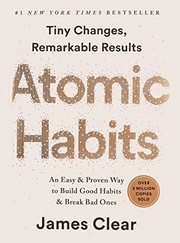 Atomic HabitsRecommended
by James Clear
“James Clear's principle applies directly: people shrink to the level of their systems, not their goals.”
More from The Knowledge Project
We summarize every new episode. Want them in your inbox?
Charlie Munger's Interview with Todd Combs
Bill Ackman: The Biggest Fight of His Life
Tobi Lütke: AI Agents, Better Decisions, and the Future of Work
Steve Jobs in Exile
Roblox CEO: How to Make Better Decisions by Fixing Yourself First
Similar Episodes
Related episodes from other podcasts

Stuff You Should Know
Sep 3
Social Identity Theory: Your Group Rules, Others Drool

10% Happier with Dan Harris
Jun 29
That Background Hum of Worry in Every Important Conversation — Here's What It Is and How to Quiet It | Claude M. Steele

a16z Podcast
Jun 25
Marc Andreessen on AI, Technology, and the Future of Humanity

Huberman Lab
Oct 5
Bringing Extinct Species Back to Life | Dr. Beth Shapiro

Modern Wisdom
Sep 19
Why Sydney Sweeney Has Two Big Targets On Her Chest - William Costello - #1152
Explore Related Topics
This podcast is featured in Best Business Podcasts (2026) — ranked and reviewed with AI summaries.
You're clearly into The Knowledge Project.
Every Monday, we deliver AI summaries of the latest episodes from The Knowledge Project and 192+ other podcasts. Free for one show.
Start My Monday DigestNo credit card · Unsubscribe anytime