From the Archive: Tim Ferriss on Possibility, Mentors, and the DISS Learning Framework
Episode
95 min
Read time
3 min
Topics
Career Growth, Health & Wellness, Relationships
AI-Generated Summary
Key Takeaways
- ✓DISS Learning Framework: Ferriss uses a four-step system to master any skill: Deconstruction (break down the skill into components), Selection (identify the 20% that gives 80% results), Sequencing (determine optimal learning order), and Stakes (build in consequences). He applies this to poker, languages, surfing, and startup investing by interviewing outliers who succeed despite lacking typical attributes for that field.
- ✓Finding Mentors Through Value: Volunteer for organizations that hold events to gain leadership roles and access to influential people. Ferriss volunteered for Silicon Valley startup events in 2000, eventually managing a 500-person conference where he recruited speakers like Jack Canfield. This relationship led to his literary agent introduction ten years later, demonstrating how loose ties compound over time without aggressive networking.
- ✓Fear-Setting Over Goal-Setting: Create three columns: worst possible outcomes in detail, actions to minimize their likelihood, and recovery plans if they occur. Define risk as likelihood of irreversible negative outcomes. This exercise reveals most feared scenarios are reversible and manageable, removing paralysis from career changes. Ferriss used this before his 2004 London trip to redesign BrainQuicken or shut it down.
- ✓Product Repositioning Strategy: BrainQuicken started as a cognitive enhancement supplement but Americans resist intelligence aids. After noticing NCAA and professional athletes buying it for performance gains, Ferriss repositioned it as a non-stimulant pre-workout product for reaction-speed sports like tennis, boxing, and MMA. This pivot targeted price-insensitive athletes affordable to reach through niche sports publications, leading to distribution in 12-20 countries.
- ✓Book Title Testing Process: Test multiple title variations with actual audiences before committing. Ferriss originally proposed The 2-Hour Work Week but publishers deemed it unrealistic, settling on four hours through testing. He later tested titles like Drug Dealing for Fun and Profit before The 4-Hour Body. This data-driven approach prevents relying on gut instinct, which Ferriss distrusts from his day trading background.
What It Covers
Tim Ferriss discusses his DISS learning framework (Deconstruction, Selection, Sequencing, Stakes), the origin story of BrainQuicken and The 4-Hour Work Week, dealing with 27 publisher rejections, selling his company during the 2008 financial crisis, creating his TV show with 12-16 hour production days, and his transition to podcasting for creative control.
Key Questions Answered
- •DISS Learning Framework: Ferriss uses a four-step system to master any skill: Deconstruction (break down the skill into components), Selection (identify the 20% that gives 80% results), Sequencing (determine optimal learning order), and Stakes (build in consequences). He applies this to poker, languages, surfing, and startup investing by interviewing outliers who succeed despite lacking typical attributes for that field.
- •Finding Mentors Through Value: Volunteer for organizations that hold events to gain leadership roles and access to influential people. Ferriss volunteered for Silicon Valley startup events in 2000, eventually managing a 500-person conference where he recruited speakers like Jack Canfield. This relationship led to his literary agent introduction ten years later, demonstrating how loose ties compound over time without aggressive networking.
- •Fear-Setting Over Goal-Setting: Create three columns: worst possible outcomes in detail, actions to minimize their likelihood, and recovery plans if they occur. Define risk as likelihood of irreversible negative outcomes. This exercise reveals most feared scenarios are reversible and manageable, removing paralysis from career changes. Ferriss used this before his 2004 London trip to redesign BrainQuicken or shut it down.
- •Product Repositioning Strategy: BrainQuicken started as a cognitive enhancement supplement but Americans resist intelligence aids. After noticing NCAA and professional athletes buying it for performance gains, Ferriss repositioned it as a non-stimulant pre-workout product for reaction-speed sports like tennis, boxing, and MMA. This pivot targeted price-insensitive athletes affordable to reach through niche sports publications, leading to distribution in 12-20 countries.
- •Book Title Testing Process: Test multiple title variations with actual audiences before committing. Ferriss originally proposed The 2-Hour Work Week but publishers deemed it unrealistic, settling on four hours through testing. He later tested titles like Drug Dealing for Fun and Profit before The 4-Hour Body. This data-driven approach prevents relying on gut instinct, which Ferriss distrusts from his day trading background.
- •Intellectual Property Protection: Use red herrings when announcing projects to prevent domain squatting and trademark infringement. Before launching The 4-Hour Body, Ferriss publicly announced it as Becoming Superhuman to mislead squatters while securing actual URLs and trademarks. He registered four hour as a trademarked prefix after widespread copying attempts, requiring ongoing legal enforcement to maintain rights.
- •TV Production Reality: Creating 13 episodes of Tim Ferriss Experiment required 5-6 days of 12-16 hour shoots per 22-minute episode, excluding post-production reviews, notes, graphics feedback, and refinement. Unlike scripted reality TV (Kardashians), capturing spontaneous learning attempts demands two camera operators and massive footage. Ferriss would reduce episodes to six hour-long shows with two-day practice breaks between shoots if repeating the format.
Notable Moment
Ferriss describes hitting rock bottom in summer 2013 when he stayed in bed until the last possible moment on his birthday, afraid to face being alone after friends left. He published a vulnerable post about depression and dysfunctional behaviors titled Productivity Tricks for the Neurotic, Manic Depressive, which received nearly 800 comments, demonstrating how exposing personal struggles resonates more than polished success stories.
Episode Transcript
This isn't your average business podcast, and he's not your average host. This is the James Altucher show. Presenting the archive, classic episodes that remain timeless. The raw, unfiltered conversations from the early days in which people shared their failures and showed us exactly how they rebuilt everything from the ground up. Tim Ferris, you've done a billion things. Welcome to the show. Thanks for having me. Really happy to be here. Tim, I have one small beef to pick with you, which I'm I'm gonna bring up. We know each other now. We've known each other for, I guess, about almost a year and a half since a conference, like, at the 2012 or 2011. I forget one of those years. Mhmm. But before that, you released the four Hour Body. I was around the corner in the freezing cold waiting to get into that event in Downtown New York. I'm so sorry. That was a mess. That was such a mess. So one thing, just a word to the wise for people listening. If you ever hold an event, in the winter, it might be a crowded venue. Make sure that if they have a mandatory coat check for fire code that they tell you about it beforehand. That is what held up the line and the poor people waiting outside in, like, normal sort of cocktail party clothing on the coldest day of the winter in that year. It was horrible. What a disaster that was. I apologize for that. No. No. Don't apologize because from every problem, there's a lesson to be learned, and we have a lot of things to talk about. But I learned a couple of things from that. One is you were trying something different with marketing. In general, that's been your approach where not only do you have the event of a book launch, but your marketing events themselves are newsworthy events. So you've changed marketing for books for everyone, and that was part of it. And there's going to be mistakes along the way. That will happen. But, also, you dealt with it instantly. So, of course, you must have gotten many emails the next day, and you right away made a response. Everybody gets x, y, and z. You dealt with it right away, and it it proved to be a successful event for you. Also, it made us think everybody in line think, oh my god. This book is gonna be such a massive success. Like, we really created this aura of success around the book even though we were freezing. It was, like, the coldest I've ever been in my life. It was so cold. Yeah. It was it was something like 10 degrees outside, and there were there were people freezing their asses off. So did learn a lot from that, and thank you for the kind words. Yeah. It was I will do another event, and it will be in a warmer season too just …
Get the full transcript (18,347 words) + summary by email — free
One-time email with the complete transcript and AI summary of this episode. No account needed.
One email, no spam. We’ll also show you what SignalCast does.

You just read a 3-minute summary of a 92-minute episode.
Get The James Altucher Show summarized like this every Monday — plus up to 2 more podcasts, free.
Pick Your Podcasts — FreeKeep Reading
More from The James Altucher Show
Tom Bilyeu: What to Do If AI Threatens Your Career
Oct 21 · 56 min

The Tim Ferriss Show
#877: Q&A with Tim — The Art of Male Friendship, Mini-Retirements, Higher-Resolution Living, Reinvention in The Age of AI, and More
Jul 29
More from The James Altucher Show
Carlos Gutierrez: ADHD Diagnosed at 65, Career Lessons
Oct 13 · 46 min

Strict Scrutiny
S7: BREAKING: SCOTUS Nixes Trump’s Tariffs
Feb 20
Books, tools, and gear mentioned in this episode
SignalCast may earn commission on purchases via these links. As an Amazon Associate, SignalCast earns from qualifying purchases.
Books
by Tim Ferriss
“Tim Ferriss discusses his DISS learning framework (Deconstruction, Selection, Sequencing, Stakes), the origin story of BrainQuicken and The 4-Hour Work Week, dealing with 27 publisher rejections”
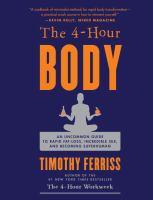
by Tim Ferriss
“He later tested titles like Drug Dealing for Fun and Profit before The 4-Hour Body. This data-driven approach prevents relying on gut instinct”
Products
- BrainQuickenBy guest
“the origin story of BrainQuicken and The 4-Hour Work Week, dealing with 27 publisher rejections, selling his company during the 2008 financial crisis”
other
- Tim Ferriss ExperimentBy guest
“Creating 13 episodes of Tim Ferriss Experiment required 5-6 days of 12-16 hour shoots per 22-minute episode, excluding post-production reviews”
by Tim Ferriss
“He published a vulnerable post about depression and dysfunctional behaviors titled Productivity Tricks for the Neurotic, Manic Depressive, which received nearly 800 comments”
More from The James Altucher Show
We summarize every new episode. Want them in your inbox?
Tom Bilyeu: What to Do If AI Threatens Your Career
Carlos Gutierrez: ADHD Diagnosed at 65, Career Lessons
David Rubenstein: Why Owners Care About Winning, Not Money
The Art of a Great Question with Cal Fussman [From the Archive]
Bill O'Reilly on Brokering a Secret Hostage Release Deal
Similar Episodes
Related episodes from other podcasts

The Tim Ferriss Show
Jul 29
#877: Q&A with Tim — The Art of Male Friendship, Mini-Retirements, Higher-Resolution Living, Reinvention in The Age of AI, and More

Strict Scrutiny
Feb 20
S7: BREAKING: SCOTUS Nixes Trump’s Tariffs

Morning Brew Daily
Dec 29
How to Find a Career You Love, with Author and Venture Capitalist Bill Gurley
The Tim Ferriss Show
Oct 20
#887: Q&A with Tim — The 4-Hour Workweek in a World of AI, Rebuilding Personal Agency, The 4-Hour Body After 40, and More

We Study Billionaires
Oct 18
RWH074: True Wealth w/ Matt Ludmer
Explore Related Topics
This podcast is featured in Best Startup Podcasts (2026) — ranked and reviewed with AI summaries.
Read this week's Health & Longevity Podcast Insights — cross-podcast analysis updated weekly.
You're clearly into The James Altucher Show.
Every Monday, we deliver AI summaries of the latest episodes from The James Altucher Show and 192+ other podcasts. Free for one show.
Start My Monday DigestNo credit card · Unsubscribe anytime