Snap judgement: Japan PM’s electoral landslide
Episode
23 min
Read time
2 min
Topics
Productivity, Fundraising & VC, Leadership
AI-Generated Summary
Key Takeaways
- ✓Electoral mandate mechanics: Takeichi converted personal popularity into 100+ seat gains despite her party's recent scandals, demonstrating how individual appeal can overcome institutional damage. Her middle-class background, plain-spoken style, and work-focused campaign outperformed traditional political dynasty candidates, proving authenticity resonates with voters seeking change from establishment politics.
- ✓Opposition collapse strategy: Japan's centrist Reform Alliance lost over half its seats after merging the Constitutional Democratic Party and COMETA, showing poorly executed party mergers destroy rather than combine voter bases. The failure reveals that unclear leadership structures and muddled identities alienate core supporters, while traditional pacifist positions appear increasingly misaligned with security-focused electorates.
- ✓Academic censorship reversal: Free speech violations in US universities shifted from 80% left-wing censorship in 2020 to 80% right-wing censorship today, according to Foundation for Individual Rights and Expression data. Texas lawmakers passed 21 of 93 bills in 32 states affecting over half of US college students, requiring professors to pre-declare which days they discuss race and gender.
- ✓Institutional compliance costs: Texas A&M reviewed 200 courses for prohibited content, forcing professors to remove texts like Plato's Symposium discussing gender and sexuality or face reassignment. At University of Texas Austin, 40% of faculty preemptively changed curricula to comply with state laws, while student clubs must now get outside speakers approved and read disclaimers at meetings.
- ✓Defense spending acceleration: Takeichi's super majority enables faster implementation of expanded defense budgets, streamlined weapons export rules for domestic defense companies, and development of Japan's first modern national intelligence apparatus. Her challenge involves maintaining market confidence while pursuing expansionary fiscal policy amid rising inflation and interest rates, balancing growth stimulus with fiscal responsibility perceptions.
What It Covers
Japan's Prime Minister Takeichi Sanaya wins the Liberal Democratic Party's largest electoral victory in its 70-year history, securing a super majority with 316 seats. The episode also examines Republican-led censorship in Texas universities banning texts like Plato's Symposium, and reflects on Taxi Driver's 50th anniversary as a portrait of alienation.
Key Questions Answered
- •Electoral mandate mechanics: Takeichi converted personal popularity into 100+ seat gains despite her party's recent scandals, demonstrating how individual appeal can overcome institutional damage. Her middle-class background, plain-spoken style, and work-focused campaign outperformed traditional political dynasty candidates, proving authenticity resonates with voters seeking change from establishment politics.
- •Opposition collapse strategy: Japan's centrist Reform Alliance lost over half its seats after merging the Constitutional Democratic Party and COMETA, showing poorly executed party mergers destroy rather than combine voter bases. The failure reveals that unclear leadership structures and muddled identities alienate core supporters, while traditional pacifist positions appear increasingly misaligned with security-focused electorates.
- •Academic censorship reversal: Free speech violations in US universities shifted from 80% left-wing censorship in 2020 to 80% right-wing censorship today, according to Foundation for Individual Rights and Expression data. Texas lawmakers passed 21 of 93 bills in 32 states affecting over half of US college students, requiring professors to pre-declare which days they discuss race and gender.
- •Institutional compliance costs: Texas A&M reviewed 200 courses for prohibited content, forcing professors to remove texts like Plato's Symposium discussing gender and sexuality or face reassignment. At University of Texas Austin, 40% of faculty preemptively changed curricula to comply with state laws, while student clubs must now get outside speakers approved and read disclaimers at meetings.
- •Defense spending acceleration: Takeichi's super majority enables faster implementation of expanded defense budgets, streamlined weapons export rules for domestic defense companies, and development of Japan's first modern national intelligence apparatus. Her challenge involves maintaining market confidence while pursuing expansionary fiscal policy amid rising inflation and interest rates, balancing growth stimulus with fiscal responsibility perceptions.
Notable Moment
A philosophy professor at Texas A&M, who chairs the campus academic freedom council, removed Plato from his syllabus under administrative pressure but plans to replace that unit with two classes specifically teaching the value of free speech, stating he has a moral obligation to speak out even if it brings catastrophic personal consequences.
Episode Transcript
Most drivers overpay for car insurance, not because they're careless, but because the system is needlessly complicated. Jerry fixes that. Traditional comparison sites give you quotes once, then disappear. But Jerry can handle all the insurance shopping legwork and never stops working. Compare 50 plus insurers side by side and purchase directly in the app. No spam calls, no hidden fees. They'll even monitor price trends and can alert you to better rates. Drivers who save with Jerry could save over $1,300 a year. Download the Jerry app or visit jerry.ai/acast today. Have you been waiting for the perfect time to upgrade your tech? Good news. The wait is over. Dell Tech Day's annual sales event is here, and we're celebrating our best customers with fantastic deals on the latest PCs, like the Dell 14 plus with Intel Core Ultra processors. We've also got incredible perks like Dell rewards, fast free shipping, premium support, price match guarantee, and more. And while you're upgrading your PC, you may as well go all out because we're also offering huge deals on our premium suite of monitors and accessories. You know what that means? That's right. You can get a whole new setup with amazing savings. Clearly, this is a sale you don't wanna miss. Visit dell.com/deals. That's dell.com/deals. The Economist. Hello, and welcome to The Intelligence from The Economist. I'm your host, Rosie Blore. Every weekday, we provide a fresh perspective on the events shaping your world. In the past decade, American universities have become a hunting ground for almost every phase of the culture wars. Today, free speech and why Republican states seem to have a problem with Plato. And fifty years ago, Taxi Driver brought us a moldering New York and a misfit who raged against the society he couldn't find a way into. No wonder, says our correspondent, that the film still feels so relevant. First up though, This weekend's Japanese voters braved record breaking snowfall to head to the polls. There, they delivered a record breaking victory for prime minister Tokayich Sanaya, who called this snap election just weeks ago. Noah Snyder is our East Asia bureau chief. It was a high stakes political gamble, and it has paid off big time. The result is set to reshape Japanese politics for years to come. Noah, it was a political gamble. It paid off. Just how significant is this victory for Takeichi and her party? It's a really historic victory, Rosie. It's it's hard to overstate. The ruling Liberal Democratic Party, which Prime Minister Takeichi heads, has basically dominated Japanese politics since 1955, ruling with with only two brief interruptions. And this is the biggest victory they've won, the biggest margin they've had in the lower house of parliament in the entirety of the party's history. So the result is a massive mandate as a super majority for the LDP on its own. They picked up more than a 100 seats in the course of this election, and they …
Get the full transcript (3,887 words) + summary by email — free
One-time email with the complete transcript and AI summary of this episode. No account needed.
One email, no spam. We’ll also show you what SignalCast does.

You just read a 3-minute summary of a 20-minute episode.
Get The Intelligence (Economist) summarized like this every Monday — plus up to 2 more podcasts, free.
Pick Your Podcasts — FreeKeep Reading
More from The Intelligence (Economist)
The Weekend Intelligence: Shire folk
Sep 12 · 49 min

The Indicator
How Japan’s new prime minister is jolting markets
Dec 3
More from The Intelligence (Economist)
Out-numbered: AI’s contentious maths milestone
Sep 11 · 22 min

The Ezra Klein Show
The Most Important Foreign Policy Speech in Years
Jan 27
Books, tools, and gear mentioned in this episode
SignalCast may earn commission on purchases via these links. As an Amazon Associate, SignalCast earns from qualifying purchases.
Books
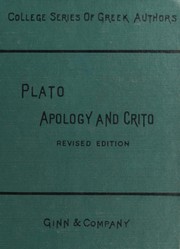
by Plato
“Republican-led censorship in Texas universities banning texts like Plato's Symposium, and reflects on Taxi Driver's 50th anniversary... Texas A&M reviewed 200 courses for prohibited content, forcing professors to remove texts like Plato's Symposium discussing gender and sexuality or face reassignment.”
Products
More from The Intelligence (Economist)
We summarize every new episode. Want them in your inbox?
The Weekend Intelligence: Shire folk
Out-numbered: AI’s contentious maths milestone
Working through it: the AI jobs boom dawns
Chainsaw sputtering: Milei’s experiment falters
School of shock: teenagers get dimmer
Similar Episodes
Related episodes from other podcasts

The Indicator
Dec 3
How Japan’s new prime minister is jolting markets

The Ezra Klein Show
Jan 27
The Most Important Foreign Policy Speech in Years

Throughline
Jun 24
Iran and the U.S., Part One: Four Days in August

Lex Fridman Podcast
Mar 16
#460 – Narendra Modi: Prime Minister of India – Power, Democracy, War & Peace

The Daily (NYT)
Aug 25
Canada Is Done With Trump
Explore Related Topics
This podcast is featured in Best News Podcasts (2026) — ranked and reviewed with AI summaries.
You're clearly into The Intelligence (Economist).
Every Monday, we deliver AI summaries of the latest episodes from The Intelligence (Economist) and 192+ other podcasts. Free for one show.
Start My Monday DigestNo credit card · Unsubscribe anytime