Battle of the texts: which books changed the world?
Episode
40 min
Read time
2 min
Topics
Relationships, Leadership, Psychology & Behavior
AI-Generated Summary
Key Takeaways
- ✓Material conditions for creativity: Virginia Woolf's A Room of One's Own argues writers need concrete resources—private space and £500 annually—not just talent. She demonstrates how small barriers like library restrictions and poor meals at women's colleges compound to prevent intellectual work.
- ✓Science fiction as future-building tool: Frankenstein established the genre by introducing the Novum—scientifically-grounded novelties that transform fictional worlds. All three pioneers of orbital rocket science were influenced by Jules Verne, showing how speculative fiction shapes actual technological development and makes futures knowable yet strange.
- ✓Books influence through non-readers: Works change society even when unread. Galileo's scientific method debates and Rushdie's Satanic Verses controversy demonstrate that a book's cultural impact often exceeds its actual readership. Most Piketty readers only highlighted passages in the first two chapters yet the work fueled left-populist movements.
- ✓Self-censorship exceeds external control: Religious and social barriers operate primarily through internalized restraint, not overt persecution. Darwin delayed publishing due to his wife's Christianity and personal faith struggles. Writers anticipate social exclusion and loved ones' reactions, creating mental barriers before external ones materialize.
What It Covers
The Economist's culture and science editors debate which books fundamentally changed human civilization, examining works from Frankenstein and Darwin's Origin of Species to Virginia Woolf's feminist manifesto and Harry Potter's publishing revolution.
Key Questions Answered
- •Material conditions for creativity: Virginia Woolf's A Room of One's Own argues writers need concrete resources—private space and £500 annually—not just talent. She demonstrates how small barriers like library restrictions and poor meals at women's colleges compound to prevent intellectual work.
- •Science fiction as future-building tool: Frankenstein established the genre by introducing the Novum—scientifically-grounded novelties that transform fictional worlds. All three pioneers of orbital rocket science were influenced by Jules Verne, showing how speculative fiction shapes actual technological development and makes futures knowable yet strange.
- •Books influence through non-readers: Works change society even when unread. Galileo's scientific method debates and Rushdie's Satanic Verses controversy demonstrate that a book's cultural impact often exceeds its actual readership. Most Piketty readers only highlighted passages in the first two chapters yet the work fueled left-populist movements.
- •Self-censorship exceeds external control: Religious and social barriers operate primarily through internalized restraint, not overt persecution. Darwin delayed publishing due to his wife's Christianity and personal faith struggles. Writers anticipate social exclusion and loved ones' reactions, creating mental barriers before external ones materialize.
Notable Moment
The panel reveals that analysis of Kindle highlighting patterns shows readers of Thomas Piketty's 700-page economics bestseller only marked passages in the opening chapters, yet the book still propelled Bernie Sanders and Jeremy Corbyn's political movements despite minimal complete readership.
Episode Transcript
What do the world's most successful companies have in common? They run on GEP software. Market leading companies use GEP's AgenTic AI powered procurement software to reduce risk, boost operational performance, and grow profitably. Gep.com. With no fees or minimums on checking accounts, it's no wonder the Capital One bank guy is so passionate about banking with Capital One. If he were here, he wouldn't just tell you about no fees or minimums. He'd also talk about how most Capital One cafes are open seven days a week to assist with your banking needs. Yep. Even on weekends, it's pretty much all he talks about in a good way. What's in your wallet? Terms apply. See capital1.com/bank. Capital One, NA member, FDIC. The Economist. Hello, and welcome to The Intelligence from The Economist. I'm your host, Rosie Blore. And today, we're discussing my very favorite thing, books. Every Christmas, we ask our correspondents to talk about books that fit a particular theme. Last year, we talked about books that predict the future, and this year, we thought we're gonna go one bigger. We want to talk about books that have changed the world. To help me leaf through the pages, I'm joined in the studio by Catherine Nixie, who wrote A Darkening Age and is our culture correspondent and also writes for the Britain section. Hi, Catherine. Hi, Rosie. And I'm also joined by Oliver Morton, who wrote The Moon, a History for the Future, and is also a senior editor at The Economist. Nice to have you, Ollie. Nice to be here, Rosie. Catherine Ollie, my first question is, can a book change the world? I think almost nothing other than books changes the world. I mean, the obvious one is the Bible, of course. It's impossible to run a counterfactual on what the world would have been like had that book. Books, it's really a library rather than a book not happened. But I mean, you go through history and again and again, the great turning points will come from books, from the rediscovery of Aristotle, from the rediscovery of Lucretius in the Renaissance to more obvious modern books that have changed the world like On the Origin of Species. Do you think that the Bible would have changed the world without the operation of divine grace? A curve full right at the beginning. Well, I don't believe in God. So for me, yes. Okay. But the interesting thing is that for most of the people for whom the Bible has changed the world or to change their world, it's changed it because they do believe in God. No. So Yes. Well, no. I think it's changed it because Christians took control of the Roman Empire. But that they did that because they believed in God. Okay. I'm gonna cut in here because, funnily enough, although I think we would all agree that the Bible, the Quran, lots of important books there that we could spend our entire …
Get the full transcript (8,371 words) + summary by email — free
One-time email with the complete transcript and AI summary of this episode. No account needed.
One email, no spam. We’ll also show you what SignalCast does.

You just read a 3-minute summary of a 37-minute episode.
Get The Intelligence (Economist) summarized like this every Monday — plus up to 2 more podcasts, free.
Pick Your Podcasts — FreeKeep Reading
More from The Intelligence (Economist)
The Weekend Intelligence: Shire folk
Sep 12 · 49 min

Modern Wisdom
Mostly Wise: Matt McCusker, Andrew Huberman & Tom Segura - #1102
May 25
More from The Intelligence (Economist)
Out-numbered: AI’s contentious maths milestone
Sep 11 · 22 min

Stuff You Should Know
Selects: How Charles Darwin Worked
Feb 14
Books, tools, and gear mentioned in this episode
SignalCast may earn commission on purchases via these links. As an Amazon Associate, SignalCast earns from qualifying purchases.
Books

by Jules Verne
“All three pioneers of orbital rocket science were influenced by Jules Verne, showing how speculative fiction shapes actual technological development”
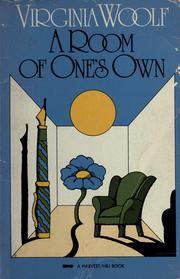
by Virginia Woolf
“Virginia Woolf's A Room of One's Own argues writers need concrete resources—private space and £500 annually—not just talent.”
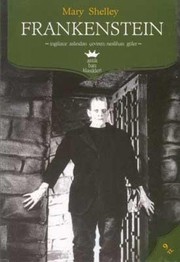
by Mary Shelley
“examining works from Frankenstein and Darwin's Origin of Species to Virginia Woolf's feminist manifesto and Harry Potter's publishing revolution”
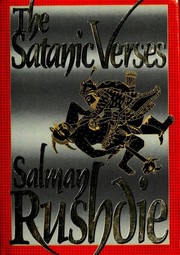
by Salman Rushdie
“Galileo's scientific method debates and Rushdie's Satanic Verses controversy demonstrate that a book's cultural impact often exceeds its actual readership.”
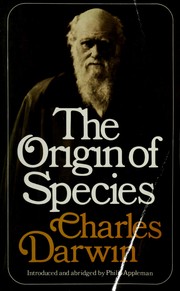
by Charles Darwin
“examining works from Frankenstein and Darwin's Origin of Species to Virginia Woolf's feminist manifesto and Harry Potter's publishing revolution”

by J.K. Rowling
“examining works from Frankenstein and Darwin's Origin of Species to Virginia Woolf's feminist manifesto and Harry Potter's publishing revolution”
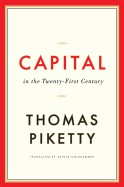
by Thomas Piketty
“Most Piketty readers only highlighted passages in the first two chapters yet the work fueled left-populist movements. The panel reveals that analysis of Kindle highlighting patterns shows readers of Thomas Piketty's 700-page economics bestseller only marked passages in the opening chapters, yet the book still propelled Bernie Sanders and Jeremy Corbyn's political movements”
More from The Intelligence (Economist)
We summarize every new episode. Want them in your inbox?
The Weekend Intelligence: Shire folk
Out-numbered: AI’s contentious maths milestone
Working through it: the AI jobs boom dawns
Chainsaw sputtering: Milei’s experiment falters
School of shock: teenagers get dimmer
Similar Episodes
Related episodes from other podcasts

Modern Wisdom
May 25
Mostly Wise: Matt McCusker, Andrew Huberman & Tom Segura - #1102

Stuff You Should Know
Feb 14
Selects: How Charles Darwin Worked

Dare to Lead with Brené Brown
Oct 10
Brené with Adam Grant and Simon Sinek on What's Happening at Work, Part 2 of 2

The Jordan Harbinger Show
Aug 30
1375: Alphas | Skeptical Sunday

The Daily (NYT)
Aug 9
Is 'Gentle Parenting' Ruining French Children?
Explore Related Topics
This podcast is featured in Best News Podcasts (2026) — ranked and reviewed with AI summaries.
You're clearly into The Intelligence (Economist).
Every Monday, we deliver AI summaries of the latest episodes from The Intelligence (Economist) and 192+ other podcasts. Free for one show.
Start My Monday DigestNo credit card · Unsubscribe anytime