Poison
Episode
42 min
Read time
2 min
Topics
Science & Discovery, History
AI-Generated Summary
Key Takeaways
- ✓Arsenic poisoning mechanics: Requires 200-300mg (one teaspoon) but takes days or weeks to kill because victims vomit after 15 minutes, requiring repeated doses while cleaning evidence and avoiding milk curdling that signals contamination.
- ✓Cyanide's lethal speed: Works within minutes by blocking oxygen processing enzymes in cells, causing blinding headaches and convulsions before death in approximately ten minutes, making it the fastest-acting common poison available.
- ✓Dose determines toxicity: Paracelsus established in 1538 that everything becomes poisonous at sufficient quantities. Delivery method matters critically—skin absorption, inhalation, or ingestion produce vastly different outcomes even with identical compounds.
- ✓Thallium detection breakthrough: Agatha Christie's accurate description of thallium poisoning symptoms in "The Pale Horse," particularly hair loss, enabled doctors to diagnose and save two real poisoning victims who otherwise would have died undiagnosed.
What It Covers
The science and history of poisons, from arsenic to cyanide, exploring their use in literature, medicine, and murder, with chemists demonstrating lethal compounds and explaining dosage, symptoms, and antidotes throughout history.
Key Questions Answered
- •Arsenic poisoning mechanics: Requires 200-300mg (one teaspoon) but takes days or weeks to kill because victims vomit after 15 minutes, requiring repeated doses while cleaning evidence and avoiding milk curdling that signals contamination.
- •Cyanide's lethal speed: Works within minutes by blocking oxygen processing enzymes in cells, causing blinding headaches and convulsions before death in approximately ten minutes, making it the fastest-acting common poison available.
- •Dose determines toxicity: Paracelsus established in 1538 that everything becomes poisonous at sufficient quantities. Delivery method matters critically—skin absorption, inhalation, or ingestion produce vastly different outcomes even with identical compounds.
- •Thallium detection breakthrough: Agatha Christie's accurate description of thallium poisoning symptoms in "The Pale Horse," particularly hair loss, enabled doctors to diagnose and save two real poisoning victims who otherwise would have died undiagnosed.
Notable Moment
A chemist's son ate a toxic berry at an Italian botanical garden despite warnings. Emergency protocols required immediate hospital transport and charcoal treatment. The child survived, illustrating how proper medical intervention overcomes many poisonings.
Episode Transcript
This BBC podcast is supported by ads outside The UK. Make their holiday unforgettable with a gift that says it all from Pandora Jewelry. A gift that tells a story and shows you know theirs. That doesn't just sparkle, but speaks. From new festive charms to forever rings and personal engravings. This season, give a gift that's perfectly theirs. Whether you're shopping for a shiny surprise for your significant other, matching bracelets to celebrate your friendship, or a heartfelt gift for a family member, say more this holiday season with Pandora. Shop now at pandora.net or visit your closest Pandora store. Looking to transform your business through better HR and payroll? Meet Paycor, a Paychex company, the powerhouse solution that empowers leaders to drive results. From recruiting and development to payroll and analytics, Paycor connects you with the people, data, and expertise you need to succeed. Their innovative platform helps you make smarter decisions about your most valuable asset, your people. Ready to become a better leader? Visit paycor.com/leaders to learn more. That's paycor.com/leaders. Your charitable giving stack just called, and it wants a glow up. Wren Technology is used by the top institutions in the country for donor advised funds. They're the fastest growing giving vehicle for a reason. Wren just makes giving a lot less taxing. Learn more at reninc.com. BBC Sounds. Music, radio, podcasts. Hello. I'm Brian Cox. I'm Robert Ince, and this is the Infinite Monkey Cage. Now if there's one thing that the British public absolutely love, it's sitting down on a Sunday evening after a roast beef dinner with Yorkshire pudding and lashings of gravy, and there's the kitchen sink freshly scoured with Vim, the antimacassas laundered and flat against the armchair, all ready for us to lean back and watch someone being slowly poisoned. On television, generally. Yes. This week, we go to the shelf in the medicine cupboard that was strictly out of bounds, the one that Roald Dahl was very careful to say that George avoided when he was making his marvelous medicine for his awful grandmother who had a puckered up mouth like a dog's bottom, which is one of my favorite lines from literature. If you've if if Roald Dahl, if there is one line that must live on, it is she had a puckered up mouth like a dog's bottom. And there's someone who studied Franky Howard as well. Oh, yeah. No. I I did it with real I did the full Jack and Ori on it there. You remember you used to watch Jack and Ori have that real kind of zeal there. Anyway, so little sketch of Quentin Blake there at the side, but it was that I would say, pucker it up, Matt. I if I could've used that in my opinion going on? Don't worry. We don't follow the linear narrative of the Now Show, I'm afraid, my friend. Because we've realized that now is only a concept in the laws of physics, and …
Get the full transcript (8,196 words) + summary by email — free
One-time email with the complete transcript and AI summary of this episode. No account needed.
One email, no spam. We’ll also show you what SignalCast does.

You just read a 3-minute summary of a 39-minute episode.
Get The Infinite Monkey Cage summarized like this every Monday — plus up to 2 more podcasts, free.
Pick Your Podcasts — FreeKeep Reading


Books, tools, and gear mentioned in this episode
SignalCast may earn commission on purchases via these links. As an Amazon Associate, SignalCast earns from qualifying purchases.
Books
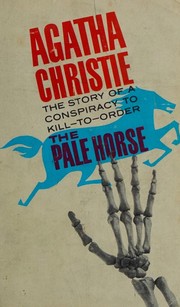
by Agatha Christie
“Agatha Christie's accurate description of thallium poisoning symptoms in "The Pale Horse," particularly hair loss, enabled doctors to diagnose and save two real poisoning victims who otherwise would have died undiagnosed.”
More from The Infinite Monkey Cage
We summarize every new episode. Want them in your inbox?
Introducing... Life Without
The North Pole Unwrapped - Russell Kane, Felicity Aston and Lloyd Peck
Monkey Business - Robin Dunbar, Dave Gorman and Jo Setchell
Head in the Clouds - Owain Wyn Evans, Gavin Pretor-Pinney, Amanda Maycock
Fusion – Ria Lina, Yasmin Andrew and Howard Wilson
Similar Episodes
Related episodes from other podcasts

Stuff You Should Know
Aug 4
Beans and Rice Feeds the World

Science Vs
Dec 4
Chiropractors: Are They Legit?

Modern Wisdom
Sep 12
Raccoon Wars, NFL Scammers & Past Crimes - Matt McCusker #1149

The Long Run with Luke Timmerman
Sep 9
Ep209: Mathai Mammen on Developing Drugs Against Undruggable Targets

The Founders Podcast
Sep 5
#432 The Mind of Napoleon
Explore Related Topics
This podcast is featured in Best Science Podcasts (2026) — ranked and reviewed with AI summaries.
You're clearly into The Infinite Monkey Cage.
Every Monday, we deliver AI summaries of the latest episodes from The Infinite Monkey Cage and 192+ other podcasts. Free for one show.
Start My Monday DigestNo credit card · Unsubscribe anytime