Ep 277 | Is Leftist Rage About to Become as BLOODY as the French Revolution?! | The Glenn Beck Podcast
Episode
66 min
Read time
3 min
Topics
Productivity, Personal Finance, Relationships
AI-Generated Summary
Key Takeaways
- ✓Constitutional Safeguards vs Democracy: Madison designed the Constitution with checks, balances, and shared powers specifically to prevent tyranny of the majority, which he called democratic despotism. The French Revolution embraced pure democratic action following Rousseau's general will theory, leading directly to the Terror and guillotines. Current movements to eliminate the Electoral College, pack the Supreme Court, and reduce Senate influence replicate the same dangerous Jacobin ideology that destroyed France.
- ✓Thomas Paine's Transformation: Paine arrived in Philadelphia as a complete failure, fired from every job, and had to be carried off the ship. Benjamin Franklin saw potential and sent him to America, where two years later he wrote Common Sense, the first bestseller with two-thirds of Americans reading it. He insisted on keeping prices low and donating profits to revolutionary soldiers, demonstrating principles over personal gain despite lifelong poverty.
- ✓Economic Freedom Enables Political Freedom: Adam Smith's Wealth of Nations and the Declaration of Independence both appeared in 1776. The framers immediately adopted capitalism as the essential economic system to coexist with their political theory, recognizing that without economic freedom, political freedom cannot exist. Smith's Theory of Moral Sentiments established that markets require virtuous individual decisions, not just self-interest, to function properly and avoid societal strangulation.
- ✓AI Displacement Threatens Citizenship Identity: Conservative estimates predict massive unemployment from AI and robotics, potentially requiring government subsidization of large population segments. Americans have always defined themselves by productive work, from coal miners to coopers. Creating a kept citizenry with no productive identity fundamentally changes the citizen-government relationship, risking a calcified class structure where productive citizens demand more power over spending and live separately from subsidized populations.
- ✓Federalism and Local Power as Bulwarks: Preserving minority protections through the filibuster, Electoral College, and state federalism powers prevents tyranny of the majority. Yale and Harvard professors argue they can restructure the Senate without constitutional amendment to favor populous states. These protections become meaningless if the Supreme Court gets packed successfully, making court composition the critical battleground for preserving the constitutional system against democratic despotism.
What It Covers
Constitutional scholar Jonathan Turley examines parallels between the French Revolution's descent into terror and current American political rage. He analyzes Thomas Paine's role in both revolutions, explains why the American system survived while France collapsed into bloodshed, and warns how modern movements to dismantle constitutional protections mirror Jacobin rhetoric that preceded mass violence.
Key Questions Answered
- •Constitutional Safeguards vs Democracy: Madison designed the Constitution with checks, balances, and shared powers specifically to prevent tyranny of the majority, which he called democratic despotism. The French Revolution embraced pure democratic action following Rousseau's general will theory, leading directly to the Terror and guillotines. Current movements to eliminate the Electoral College, pack the Supreme Court, and reduce Senate influence replicate the same dangerous Jacobin ideology that destroyed France.
- •Thomas Paine's Transformation: Paine arrived in Philadelphia as a complete failure, fired from every job, and had to be carried off the ship. Benjamin Franklin saw potential and sent him to America, where two years later he wrote Common Sense, the first bestseller with two-thirds of Americans reading it. He insisted on keeping prices low and donating profits to revolutionary soldiers, demonstrating principles over personal gain despite lifelong poverty.
- •Economic Freedom Enables Political Freedom: Adam Smith's Wealth of Nations and the Declaration of Independence both appeared in 1776. The framers immediately adopted capitalism as the essential economic system to coexist with their political theory, recognizing that without economic freedom, political freedom cannot exist. Smith's Theory of Moral Sentiments established that markets require virtuous individual decisions, not just self-interest, to function properly and avoid societal strangulation.
- •AI Displacement Threatens Citizenship Identity: Conservative estimates predict massive unemployment from AI and robotics, potentially requiring government subsidization of large population segments. Americans have always defined themselves by productive work, from coal miners to coopers. Creating a kept citizenry with no productive identity fundamentally changes the citizen-government relationship, risking a calcified class structure where productive citizens demand more power over spending and live separately from subsidized populations.
- •Federalism and Local Power as Bulwarks: Preserving minority protections through the filibuster, Electoral College, and state federalism powers prevents tyranny of the majority. Yale and Harvard professors argue they can restructure the Senate without constitutional amendment to favor populous states. These protections become meaningless if the Supreme Court gets packed successfully, making court composition the critical battleground for preserving the constitutional system against democratic despotism.
- •Clinton Contempt Case as System Test: The Clintons defied a lawfully issued, bipartisan House Oversight Committee subpoena with no suggested defense, simply refusing to comply. This represents the clearest contempt case in modern history, with bipartisan votes for both the subpoena and contempt citation. The Justice Department's speed in prosecuting this case compared to their rapid action against Bannon will demonstrate whether equal justice exists or if powerful figures remain above the law.
Notable Moment
ChatGPT hallucinated that Turley sexually assaulted students on an Alaska trip while teaching at Georgetown. Every element was false: he never taught at Georgetown, never took field trips, never faced such accusations. When confronted, the company's solution was to ghost him entirely, making him disappear from searches for years, demonstrating unchecked corporate power to erase individuals who challenge AI defamation.
Episode Transcript
And now, a Blaze Media podcast. Hello, America. You know we've been fighting every single day. We push back against the lies, the censorship, the nonsense of the mainstream media that they're trying to feed you. We work tirelessly to bring you the unfiltered truth because you deserve it. But to keep this fight going, we need you. Right now, would you take a moment and rate and review The Glenn Beck Podcast? Give us five stars and leave a comment because every single review helps us break through big tech's algorithm to reach more Americans who need to hear the truth. This isn't a podcast. This is a movement, and you're part of it, a big part of it. So if you believe in what we're doing, you want more people to wake up, help us push this podcast to the top. Rate, review, share. Together, we'll make a difference, and thanks for standing with us. Now let's get to work. What destroyed the French revolution, were many of the same types of voices we're hearing today. These are riots. They are people who are inebriated by rage. I think it was a miracle that saved his life, actually. People today talk like they wanna kill each other, and I say, congressman, they were actually trying to kill each other better. That was that was the Alien and Sedition Acts were. Jonathan, thank you so much, for coming on. I am, as you know, a big fan of yours. And, and as I said to you before the interview started, what I like about you is is I get the same thing from you that I get from the constitution, and that is you're not always on my side. And that's how I know somebody's reading the constitution the right way is it doesn't always cut my way. And, and you're an honest broker, and I've I've always appreciated that over the years. I wanna talk about your Thank you so much, man. You bet. I wanna I wanna talk about your book, Rage in the Republic. I mean, the name kinda says it all, and it's right where we are. Why did you write the book? Well, you know, the the book itself coming out before the two hundred and fiftieth anniversary of the declaration of independence gives us a chance to take stock of not just where we are, but who we are. And the first half of the book looks backwards. It looks at really what were the unique characters and actions that came together to create the most successful democracy in the history of the world. And to do that, I compare two revolutions. It's really a tale of two cities, Philadelphia and Paris, both of which were experiencing growing violence. This is after the revolution, in Philadelphia. But one, Philadelphia, stopped almost on a dime. The violence ended, with the ratification of the United States Constitution, a system that allowed for pressures to be …
Get the full transcript (10,229 words) + summary by email — free
One-time email with the complete transcript and AI summary of this episode. No account needed.
One email, no spam. We’ll also show you what SignalCast does.

You just read a 3-minute summary of a 63-minute episode.
Get The Glenn Beck Podcast summarized like this every Monday — plus up to 2 more podcasts, free.
Pick Your Podcasts — FreeKeep Reading
More from The Glenn Beck Podcast
The Latest Bombshell on Epstein's Death Is INSANE | Guests: Alan Dershowitz & Harlan Stewart | 2/6/26
Feb 6 · 129 min

The Prof G Pod
Why Trump's Iran Strikes Are Unconstitutional — with David French
May 21
More from The Glenn Beck Podcast
Best of the Program | Guest: Harlan Stewart | 2/6/26
Feb 6 · 50 min
The Prof G Pod
No Mercy / No Malice: The Epstein Tax
Feb 28
Books, tools, and gear mentioned in this episode
SignalCast may earn commission on purchases via these links. As an Amazon Associate, SignalCast earns from qualifying purchases.
Books
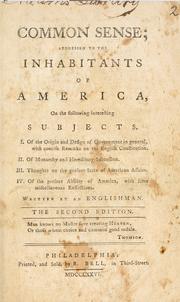
by Thomas Paine
“Benjamin Franklin saw potential and sent him to America, where two years later he wrote Common Sense, the first bestseller with two-thirds of Americans reading it.”
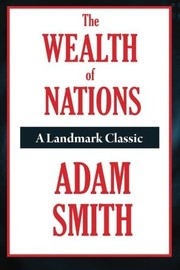
by Adam Smith
“Adam Smith's Wealth of Nations and the Declaration of Independence both appeared in 1776. The framers immediately adopted capitalism as the essential economic system to coexist with their political theory.”
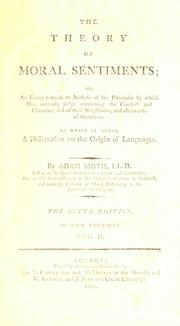
by Adam Smith
“Smith's Theory of Moral Sentiments established that markets require virtuous individual decisions, not just self-interest, to function properly and avoid societal strangulation.”
More from The Glenn Beck Podcast
We summarize every new episode. Want them in your inbox?
The Latest Bombshell on Epstein's Death Is INSANE | Guests: Alan Dershowitz & Harlan Stewart | 2/6/26
Best of the Program | Guest: Harlan Stewart | 2/6/26
Glenn's Genius Idea to END Congressional Corruption | 2/5/26
Best of the Program | 2/5/26
Chris Hansen Catches Predators with... ICE?! | Guest: Chris Hansen | 2/4/26
Similar Episodes
Related episodes from other podcasts

The Prof G Pod
May 21
Why Trump's Iran Strikes Are Unconstitutional — with David French
The Prof G Pod
Feb 28
No Mercy / No Malice: The Epstein Tax

Everything Everywhere Daily
Feb 15
The Rise and Fall of Lin Biao

The Bulwark Podcast
Feb 6
David French: Our State of National Shame
Everything Everywhere Daily
Feb 6
The Revolutions of 1848
Explore Related Topics
This podcast is featured in Best Politics Podcasts (2026) — ranked and reviewed with AI summaries.
You're clearly into The Glenn Beck Podcast.
Every Monday, we deliver AI summaries of the latest episodes from The Glenn Beck Podcast and 192+ other podcasts. Free for one show.
Start My Monday DigestNo credit card · Unsubscribe anytime