#418 Phil Knight: Founder of Nike
Episode
63 min
Read time
3 min
Topics
Career Growth, Relationships, Investing
AI-Generated Summary
Key Takeaways
- ✓Founder-Market Fit Through Belief: Knight discovered he was a poor encyclopedia and mutual fund salesman but excelled selling running shoes because he genuinely believed running improved lives. The lesson: salespeople who believe in their product transmit that conviction to customers, making persuasion unnecessary. Seek work where your personal conviction aligns with what you're selling — customers sense authentic belief and respond to it differently than to scripted pitches.
- ✓Choose Co-founders Who Complement Your Weaknesses: Knight, a finance and distribution thinker, partnered with Bill Bowerman, an obsessive product engineer who calculated that removing one ounce from a shoe saves 55 pounds of effort per mile over 880 steps. Bowerman's product obsession gave Nike its technical edge. Identify your own blind spots early and find a co-founder whose strengths directly cover those gaps before scaling.
- ✓Aggressive Inventory Reinvestment as Growth Strategy: Knight deliberately drained Nike's bank account after every sales cycle, immediately doubling inventory orders rather than holding cash reserves. He believed demand consistently exceeded annual sales figures. This kept the company perpetually cash-poor but doubled revenue for five consecutive years. The risk: it required constant bank relationships and nearly caused bankruptcy multiple times before the 1980 IPO resolved the structural problem.
- ✓Pre-Commitment Discounts Solve Cash Flow Problems: When chronic cash shortages threatened operations, Knight offered retailers like Nordstrom and Athlete's Foot discounts of up to 7% in exchange for nonrefundable orders placed six months in advance. This created predictable lead times, reduced shipment complexity, and gave Nike leverage to negotiate larger credit lines from financing partners. Pre-commitment pricing structures can convert cash flow crises into planning advantages.
- ✓Expand the Market by Celebrating the Activity, Not the Product: Bowerman wrote a book called *Jogging* in the mid-1960s when running was considered socially abnormal — drivers threw objects at runners from cars. The book sold millions of copies and dramatically expanded the addressable market for running shoes without directly advertising Nike. Knight's first retail store stocked running books and comfortable chairs, creating community around the sport rather than pushing product.
What It Covers
David Senra reads and analyzes Phil Knight's memoir *Shoe Dog*, tracing Nike's founding from a 1962 Stanford business school paper through its IPO. The episode covers Knight's partnership with coach Bill Bowerman, near-bankruptcy experiences across seven banks, the transition from importing Japanese shoes to building the Nike brand, and Knight's reflections on ambition versus family.
Key Questions Answered
- •Founder-Market Fit Through Belief: Knight discovered he was a poor encyclopedia and mutual fund salesman but excelled selling running shoes because he genuinely believed running improved lives. The lesson: salespeople who believe in their product transmit that conviction to customers, making persuasion unnecessary. Seek work where your personal conviction aligns with what you're selling — customers sense authentic belief and respond to it differently than to scripted pitches.
- •Choose Co-founders Who Complement Your Weaknesses: Knight, a finance and distribution thinker, partnered with Bill Bowerman, an obsessive product engineer who calculated that removing one ounce from a shoe saves 55 pounds of effort per mile over 880 steps. Bowerman's product obsession gave Nike its technical edge. Identify your own blind spots early and find a co-founder whose strengths directly cover those gaps before scaling.
- •Aggressive Inventory Reinvestment as Growth Strategy: Knight deliberately drained Nike's bank account after every sales cycle, immediately doubling inventory orders rather than holding cash reserves. He believed demand consistently exceeded annual sales figures. This kept the company perpetually cash-poor but doubled revenue for five consecutive years. The risk: it required constant bank relationships and nearly caused bankruptcy multiple times before the 1980 IPO resolved the structural problem.
- •Pre-Commitment Discounts Solve Cash Flow Problems: When chronic cash shortages threatened operations, Knight offered retailers like Nordstrom and Athlete's Foot discounts of up to 7% in exchange for nonrefundable orders placed six months in advance. This created predictable lead times, reduced shipment complexity, and gave Nike leverage to negotiate larger credit lines from financing partners. Pre-commitment pricing structures can convert cash flow crises into planning advantages.
- •Expand the Market by Celebrating the Activity, Not the Product: Bowerman wrote a book called *Jogging* in the mid-1960s when running was considered socially abnormal — drivers threw objects at runners from cars. The book sold millions of copies and dramatically expanded the addressable market for running shoes without directly advertising Nike. Knight's first retail store stocked running books and comfortable chairs, creating community around the sport rather than pushing product.
- •Separate Calling from Career When Evaluating Work: Knight spent seven years working as an accountant and later a Portland State accounting professor while building Blue Ribbon part-time, paying himself nothing until age 30 when he took an $18,000 annual salary. His framework: find work where the fatigue is bearable, disappointments become fuel, and highs feel unlike anything else. He distinguishes this from a job, profession, or even career — calling it a "calling" with specific emotional markers.
Notable Moment
When Nike's most loyal early employee, Woodell — paralyzed in an accident and facing medical bills — offered Knight his family's entire life savings of $8,000 with no paperwork or interest, Knight accepted. Six years later at the IPO, Knight converted that loan to stock worth $1.6 million, a 20,000% return on trust.

You just read a 3-minute summary of a 60-minute episode.
Get The Founders Podcast summarized like this every Monday — plus up to 2 more podcasts, free.
Pick Your Podcasts — FreeKeep Reading

Books, tools, and gear mentioned in this episode
SignalCast may earn commission on purchases via these links. As an Amazon Associate, SignalCast earns from qualifying purchases.
Books
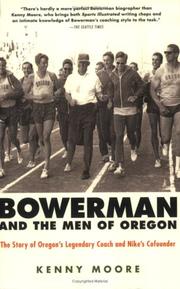 JoggingBy guest
by Bill Bowerman
“Bowerman wrote a book called *Jogging* in the mid-1960s when running was considered socially abnormal — drivers threw objects at runners from cars. The book sold millions of copies and dramatically expanded the addressable market for running shoes.”
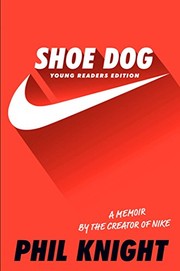
by Phil Knight
“David Senra reads and analyzes Phil Knight's memoir *Shoe Dog*, tracing Nike's founding from a 1962 Stanford business school paper through its IPO.”
More from The Founders Podcast
We summarize every new episode. Want them in your inbox?
Similar Episodes
Related episodes from other podcasts

David Senra
May 24
The Simple Genius of Rick Rubin
David Senra
Mar 15
Marc Andreessen, co-founder of a16z & Netscape

The Knowledge Project
Feb 24
[Outliers] Phil Knight: The Obsession That Built Nike
David Senra
Jan 18
Tobi Lütke, Shopify

My First Million
Jan 12
Why Balance Is the Enemy of Greatness | David Senra
Explore Related Topics
This podcast is featured in Best Business Podcasts (2026) — ranked and reviewed with AI summaries.
Read this week's Investing & Markets Podcast Insights — cross-podcast analysis updated weekly.
You're clearly into The Founders Podcast.
Every Monday, we deliver AI summaries of the latest episodes from The Founders Podcast and 192+ other podcasts. Free for one show.
Start My Monday DigestNo credit card · Unsubscribe anytime