#411 Tortured Into Greatness: The Life of Andre Agassi
Episode
61 min
Read time
3 min
Topics
Career Growth, Productivity, Relationships
AI-Generated Summary
Key Takeaways
- ✓Volume-based mastery through forced repetition: Agassi's father mandated 2,500 ball hits daily, totaling 17,500 weekly and nearly one million annually. This mathematical approach to skill development created world-class ability despite complete lack of intrinsic motivation. The principle demonstrates how pure volume and consistency can produce excellence even when passion is absent, though at significant psychological cost requiring decades to process and overcome.
- ✓Perfectionism as performance destroyer: Coach Brad Gilbert identified that attempting perfect shots on every ball created unnecessary risk and mental pressure. The alternative strategy focused on consistency over brilliance, recognizing you only need to outperform one opponent, not achieve perfection. This shift from chasing impossible standards to tactical superiority transformed Agassi's game, proving that reliable execution beats spectacular attempts that frequently fail.
- ✓Self-talk as competitive advantage: Agassi won 869 career matches, with many victories occurring during afternoon shower sessions where he rehearsed mental scripts. He repeated mantras like "control what you can control" and gave himself strict orders to take points one at a time. Speaking these affirmations aloud created belief and courage, demonstrating how deliberate internal dialogue shapes performance under pressure more than physical preparation alone.
- ✓Purpose beyond self as motivation source: Agassi felt empty after reaching number one because rankings represented others' goals, not his own. His greatest fulfillment came from helping restaurant manager Frankie by setting aside Nike stock for his children's college tuition. Later, playing for Team USA's Olympic gold and his charitable school provided sustainable motivation, proving that missions larger than personal achievement generate deeper satisfaction and resilience.
- ✓Rock bottom as rebuilding foundation: At age 27, ranked 141 and using crystal meth, Agassi faced a binary choice: quit completely or rebuild from scratch. He committed to starting in minor league challenger tournaments, an unprecedented move for a former number one. The decision required accepting total humiliation to create momentum, demonstrating that genuine transformation demands destroying current identity rather than incremental improvement.
What It Covers
Andre Agassi's autobiography reveals how his father forced him into tennis at age four, hitting one million balls annually by age seven. Despite becoming world number one and winning multiple Grand Slams, Agassi hated tennis his entire career. The book chronicles his fall to rank 141, crystal meth use, and legendary comeback driven by redefining his purpose.
Key Questions Answered
- •Volume-based mastery through forced repetition: Agassi's father mandated 2,500 ball hits daily, totaling 17,500 weekly and nearly one million annually. This mathematical approach to skill development created world-class ability despite complete lack of intrinsic motivation. The principle demonstrates how pure volume and consistency can produce excellence even when passion is absent, though at significant psychological cost requiring decades to process and overcome.
- •Perfectionism as performance destroyer: Coach Brad Gilbert identified that attempting perfect shots on every ball created unnecessary risk and mental pressure. The alternative strategy focused on consistency over brilliance, recognizing you only need to outperform one opponent, not achieve perfection. This shift from chasing impossible standards to tactical superiority transformed Agassi's game, proving that reliable execution beats spectacular attempts that frequently fail.
- •Self-talk as competitive advantage: Agassi won 869 career matches, with many victories occurring during afternoon shower sessions where he rehearsed mental scripts. He repeated mantras like "control what you can control" and gave himself strict orders to take points one at a time. Speaking these affirmations aloud created belief and courage, demonstrating how deliberate internal dialogue shapes performance under pressure more than physical preparation alone.
- •Purpose beyond self as motivation source: Agassi felt empty after reaching number one because rankings represented others' goals, not his own. His greatest fulfillment came from helping restaurant manager Frankie by setting aside Nike stock for his children's college tuition. Later, playing for Team USA's Olympic gold and his charitable school provided sustainable motivation, proving that missions larger than personal achievement generate deeper satisfaction and resilience.
- •Rock bottom as rebuilding foundation: At age 27, ranked 141 and using crystal meth, Agassi faced a binary choice: quit completely or rebuild from scratch. He committed to starting in minor league challenger tournaments, an unprecedented move for a former number one. The decision required accepting total humiliation to create momentum, demonstrating that genuine transformation demands destroying current identity rather than incremental improvement.
- •Relationship selection as destiny determinant: Agassi married Brooke Shields despite knowing she was wrong for him, driven by fear of remaining in casual relationship patterns. He literally thought "I wish I had a decoy groom" at his wedding. This catastrophic decision, made from weakness rather than conviction, led to years of misery. The lesson: forcing commitment to break patterns without addressing underlying issues creates worse problems than the original pattern.
Notable Moment
After losing the fourth set in the 1992 Wimbledon final, Agassi called his father expecting praise for winning the championship. Instead, his father criticized him for losing that set, then went silent. The silence was not disapproval but tears of pride his father could not express, revealing how a lifetime of harsh criticism masked deep love and emotional incapacity.
Episode Transcript
I open my eyes and I don't know where I am or who I am. Not all that unusual. I've spent half my life not knowing. Still, this feels different. This confusion is more frightening, more total. I look up. I'm lying on the floor beside the bed. I remember now. I moved from the bed to the floor in the middle of the night. I do that most nights. Better for my back. I count to three, then start the long difficult process of standing. With a cough, a groan, I roll onto my side, then curl into the fetal position, then flip over onto my stomach. I'm a young man, relatively speaking, 36, but I wake as if I'm 96. After three decades of sprinting, stopping on a dime, jumping high, and landing hard, my body no longer feels like my body, especially in the morning. Consequently, my mind doesn't feel like my mind. Upon opening my eyes, I'm a stranger to myself. I run quickly through the basic facts. My name is Andre Agassi. My wife's name is Steffi Graf. We have two children, a son and a daughter, five and three. We live in Las Vegas, Nevada, but currently reside in a suite at the Four Seasons Hotel in New York City because I'm playing in the two thousand six US Open, my last US Open. In fact, my last tournament ever. I play tennis for a living even though I hate tennis. Hate it with a dark and secret passion and always have. As this last piece of identity falls into place, I slide to my knees and in a whisper, I say, please let this be over. Then I say, I'm not ready for it to be over. Hate brings me to my knees. Love gets me on my feet. Gil, my trainer, my friend, my surrogate father, explains it this way. Your body is saying that it doesn't wanna do this anymore. My body has been saying that for a long time, I tell Gil, almost as long as I've been saying it. My body doesn't wanna retire. My body has already retired. My body has moved to Florida and bought a condo. So I've been negotiating with my body, asking it to come out of retirement for a few hours here and a few hours there. Much of this negotiation revolves around a cortisone shot that temporarily dulls the pain. Before the shot works, however, it causes its own torments. I got one yesterday so I could play tonight. It was the third shot this year, the thirteenth of my career, and by far the most alarming. The burning sensation made me bite my lip, then came the pressure. The tiny space in my spine where the nerves are housed began to feel vacuum packed. The pressure built until I thought my back would burst. Pressure is how you know everything's working, the doctor said. Words to live by, doc. I limp …
Get the full transcript (12,262 words) + summary by email — free
One-time email with the complete transcript and AI summary of this episode. No account needed.
One email, no spam. We’ll also show you what SignalCast does.

You just read a 3-minute summary of a 58-minute episode.
Get The Founders Podcast summarized like this every Monday — plus up to 2 more podcasts, free.
Pick Your Podcasts — FreeKeep Reading


Books, tools, and gear mentioned in this episode
SignalCast may earn commission on purchases via these links. As an Amazon Associate, SignalCast earns from qualifying purchases.
Books
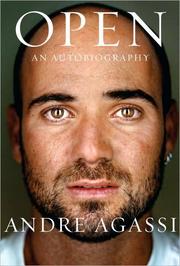
by Andre Agassi
“Andre Agassi's autobiography reveals how his father forced him into tennis at age four, hitting one million balls annually by age seven.”
More from The Founders Podcast
We summarize every new episode. Want them in your inbox?
Similar Episodes
Related episodes from other podcasts

The Daily (NYT)
Sep 1
How a Teenager Found Undiagnosed Brain Injuries in the Military

Everything Everywhere Daily
Aug 23
The Doctor's Riot of 1788

The Jordan Harbinger Show
Aug 21
1371: Showed Intent to Roam, so In-Laws Stole Home | Feedback Friday

Huberman Lab
Aug 20
Essentials: How to Access Your Creativity | Rick Rubin
Huberman Lab
Aug 6
Essentials: Control Your Brain Chemistry for Focus, Motivation & Well-Being
Explore Related Topics
This podcast is featured in Best Business Podcasts (2026) — ranked and reviewed with AI summaries.
You're clearly into The Founders Podcast.
Every Monday, we deliver AI summaries of the latest episodes from The Founders Podcast and 192+ other podcasts. Free for one show.
Start My Monday DigestNo credit card · Unsubscribe anytime