Ian Bremmer on the Risks America Poses to the World
Episode
91 min
Read time
3 min
Topics
Personal Finance, Relationships, Leadership
AI-Generated Summary
Key Takeaways
- ✓Trump as FDR Parallel: Bremmer frames Trump as the first president since FDR attempting to fundamentally dismantle checks and balances on executive power. Like FDR, Trump is driving a genuine political revolution — but where FDR built a professionalized administrative state and multilateral institutions, Trump targets both as enemies. The revolution may fail, but the underlying demand from Americans who feel the system is broken will persist regardless of whether Trump succeeds.
- ✓Iran War as Strategic Own Goal: Trump's Iran strategy collapsed because assassinating regime leadership removed the very deterrent that had previously stopped Iran from closing the Strait of Hormuz. Once leaders were killed, Iran had nothing left to lose and shut the strait — a move they had always had the military capacity for but feared would trigger regime change. Trump's eyes were bigger than his stomach: he had a strong opening punch but a glass jaw when Iran hit back hard.
- ✓China Summit as US Defeat: Trump's April 2 "Liberation Day" tariff strategy aimed to force China to capitulate, but China retaliated with critical minerals export licenses, threatening to shut down US factory floors. CEOs traveled to Mar-a-Lago demanding a deal. The resulting summit — framed as historic by Beijing — represents a full reversal of Trump's stated China policy, with China gaining prestige as a US equal while retaining leverage it did not have before the confrontation began.
- ✓Petro-State vs. Electrostate Competition: The US produces more oil than any country on earth, including Saudi Arabia, but China dominates the export of green energy infrastructure — the physical machinery that converts renewable sources into power. China's green tech exports now exceed US oil and gas exports in value. Any country building out renewable energy buys Chinese infrastructure, creating dependency chains analogous to Europe's reliance on Russian gas or global reliance on Taiwan semiconductors.
- ✓Housing Scarcity Kills Social Mobility: The US historically achieved class mobility by people moving to richer cities. That mechanism has broken down because superstar cities like San Francisco, New York, and Boston made housing construction nearly impossible. Data now shows richer people move into wealthy cities while poorer people move out. Silicon Valley, where Meta and Nvidia are headquartered, remains a landscape of strip malls and single-family homes rather than the dense urban towers being built in Shenzhen.
What It Covers
Ezra Klein and Ian Bremmer analyze Donald Trump as both symptom and cause of American political dysfunction, examining the failed Iran war strategy, the US-China summit climb-down, America's petro-state identity versus China's electrostate dominance, and how algorithmic media and housing scarcity have combined to hollow out social mobility and destabilize the global order the US built after World War II.
Key Questions Answered
- •Trump as FDR Parallel: Bremmer frames Trump as the first president since FDR attempting to fundamentally dismantle checks and balances on executive power. Like FDR, Trump is driving a genuine political revolution — but where FDR built a professionalized administrative state and multilateral institutions, Trump targets both as enemies. The revolution may fail, but the underlying demand from Americans who feel the system is broken will persist regardless of whether Trump succeeds.
- •Iran War as Strategic Own Goal: Trump's Iran strategy collapsed because assassinating regime leadership removed the very deterrent that had previously stopped Iran from closing the Strait of Hormuz. Once leaders were killed, Iran had nothing left to lose and shut the strait — a move they had always had the military capacity for but feared would trigger regime change. Trump's eyes were bigger than his stomach: he had a strong opening punch but a glass jaw when Iran hit back hard.
- •China Summit as US Defeat: Trump's April 2 "Liberation Day" tariff strategy aimed to force China to capitulate, but China retaliated with critical minerals export licenses, threatening to shut down US factory floors. CEOs traveled to Mar-a-Lago demanding a deal. The resulting summit — framed as historic by Beijing — represents a full reversal of Trump's stated China policy, with China gaining prestige as a US equal while retaining leverage it did not have before the confrontation began.
- •Petro-State vs. Electrostate Competition: The US produces more oil than any country on earth, including Saudi Arabia, but China dominates the export of green energy infrastructure — the physical machinery that converts renewable sources into power. China's green tech exports now exceed US oil and gas exports in value. Any country building out renewable energy buys Chinese infrastructure, creating dependency chains analogous to Europe's reliance on Russian gas or global reliance on Taiwan semiconductors.
- •Housing Scarcity Kills Social Mobility: The US historically achieved class mobility by people moving to richer cities. That mechanism has broken down because superstar cities like San Francisco, New York, and Boston made housing construction nearly impossible. Data now shows richer people move into wealthy cities while poorer people move out. Silicon Valley, where Meta and Nvidia are headquartered, remains a landscape of strip malls and single-family homes rather than the dense urban towers being built in Shenzhen.
- •Technology Reversal Undermines Open Societies: Bremmer's 2006 J-Curve framework — that open societies are more stable than closed ones — no longer holds. Pre-2010 communications technology empowered bottom-up organizing and undermined authoritarian regimes, producing the Arab Spring and Eastern European colored revolutions. Surveillance-based, algorithmic, attention-addictive technology now benefits closed systems like China, which can control and direct patriotic sentiment, while fragmenting and radicalizing open societies. The J-Curve has become a U-curve at best.
- •Gracchi Trap Over Thucydides Trap: The relevant historical parallel for US decline is not the Thucydides Trap of rising versus declining powers going to war. It is the Gracchi Trap — Roman tribunes who broke institutional norms in response to genuine inequality grievances, weakened Rome's credibility with allies, and normalized violations that later leaders exploited further. China is not building alternative global architecture; it is filling the governance vacuum the US is voluntarily abandoning at the UN, WHO, and multilateral trade institutions.
Notable Moment
Bremmer reveals that the Iran ceasefire deal currently on the table — unfreezing Iranian assets in exchange for reopening the Strait of Hormuz, with nuclear negotiations to follow — is structurally worse than the Obama-era JCPOA that Trump spent years denouncing. Iran retains its nuclear capacity, gained financial relief, and holds stronger regional leverage than before the war began.
Episode Transcript
This podcast is supported by Live Right, publisher of the New York Times bestseller, The Gales of November. Award winning journalist, John u Bacon, delivers the definitive account of the wreck of the Edmund Fitzgerald. Drawing on over 100 interviews with the families, friends, and former crewmates of those lost. A perfect Father's Day gift, this propulsive page turner is destined to be a classic, says Ryder Hampton sides, while The Wall Street Journal declares that this history has never been told better. The Gales of November, available now. Over the past month, there are two dominant stories in American foreign policy. One, of course, is the war with Iran. The other is the much anticipated summit between President Trump and Xi Jinping of China. And I think if you look closely at both of these stories, you see that our foreign policy has entered into a period of absolute and complete incoherence. Donald Trump said that the point of the war with Iran was to end the threat of the Iranian regime and to forever end the capability to get nuclear weapons. They will never have a nuclear weapon. This regime will soon learn that no one should challenge the strength and might of the United States Armed Forces. Now if you look at what is being considered, it appears that neither policy is gonna be achieved. So what are we doing there? What are we trying to achieve there now? And if you look at president Trump's entire time in politics, he's been committed to nothing so much as changing America's relationship with China. We can't continue to allow China to rape our country, and that's what they're doing. It's the greatest theft in the history of the world. Containing China, making sure we have power in that relationship, or we begin to detach from it. But if you look at our policy now towards China and you look at that summit with China, are either of those things happening or are we in fact moving in the opposite direction? The American and Chinese people share much in common. We value hard work. We value courage and achievement. We love our families, and we love our countries. Together, we have the chance to draw on these values to create a future of greater prosperity, cooperation, and happiness. There's much I disagree with in Donald Trump's foreign policy, but at the moment, there's just reality that it's not clear what it is. It's not clear what he is trying to achieve or what he is simply settling for or reacting to. So I wanted to do an episode looking at China, Iran, but also just trying to assess Donald Trump as a geopolitical force and as a force that is remaking what America means and what its role is in the world. Ian Bremmer is the president and founder of the Eurasia Group and GZERO Media. He's also the author of, among other books, Every Nation for Itself, What …
Get the full transcript (16,952 words) + summary by email — free
One-time email with the complete transcript and AI summary of this episode. No account needed.
One email, no spam. We’ll also show you what SignalCast does.

You just read a 3-minute summary of a 88-minute episode.
Get The Ezra Klein Show summarized like this every Monday — plus up to 2 more podcasts, free.
Pick Your Podcasts — FreeKeep Reading
More from The Ezra Klein Show
Is It Wrong to Love a Chatbot?
Oct 14 · 74 min

Modern Wisdom
Inside The Democratic Party Civil War - Ezra Klein - #1114
Jun 22
More from The Ezra Klein Show
What if A.I. Is Just a ‘Normal Technology’?
Oct 9 · 61 min

Pivot
Trump's Iran Deal, SpaceX’s Wild Ride, and Snap’s Specs
Jun 19
Books, tools, and gear mentioned in this episode
SignalCast may earn commission on purchases via these links. As an Amazon Associate, SignalCast earns from qualifying purchases.
Books
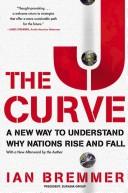 J-CurveBy guest
by Ian Bremmer
“Bremmer's 2006 J-Curve framework — that open societies are more stable than closed ones — no longer holds.”
More from The Ezra Klein Show
We summarize every new episode. Want them in your inbox?
Similar Episodes
Related episodes from other podcasts

Modern Wisdom
Jun 22
Inside The Democratic Party Civil War - Ezra Klein - #1114

Pivot
Jun 19
Trump's Iran Deal, SpaceX’s Wild Ride, and Snap’s Specs

The Daily (NYT)
Apr 8
A Cease-Fire in Iran

The Prof G Pod
Jan 8
The Biggest Global Risks for 2026 — with Ian Bremmer

Pod Save America
Jan 2
Meet Democrats' Go-To Trump Stand In
Explore Related Topics
This podcast is featured in Best Politics Podcasts (2026) — ranked and reviewed with AI summaries.
You're clearly into The Ezra Klein Show.
Every Monday, we deliver AI summaries of the latest episodes from The Ezra Klein Show and 192+ other podcasts. Free for one show.
Start My Monday DigestNo credit card · Unsubscribe anytime