Secretary Pete Buttigieg: The American Dream Is DEAD. We're Running Out Of Time To Fix It!
Episode
114 min
Read time
3 min
Topics
Productivity, Personal Finance, Relationships
AI-Generated Summary
Key Takeaways
- ✓American Dream Displacement: The U.S. no longer leads in upward economic mobility. Statistically, Denmark now offers a higher probability of surpassing your starting economic position than America does. This reversal stems from 30–40 years of tax policy that taxes labor income at higher rates than accumulated wealth, systematically disadvantaging workers who aren't already wealthy and compressing the middle class from below.
- ✓Tax System Structural Bias: The U.S. tax code currently taxes multibillionaires at a lower effective percentage rate than schoolteachers or firefighters. This occurs because capital gains rates fall below income tax rates, and wealthy individuals exploit borrowing against appreciated assets — receiving, for example, $25 million cash against $50 million in stock — generating zero taxable income while living on effectively tax-free liquidity indefinitely.
- ✓Iran War Cost Accountability: The Iran conflict has cost American taxpayers approximately $37.5 billion, raised gas and food prices, and resulted in troop casualties — all without achieving any stated war objective. Neither regime change nor unconditional surrender materialized. Iran now holds greater leverage over the Strait of Hormuz than before hostilities began, creating ongoing oil supply vulnerability that directly raises costs for ordinary Americans.
- ✓AI Wealth Concentration Fork: AI's economic outcome — shorter workweeks with higher household income versus extreme wealth concentration — is entirely a policy choice, not a technological inevitability. Buttigieg points to economist John Maynard Keynes's 1930 prediction that automation would reduce work to 10–15 hours weekly by 2030. Productivity has matched that forecast almost exactly, but working hours haven't fallen, proving that labor-saving technology alone doesn't redistribute gains without deliberate policy intervention.
- ✓Worker Identity Disruption: Job loss from automation doesn't only remove income — it destroys identity. Drawing from his upbringing in industrial Northern Indiana, Buttigieg argues that auto workers who lost jobs in the 1990s often never recovered their sense of belonging, even after retraining. As AI targets white-collar entry-level roles first — per Anthropic's published research — a generation of knowledge workers faces the same identity collapse, not just unemployment.
What It Covers
Former Secretary of Transportation Pete Buttigieg speaks with Steven Bartlett across 114 minutes about the structural collapse of the American dream, the Iran war's economic fallout, AI's threat to worker identity, extreme wealth inequality, a broken tax system that favors billionaires over teachers, and why democratic reform — not partisan reversal — is the only path away from catastrophe.
Key Questions Answered
- •American Dream Displacement: The U.S. no longer leads in upward economic mobility. Statistically, Denmark now offers a higher probability of surpassing your starting economic position than America does. This reversal stems from 30–40 years of tax policy that taxes labor income at higher rates than accumulated wealth, systematically disadvantaging workers who aren't already wealthy and compressing the middle class from below.
- •Tax System Structural Bias: The U.S. tax code currently taxes multibillionaires at a lower effective percentage rate than schoolteachers or firefighters. This occurs because capital gains rates fall below income tax rates, and wealthy individuals exploit borrowing against appreciated assets — receiving, for example, $25 million cash against $50 million in stock — generating zero taxable income while living on effectively tax-free liquidity indefinitely.
- •Iran War Cost Accountability: The Iran conflict has cost American taxpayers approximately $37.5 billion, raised gas and food prices, and resulted in troop casualties — all without achieving any stated war objective. Neither regime change nor unconditional surrender materialized. Iran now holds greater leverage over the Strait of Hormuz than before hostilities began, creating ongoing oil supply vulnerability that directly raises costs for ordinary Americans.
- •AI Wealth Concentration Fork: AI's economic outcome — shorter workweeks with higher household income versus extreme wealth concentration — is entirely a policy choice, not a technological inevitability. Buttigieg points to economist John Maynard Keynes's 1930 prediction that automation would reduce work to 10–15 hours weekly by 2030. Productivity has matched that forecast almost exactly, but working hours haven't fallen, proving that labor-saving technology alone doesn't redistribute gains without deliberate policy intervention.
- •Worker Identity Disruption: Job loss from automation doesn't only remove income — it destroys identity. Drawing from his upbringing in industrial Northern Indiana, Buttigieg argues that auto workers who lost jobs in the 1990s often never recovered their sense of belonging, even after retraining. As AI targets white-collar entry-level roles first — per Anthropic's published research — a generation of knowledge workers faces the same identity collapse, not just unemployment.
- •Democratic System Repair Priorities: Four structural reforms Buttigieg identifies as prerequisites for functional governance: abolishing the Electoral College in favor of national popular vote, ending gerrymandering (currently 9 of 10 House seats are predetermined in a 50/50 country), imposing Supreme Court term limits with a balanced-bench appointment process, and passing a constitutional amendment overturning Citizens United to ban unlimited corporate dark money from elections.
- •Deliberate-Decisive Leadership Framework: Effective executive leadership requires holding two qualities in tension: deliberation — slowing down to analyze before acting — and decisiveness — committing fully once sufficient information exists, then owning consequences without reversal. Buttigieg contrasts this with Trump's bias-for-action style, which he credits for political effectiveness but criticizes for bypassing legal constraints. The next president needs both qualities plus corruption-free judgment, given foreign governments currently investing billions directly into the sitting president's family business interests.
Notable Moment
When pressed using Amazon's four-option hiring framework — strongly inclined, inclined, not inclined, strongly not inclined — Buttigieg resisted deflecting entirely and acknowledged he sits closer to inclined than not on running for president in 2028, while citing his young children as a variable that has fundamentally changed every political calculation he now makes.
Episode Transcript
When others hear noise, T. Rowe Price interprets market signals to find investment opportunities. That's the power of active ETFs from T. Rowe Price. Their portfolio managers approach data from multiple perspectives, analyzing trends and conducting deep research to give you their curiosity backed active management expertise. Learn more about their active ETFs at trowprice.com/explore ETFs. Exchange traded funds, ETFs, are bought and sold at market prices, not NAV. Investors generally incur the cost of the spread between the prices at which shares are bought and sold. Buying and selling shares may result in brokerage commissions, which will reduce returns. T Rowe Price Investment Services Inc. I'm really worried about where we're headed as a country right now. American system is so out of whack that if you are a multibillionaire, you probably pay a lower percentage in taxes than if you're a school teacher or a firefighter. You have levels of inequality that we've almost never seen. There's a rise in political violence, the collapse in trust, and the biggest thing of all that we're facing right now is this massive debt. But it's now escalated to a level that no one can ignore. How how do you think this plays out? I mean, we're on the brink of losing our democracy, and we're running out of time to do something about it. Secretary Pete Buttigieg. Trump made a lot of promises when he came into power. Keen to get your perspective on the Iran war. So the president can't explain why we're there. There's a lot of reasons to suspect that we're just at war because he wanted us to, and now he can't figure out how to get us out of it. Troops have lost their lives. Prices are higher. You're paying more for gas and food or for mortgages because of this war. And so the next president will be doing this at a big disadvantage because so many relationships with our allies have been burned. So I am keen to get your perspective on AI, good, bad. Should we implement a wealth tax? Is there anything you respect about Trump, but also greater Israel, for example? But what does Netanyahu want in the region? And then were you the first person in a presidential candidate to be openly gay? Definitely the first person who's considered to have a shot. And when I finally made peace with this reality that I was gay, I was well into my twenties because I wanted so bad for it not to be true. I'd like to believe we'll get to a day when it's just not a thing. No one cares. Secretary Pete Buttigieg, are you gonna run to be president in 2028? Guys, I've got a favor to ask before this episode begins. The algorithm, if you follow a show, will deliver you the best episodes from that show very prominently in your feed. So when we have our best episodes on this show, the most shared episodes, …
Get the full transcript (22,481 words) + summary by email — free
One-time email with the complete transcript and AI summary of this episode. No account needed.
One email, no spam. We’ll also show you what SignalCast does.

You just read a 3-minute summary of a 111-minute episode.
Get The Diary of a CEO summarized like this every Monday — plus up to 2 more podcasts, free.
Pick Your Podcasts — FreeKeep Reading
More from The Diary of a CEO
Most Replayed Moment: Is Renting Keeping You Poor? What's The Actual Cost Of Home Ownership? David Bach
Sep 18 · 18 min

Lenny's Podcast
90 minutes of unfiltered product advice from Snap and Discord’s product chief | Peter Sellis
Sep 20
More from The Diary of a CEO
AI Debate Ed Zitron, Andrew McAfee, Nate Soares, Roman Yampolskiy
Sep 17 · 144 min

WorkLife with Adam Grant
Can AI make you a better manager? with Hilary Gridley
Aug 11
Books, tools, and gear mentioned in this episode
SignalCast may earn commission on purchases via these links. As an Amazon Associate, SignalCast earns from qualifying purchases.
Books
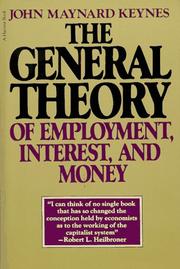
by John Maynard Keynes
“Buttigieg points to economist John Maynard Keynes's 1930 prediction that automation would reduce work to 10–15 hours weekly by 2030.”
other
by Anthropic
“As AI targets white-collar entry-level roles first — per Anthropic's published research — a generation of knowledge workers faces the same identity collapse, not just unemployment.”
More from The Diary of a CEO
We summarize every new episode. Want them in your inbox?
Most Replayed Moment: Is Renting Keeping You Poor? What's The Actual Cost Of Home Ownership? David Bach
AI Debate Ed Zitron, Andrew McAfee, Nate Soares, Roman Yampolskiy
The Man Who Predicted The Iran War: The Next 9/11 Will Target Your Bank Account! | Professor Jiang
Most Replayed Moment: Brain Rot Experts - How To Use AI In A Healthy Way!
Likeability Expert: Stop Doing This, It’s Why People Quietly Avoid You! | Vanessa Van Edwards
Similar Episodes
Related episodes from other podcasts

Lenny's Podcast
Sep 20
90 minutes of unfiltered product advice from Snap and Discord’s product chief | Peter Sellis

WorkLife with Adam Grant
Aug 11
Can AI make you a better manager? with Hilary Gridley

a16z Podcast
Jul 27
Steven Sinofsky: AI Doesn't Need New Rules Yet

Pivot
Jun 30
Comcast Splits, OpenAI Weighs IPO Delay, and Buttigieg Targeted
WorkLife with Adam Grant
Jun 16
Why success is never linear with Claire Hughes Johnson
Explore Related Topics
This podcast is featured in Best Startup Podcasts (2026) — ranked and reviewed with AI summaries.
You're clearly into The Diary of a CEO.
Every Monday, we deliver AI summaries of the latest episodes from The Diary of a CEO and 192+ other podcasts. Free for one show.
Start My Monday DigestNo credit card · Unsubscribe anytime