No.1 Christianity Expert: The Truth About Christianity! The Case For Jesus (Historian's Proof)
Episode
146 min
Read time
3 min
Topics
Health & Wellness, Remote Work, Relationships
AI-Generated Summary
Key Takeaways
- ✓Religious Resurgence Data: Track the 2024–2025 religious upturn as a cultural signal rather than an anomaly. Bible sales hit a 21-year high at 19 million units in the US. Weekly Bible reading rose 12% since 2024, reaching 42% of adults. Christian music streams increased 20%. Wesley attributes this to the collapse of New Atheism's practical utility — its materialist framework failed to answer identity and purpose questions for the generation that adopted it most enthusiastically.
- ✓Historical Reliability of the Gospels: When evaluating ancient sources, compare source proximity to the subject. Jesus has four biographical accounts written within 40–60 years of his death — closer than those for Emperor Tiberius, whose biographers (Suetonius, Tacitus, Cassius Dio) wrote from the second century onward. The earliest source on Jesus is Paul, writing before the Gospels, as a former hostile persecutor of Christians — making his testimony structurally more credible than sympathetic accounts.
- ✓Oral Culture vs. Chinese Whispers: The telephone-game analogy for gospel transmission is structurally flawed. In oral cultures, stories were transmitted communally, not sequentially. Large groups repeated accounts collectively, enabling real-time correction. The feeding of 5,000 had thousands of potential witnesses. The disciples also returned to Jerusalem — the exact location of the crucifixion — to proclaim the resurrection, a strategically risky move that would be irrational if the account were fabricated.
- ✓The Embarrassing Evidence Principle: Historians use "criterion of embarrassment" to assess source reliability. The gospel accounts name women as the first witnesses to the empty tomb — a detail that carried zero credibility in first-century Greco-Roman and Jewish legal culture. Later non-canonical texts like the Gospel of Peter rewrote the scene to place male Roman and Jewish officials at the tomb instead, revealing discomfort with the original account and paradoxically confirming its authenticity.
- ✓The Moral Law Argument: When atheist frameworks invoke evil as evidence against God, they implicitly import moral categories that materialism cannot ground. Richard Dawkins acknowledged in River Out of Eden that DNA "neither knows nor cares" — meaning evolutionary biology cannot produce objective moral categories like evil. Calling a parasite eating a child's eye "evil" requires a moral standard external to biology. Wesley argues this standard requires a moral lawgiver, making the problem of evil self-defeating for strict materialism.
What It Covers
Stephen Bartlett interviews biblical historian and theologian Wesley, examining the historical evidence for Jesus's existence and resurrection, the philosophical case for Christianity as an antidote to modern meaning crises, and why 2024–2025 data shows a measurable religious resurgence — including 19 million Bible sales and a 12% rise in weekly Bible reading among US adults.
Key Questions Answered
- •Religious Resurgence Data: Track the 2024–2025 religious upturn as a cultural signal rather than an anomaly. Bible sales hit a 21-year high at 19 million units in the US. Weekly Bible reading rose 12% since 2024, reaching 42% of adults. Christian music streams increased 20%. Wesley attributes this to the collapse of New Atheism's practical utility — its materialist framework failed to answer identity and purpose questions for the generation that adopted it most enthusiastically.
- •Historical Reliability of the Gospels: When evaluating ancient sources, compare source proximity to the subject. Jesus has four biographical accounts written within 40–60 years of his death — closer than those for Emperor Tiberius, whose biographers (Suetonius, Tacitus, Cassius Dio) wrote from the second century onward. The earliest source on Jesus is Paul, writing before the Gospels, as a former hostile persecutor of Christians — making his testimony structurally more credible than sympathetic accounts.
- •Oral Culture vs. Chinese Whispers: The telephone-game analogy for gospel transmission is structurally flawed. In oral cultures, stories were transmitted communally, not sequentially. Large groups repeated accounts collectively, enabling real-time correction. The feeding of 5,000 had thousands of potential witnesses. The disciples also returned to Jerusalem — the exact location of the crucifixion — to proclaim the resurrection, a strategically risky move that would be irrational if the account were fabricated.
- •The Embarrassing Evidence Principle: Historians use "criterion of embarrassment" to assess source reliability. The gospel accounts name women as the first witnesses to the empty tomb — a detail that carried zero credibility in first-century Greco-Roman and Jewish legal culture. Later non-canonical texts like the Gospel of Peter rewrote the scene to place male Roman and Jewish officials at the tomb instead, revealing discomfort with the original account and paradoxically confirming its authenticity.
- •The Moral Law Argument: When atheist frameworks invoke evil as evidence against God, they implicitly import moral categories that materialism cannot ground. Richard Dawkins acknowledged in River Out of Eden that DNA "neither knows nor cares" — meaning evolutionary biology cannot produce objective moral categories like evil. Calling a parasite eating a child's eye "evil" requires a moral standard external to biology. Wesley argues this standard requires a moral lawgiver, making the problem of evil self-defeating for strict materialism.
- •Individualism and Mental Health Correlation: Expressive individualism — glamorized through remote work culture, delayed relationships, and social media influence — correlates directly with the mental health crisis most acute in Gen Z. Wesley frames humans as structurally relational, created for community rather than autonomy. The data supports this: as individualism peaked, anxiety and depression rates rose. Reconnecting with structured community — religious or otherwise — addresses the isolation that algorithmic connection cannot replicate.
- •Betty the Botanist Framework: When evaluating meaning and purpose, distinguish between scientific explanation and interpretive meaning. Wesley uses the parable of a botanist who runs full chemical analysis on a Valentine's Day rose but misses that it is a love gift. Science accurately describes mechanisms but cannot extract meaning from data. Apply this framework personally: ask not just how something works, but what it communicates — particularly when confronting questions of identity, purpose, and moral obligation.
Notable Moment
Wesley argues that everyone — not just non-believers — is headed to hell by default, because the Bible states no one is inherently good except God. Heaven, he explains, is not populated by good people but by people who recognized their own moral insufficiency and accepted grace through Jesus — reframing salvation as received rather than earned through behavior or belief alone.
Episode Transcript
Am I going to hell? Yes. But here's the thing. Everybody is going to hell, and it's not because they don't believe in God. And look, I'm a historian and a theologian, so I study ancient biblical manuscripts. And if you truly understand what this book is saying, I don't want you to experience that. This is not a place I want to go. So what do I do about that? It's not about trying to earn my way into heaven. It's not about checking off, oh, I read the Bible as many times. I didn't lie. I didn't steal. I didn't cheat. Like, it's none of that. But here's the problem. Unfortunately, we bought the lie that we are the sum of our actions. We're we're chasing after things that aren't going to give us what we actually need, which is also why we live in a world that is lacking in purpose and meaning. But the part that I've always struggled with is the answer being religion as an antidote to that feeling. Because I require a really high standard of evidence Sure. Because of the way that I am. Well, I think not only can it provide an antidote, it can provide the antidote. And I'll explain why. But how can we trust human accounts of these things? And then how do you take people who agree that there's clearly something missing to believing that what's written in the Bible is the thing that should guide my life? But also, do you have any doubt? Oh, of course. Especially when there are times of struggle and pain and suffering, like, the whole Epstein thing right now. We are seeing examples of true evil. So there are moments where I think, how could there be a good God? However, from my investigation, I'm convinced beyond a reasonable doubt that there's actual evidence for the existence of God, the historical reliability of the Bible, and the philosophical explanations for meaning and purpose. And what is that? First, we have That is some of the most persuasive evidence one can receive. Guys, I've got a favor to ask before this episode begins. 69% of you that listen to the show frequently haven't yet hit the follow button. And that follow button is very smart because it means you won't miss the best episodes. The algorithm, if you follow a show, will deliver you the best episodes from that show very prominently in your feed. So when we have our best episodes on this show, the most shared episodes, the most rated episodes, I would love you to know. And the simple way for you to know that is to hit that follow button. But also, the fact that I think what 41% of you have chosen to follow the show, that listen to it regularly, is is the reason why we've been able to improve everything. It's the simple, easy, free thing that you can do to help us make …
Get the full transcript (26,457 words) + summary by email — free
One-time email with the complete transcript and AI summary of this episode. No account needed.
One email, no spam. We’ll also show you what SignalCast does.

You just read a 3-minute summary of a 143-minute episode.
Get The Diary of a CEO summarized like this every Monday — plus up to 2 more podcasts, free.
Pick Your Podcasts — FreeKeep Reading
More from The Diary of a CEO
Most Replayed Moment: How AI Companies Are Gaslighting You - Karen Hao
Oct 23 · 24 min

a16z Podcast
Can Open Models Keep Up With the AI Frontier? | Nathan Lambert
Oct 14
More from The Diary of a CEO
President Zelenskyy: Peace Is A Huge Compromise, The Horrific Atrocities Of Russian War Crimes!
Oct 22 · 110 min

Dwarkesh Podcast
Si Sheppard – How did a few hundred Spanish soldiers topple two empires?
Oct 1
Books, tools, and gear mentioned in this episode
SignalCast may earn commission on purchases via these links. As an Amazon Associate, SignalCast earns from qualifying purchases.
Books
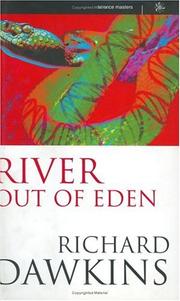
by Richard Dawkins
“Richard Dawkins acknowledged in River Out of Eden that DNA 'neither knows nor cares' — meaning evolutionary biology cannot produce objective moral categories like evil.”
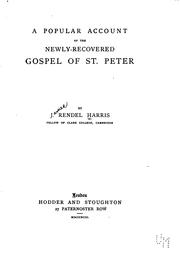
“Later non-canonical texts like the Gospel of Peter rewrote the scene to place male Roman and Jewish officials at the tomb instead, revealing discomfort with the original account and paradoxically confirming its authenticity.”
More from The Diary of a CEO
We summarize every new episode. Want them in your inbox?
Most Replayed Moment: How AI Companies Are Gaslighting You - Karen Hao
President Zelenskyy: Peace Is A Huge Compromise, The Horrific Atrocities Of Russian War Crimes!
The Deathbed Doctor: Weeks Before Death, Patients Start Having Visions! | Dr Christopher Kerr
Most Replayed Moment: Christian vs Atheist - Is Faith A Human Creation?
Phone Addiction Scientist: Doing This Gives You An Hour Back Every Day! | Dr Sahar Yousef
Similar Episodes
Related episodes from other podcasts

a16z Podcast
Oct 14
Can Open Models Keep Up With the AI Frontier? | Nathan Lambert

Dwarkesh Podcast
Oct 1
Si Sheppard – How did a few hundred Spanish soldiers topple two empires?

Invest Like the Best with Patrick O'Shaughnessy
Sep 8
Walter Russell Mead - How America Keeps Winning - [Invest Like the Best, EP.490]

Investing for Beginners
Sep 3
Is NVIDIA’s High-Margin Machine Sustainable?

Freakonomics Radio
Jul 22
Why Cooking is Caregiving, with Chef Hillary Sterling | Better in Person
Explore Related Topics
This podcast is featured in Best Startup Podcasts (2026) — ranked and reviewed with AI summaries.
Read this week's Health & Longevity Podcast Insights — cross-podcast analysis updated weekly.
You're clearly into The Diary of a CEO.
Every Monday, we deliver AI summaries of the latest episodes from The Diary of a CEO and 192+ other podcasts. Free for one show.
Start My Monday DigestNo credit card · Unsubscribe anytime