Most Replayed Moment: Your Excuses Will Destroy You, To Be Disciplined Is To Be Free!
Episode
24 min
Read time
2 min
Topics
Health & Wellness, Leadership, Software Development
AI-Generated Summary
Key Takeaways
- ✓SEAL Selection Reality: Only 20% of candidates complete Navy SEAL training, dropping to roughly 5% for those under 20 years old. The primary filter is not physical strength or swimming ability — trainers deliberately identify each candidate's specific weakness and apply targeted pressure there to force either a breakthrough or a voluntary withdrawal.
- ✓Excuse Anatomy: Roughly 80-90% of SEAL training dropouts quit voluntarily, yet almost none self-report it as quitting. They construct medical or circumstantial narratives instead. Willink frames this as a universal pattern: when someone does not genuinely want something, nearly any obstacle becomes a sufficient reason to stop pursuing it.
- ✓Extreme Ownership Framework: Willink's Extreme Ownership methodology requires attributing every failure — financial, relational, physical, professional — entirely to oneself rather than external factors. This is painful short-term but strategically empowering: if your choices created the problem, your choices can fix it, restoring agency over outcomes others might blame on circumstance.
- ✓Discipline-Freedom Equation: Willink argues discipline and freedom are causally linked, not opposites. Lacking financial discipline produces debt slavery; lacking exercise discipline produces disease dependency; lacking time discipline eliminates free time. Conversely, consistent discipline in each domain compounds into genuine autonomy — the counterintuitive mechanism being that short-term constraint prevents long-term constraint.
- ✓Sleep Consistency Over Wake Time: Willink explicitly states that waking at 04:30 is not universally necessary. The functional principle is consistency: select a fixed sleep and wake time that matches your natural pattern, then add morning exercise immediately upon waking. A stable 11am wake time with daily training outperforms an erratic early schedule without structure.
What It Covers
Former Navy SEAL Jocko Willink speaks with Diary of a CEO host Steven Bartlett about SEAL training's 20% pass rate, why excuses prevent success, how extreme ownership transforms personal accountability, and why discipline — counterintuitively — produces more life freedom than its absence.
Key Questions Answered
- •SEAL Selection Reality: Only 20% of candidates complete Navy SEAL training, dropping to roughly 5% for those under 20 years old. The primary filter is not physical strength or swimming ability — trainers deliberately identify each candidate's specific weakness and apply targeted pressure there to force either a breakthrough or a voluntary withdrawal.
- •Excuse Anatomy: Roughly 80-90% of SEAL training dropouts quit voluntarily, yet almost none self-report it as quitting. They construct medical or circumstantial narratives instead. Willink frames this as a universal pattern: when someone does not genuinely want something, nearly any obstacle becomes a sufficient reason to stop pursuing it.
- •Extreme Ownership Framework: Willink's Extreme Ownership methodology requires attributing every failure — financial, relational, physical, professional — entirely to oneself rather than external factors. This is painful short-term but strategically empowering: if your choices created the problem, your choices can fix it, restoring agency over outcomes others might blame on circumstance.
- •Discipline-Freedom Equation: Willink argues discipline and freedom are causally linked, not opposites. Lacking financial discipline produces debt slavery; lacking exercise discipline produces disease dependency; lacking time discipline eliminates free time. Conversely, consistent discipline in each domain compounds into genuine autonomy — the counterintuitive mechanism being that short-term constraint prevents long-term constraint.
- •Sleep Consistency Over Wake Time: Willink explicitly states that waking at 04:30 is not universally necessary. The functional principle is consistency: select a fixed sleep and wake time that matches your natural pattern, then add morning exercise immediately upon waking. A stable 11am wake time with daily training outperforms an erratic early schedule without structure.
Notable Moment
Willink describes rock bottom not as a low point but as the moment all available excuses simultaneously collapse, forcing direct confrontation with personal responsibility. He argues this moment, though painful, is paradoxically the most empowering a person can experience — because it restores the belief that self-created problems are self-solvable.
Episode Transcript
Most people know American Express for our iconic personal cards. Some know us for our business cards to help entrepreneurs grow. But American Express also offers something built for companies at scale, the American Express corporate program. With the corporate program, you can apply for employee cards tailored to their needs, issue virtual cards to your team and suppliers, and even automate accounts payable with American Express one AP. Along the way, your company can earn rewards or cash back as a statement credit to reinvest where it matters most. And because it's all backed by American Express, you get the service, insights, and flexibility to help keep your business moving forward. The American Express corporate program, designed to help companies grow with confidence. Terms apply, enrollment required, and fees may apply, including an auto renewing monthly platform access fee. Suppliers must be enrolled and located in The United States. And at 19 years old, you applied to be a Navy SEAL. Mhmm. Okay. So I have to ask a very dumb question here, which is what is a Navy SEAL? So there's special operations, which I guess, you know, from England, this is the the the SAS and the SBS. So those are the two sort of units that we get compared to the most. And, so a Navy SEAL is a part of the Navy, but you're the special operations component of the Navy. And the the term SEAL is actually an acronym, which stands for sea, air, and land. Because even though we're in the Navy, we are trained to operate in the sea, in the air. So in the sea, meaning we dive. In the air, meaning we parachute and repel. And then on the land, meaning we conduct land warfare operations. And you take all those things, combine them together, and that's what our job consists of. I was under the assumption that to become a Navy Seal or to be in the SAS, you had to have ten, twenty years in of military service. You had to have like an established military service and then you get some like pop up on your computer and it says, like come to this of this building over here. And so to hear that you applied at 19 years old, I was like, oh, I didn't know teenagers could apply. Yeah. No. I I was 18 years old when I joined the Navy and I joined on a contract that got me sent to seal training and it took a year to get through. So I was 19 when I finished that up. But there is there's always debates about, well, don't you want someone that's more experienced? And I actually loved the fact that I was basically raised in the SEAL teams. It was just awesome. It was an awesome way to grow up. It was an awesome way to spend those those years of your life learning the trade that you wanted to learn. And …
Get the full transcript (4,542 words) + summary by email — free
One-time email with the complete transcript and AI summary of this episode. No account needed.
One email, no spam. We’ll also show you what SignalCast does.

You just read a 3-minute summary of a 21-minute episode.
Get The Diary of a CEO summarized like this every Monday — plus up to 2 more podcasts, free.
Pick Your Podcasts — FreeKeep Reading
More from The Diary of a CEO
Human Lie Detector: The #1 Sign They’re Lying To You, Catch Liars Instantly! | Dr Leanne Ten Brinke
Sep 7 · 108 min

Modern Wisdom
Jocko Willink, Matt McCusker & Jeff Dye - Mostly Wise #3 - #1139
Aug 20
More from The Diary of a CEO
Most Replayed Moment: The First Warning Signs Of Insulin Resistance! Check Your Skin For This
Sep 4 · 18 min

Huberman Lab
Essentials: How to Become Resilient, Forge Your Identity & Lead Others | Jocko Willink
Jul 30
Books, tools, and gear mentioned in this episode
SignalCast may earn commission on purchases via these links. As an Amazon Associate, SignalCast earns from qualifying purchases.
Books
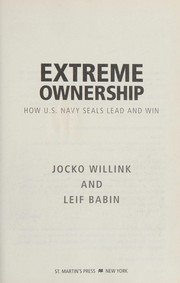
by Jocko Willink
“Willink's Extreme Ownership methodology requires attributing every failure — financial, relational, physical, professional — entirely to oneself rather than external factors.”
More from The Diary of a CEO
We summarize every new episode. Want them in your inbox?
Human Lie Detector: The #1 Sign They’re Lying To You, Catch Liars Instantly! | Dr Leanne Ten Brinke
Most Replayed Moment: The First Warning Signs Of Insulin Resistance! Check Your Skin For This
Andrew Huberman: My Exact Routine To Optimize Brain & Body, I Do All Of These Every Day!
Top White House Advisor: The US Empire Is DYING And Socialism Is Coming Next! | David Friedberg
Most Replayed Moment: Tony Robbins Reveals The Key To A Meaningful Life
Similar Episodes
Related episodes from other podcasts

Modern Wisdom
Aug 20
Jocko Willink, Matt McCusker & Jeff Dye - Mostly Wise #3 - #1139

Huberman Lab
Jul 30
Essentials: How to Become Resilient, Forge Your Identity & Lead Others | Jocko Willink

The Joe Rogan Experience
Aug 20
#2543 - MrBallen

The James Altucher Show
Feb 7
From the Archive: Jocko Willink | Discipline Equals Freedom
Modern Wisdom
Jun 18
Navy SEAL: “Not Killing People Is Hard” - DJ Shipley - #1112
Explore Related Topics
This podcast is featured in Best Startup Podcasts (2026) — ranked and reviewed with AI summaries.
Read this week's Health & Longevity Podcast Insights — cross-podcast analysis updated weekly.
You're clearly into The Diary of a CEO.
Every Monday, we deliver AI summaries of the latest episodes from The Diary of a CEO and 192+ other podcasts. Free for one show.
Start My Monday DigestNo credit card · Unsubscribe anytime