Most Replayed Moment: The 4 Personalities Living In Your Brain! How To Switch Between Them
Episode
25 min
Read time
2 min
Topics
Productivity, Software Development, Psychology & Behavior
AI-Generated Summary
Key Takeaways
- ✓The Four Characters Framework: The brain contains four functional personalities: Character 1 (left thinking — analytical, goal-driven), Character 2 (left emotional — stores past trauma and pain), Character 3 (right emotional — present-moment playfulness), and Character 4 (right thinking — wisdom and big-picture peace). Identifying which character is active in any moment is the foundation of self-regulation.
- ✓Hemisphere-Switching via Lateral Vision Glasses: Blocking lateral light to one eye preferentially stimulates the opposite hemisphere. Stimulating the right hemisphere produces measurable physical relaxation within roughly 20 seconds, while stimulating the left produces focus. Harvard fMRI research by psychiatrist Frederick Schiffer confirms this is anatomical, not placebo, and has been used in psychiatric treatment.
- ✓Observing Character Two to Defuse Emotional Reactivity: Character 2, rooted in the left limbic system, stores every past traumatic memory and triggers knee-jerk emotional reactions in the present. Rather than trying to eliminate this reactivity, the practice is to recognize it, name it, and respond with compassion — because this system is actively trying to protect you from repeated harm.
- ✓Scheduled Play as a Cognitive Performance Tool: Character 3, the right emotional system, has no concept of past or future and generates endorphins through present-moment play. Deliberately scheduling even brief play breaks — Taylor used hopscotch outside an ER with physicians — counteracts left-hemisphere overdrive, reduces stress, and measurably improves creative output when returning to focused work.
- ✓Step-by-Step Practice for Switching Characters: Actively shifting between the four personalities requires a three-step practice: first, observe which character is currently running; second, identify what that character feels like physically in the body; third, consciously choose to invite a different character. Taylor states that with consistent practice, the transition between all four can become near-instantaneous.
What It Covers
Neuroscientist Jill Bolte Taylor outlines four distinct brain personalities — two thinking and two emotional systems split across left and right hemispheres — and explains how deliberately switching between them using specific techniques can improve focus, emotional regulation, creativity, and overall mental well-being.
Key Questions Answered
- •The Four Characters Framework: The brain contains four functional personalities: Character 1 (left thinking — analytical, goal-driven), Character 2 (left emotional — stores past trauma and pain), Character 3 (right emotional — present-moment playfulness), and Character 4 (right thinking — wisdom and big-picture peace). Identifying which character is active in any moment is the foundation of self-regulation.
- •Hemisphere-Switching via Lateral Vision Glasses: Blocking lateral light to one eye preferentially stimulates the opposite hemisphere. Stimulating the right hemisphere produces measurable physical relaxation within roughly 20 seconds, while stimulating the left produces focus. Harvard fMRI research by psychiatrist Frederick Schiffer confirms this is anatomical, not placebo, and has been used in psychiatric treatment.
- •Observing Character Two to Defuse Emotional Reactivity: Character 2, rooted in the left limbic system, stores every past traumatic memory and triggers knee-jerk emotional reactions in the present. Rather than trying to eliminate this reactivity, the practice is to recognize it, name it, and respond with compassion — because this system is actively trying to protect you from repeated harm.
- •Scheduled Play as a Cognitive Performance Tool: Character 3, the right emotional system, has no concept of past or future and generates endorphins through present-moment play. Deliberately scheduling even brief play breaks — Taylor used hopscotch outside an ER with physicians — counteracts left-hemisphere overdrive, reduces stress, and measurably improves creative output when returning to focused work.
- •Step-by-Step Practice for Switching Characters: Actively shifting between the four personalities requires a three-step practice: first, observe which character is currently running; second, identify what that character feels like physically in the body; third, consciously choose to invite a different character. Taylor states that with consistent practice, the transition between all four can become near-instantaneous.
Notable Moment
Taylor walks the host through a live hemisphere-switching demonstration using specialized glasses. Within roughly 20 seconds of stimulating his right hemisphere, he spontaneously describes feeling as though he is lying in sunlight — a shift Taylor explains is entirely explained by the brain's hardwired visual anatomy.
Episode Transcript
You're listening to this podcast, so I know you've got a curious mind. Here's a helpful fact you might not know yet. Drivers who switch and save with Progressive save over $900 on average. Pop over to progressive.com, answer some questions, and you'll get a quick quote with discounts that are easy to come by. In fact, 99% of their auto customers earn at least one discount. Visit progressive.com and see if you can enjoy a little cash back. Progressive Casualty Insurance Company and affiliates. National averaged twelve month savings of $946 by new customers surveyed who saved with Progressive between June 2024 and May 2025. Potential savings will vary. So you said there's four personalities in everybody's brain. Mhmm. What are those four personalities? As we're looking at the brain, just from an anatomical perspective, the way evolution happens for the mammalian brain is that there are creatures who have a spinal cord and they have, and then and there are creatures like that, like worms. And then a little brain, a little medulla will form at the top of that tissue, and then now that brain controls and streamlines information processing to the rest of the system. And then we add a pons. What's that? It's just a structure of cells. So this is the medulla. Yeah. We would have spinal cord there, and this is the pons. We call it the pons. It's a group of cells. Brain. Yeah. It's a smaller brain. And in relationship to that pons is this cerebellum. And the cerebellum has this gorgeous cell in it called the Purkinje cell, and they're they're like a hand. They're like, you know, two dimensional, and they all line up like this. And then fibers run through those, And it's part of the mechanism of timing so that you have fluidity of movement because of the way those cells are aligned. So not all cells are created equal and not all cells look alike. Cells have the right shape for the right job. So as then we we grow and now we have the mammalian brain, we're going to have the hippocampus, you've heard of that, for learning and memory, the amygdala, you've heard that, for am I safe? Am I safe? Yeah. Are you safe? The amygdala yeah. There there's a group of cells right there that is scanning constantly. Am I safe? Am I safe? Am I safe? And you're fine until you're not safe. Okay. So like threat detection? Yes. That's exactly what it is. Okay. You have two emotional systems. One in your left hemisphere and one in your right hemisphere. And the right hemisphere is gonna be right here, right now. Am I safe in the right here, right now? So let's say all of a sudden a snake row went by, and we would jump. We would startle because it's your right amygdala saying, oh my gosh. Am I safe? And then the left hemisphere is going, oh my …
Get the full transcript (4,772 words) + summary by email — free
One-time email with the complete transcript and AI summary of this episode. No account needed.
One email, no spam. We’ll also show you what SignalCast does.

You just read a 3-minute summary of a 22-minute episode.
Get The Diary of a CEO summarized like this every Monday — plus up to 2 more podcasts, free.
Pick Your Podcasts — FreeKeep Reading
More from The Diary of a CEO
Most Replayed Moment: Is Renting Keeping You Poor? What's The Actual Cost Of Home Ownership? David Bach
Sep 18 · 18 min

Huberman Lab
Essentials: Use Sleep to Enhance Learning, Memory & Emotional State | Dr. Gina Poe
Sep 3
More from The Diary of a CEO
AI Debate Ed Zitron, Andrew McAfee, Nate Soares, Roman Yampolskiy
Sep 17 · 144 min

The Daily (NYT)
Why Do Some Memories Survive Dementia?
Jul 26
Books, tools, and gear mentioned in this episode
SignalCast may earn commission on purchases via these links. As an Amazon Associate, SignalCast earns from qualifying purchases.
Books
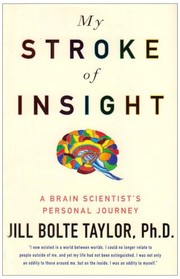
by Jill Bolte Taylor
“Neuroscientist Jill Bolte Taylor outlines four distinct brain personalities — two thinking and two emotional systems split across left and right hemispheres”
Gear
“Hemisphere-Switching via Lateral Vision Glasses: Blocking lateral light to one eye preferentially stimulates the opposite hemisphere. Stimulating the right hemisphere produces measurable physical relaxation within roughly 20 seconds, while stimulating the left produces focus.”
More from The Diary of a CEO
We summarize every new episode. Want them in your inbox?
Most Replayed Moment: Is Renting Keeping You Poor? What's The Actual Cost Of Home Ownership? David Bach
AI Debate Ed Zitron, Andrew McAfee, Nate Soares, Roman Yampolskiy
The Man Who Predicted The Iran War: The Next 9/11 Will Target Your Bank Account! | Professor Jiang
Most Replayed Moment: Brain Rot Experts - How To Use AI In A Healthy Way!
Likeability Expert: Stop Doing This, It’s Why People Quietly Avoid You! | Vanessa Van Edwards
Similar Episodes
Related episodes from other podcasts

Huberman Lab
Sep 3
Essentials: Use Sleep to Enhance Learning, Memory & Emotional State | Dr. Gina Poe

The Daily (NYT)
Jul 26
Why Do Some Memories Survive Dementia?
Huberman Lab
Jul 20
Accelerate Learning & Increase Cognitive Capacity | Dr. Tommy Wood

Eye on AI
May 28
Is ChatGPT Conscious? A Pioneer of AI Explains | Dr. Terry Sejnowski
Huberman Lab
May 21
Essentials: The Science of Learning & Speaking Languages | Dr. Eddie Chang
Explore Related Topics
This podcast is featured in Best Startup Podcasts (2026) — ranked and reviewed with AI summaries.
Read this week's Software Engineering Podcast Insights — cross-podcast analysis updated weekly.
You're clearly into The Diary of a CEO.
Every Monday, we deliver AI summaries of the latest episodes from The Diary of a CEO and 192+ other podcasts. Free for one show.
Start My Monday DigestNo credit card · Unsubscribe anytime