They Should Have What They Want
Episode
7 min
Read time
2 min
Topics
Fundraising & VC, Software Development, Psychology & Behavior
AI-Generated Summary
Key Takeaways
- ✓Non-interference principle: Resist the urge to judge or redirect others' ambitions. Stoic practice calls for stepping back and allowing people to pursue their chosen goals, recognizing that external achievements rarely deliver the satisfaction people anticipate — a pattern consistent throughout recorded history.
- ✓The Cato Framework: Identify one towering historical or personal figure — Cato the Younger, Marcus Aurelius, a grandparent — and mentally invoke them before decisions. Ask what that person would expect of you, not what you would permit yourself, to access a higher behavioral standard.
- ✓Impartial Spectator technique: Economist Adam Smith's concept mirrors the Cato framework: place an imagined neutral observer in the room before acting. This external perspective breaks the self-justifying logic that arises when personal impulses, convenience, or short-term thinking dominate decision-making.
- ✓Aspire to become the model: The Cato framework has a second stage — live and work with enough integrity that you yourself become someone else's mental benchmark. Washington used Cato as his standard for decades; the goal is to eventually occupy that role for colleagues, children, or community.
What It Covers
Ryan Holiday explores two Stoic practices: releasing attachment to outcomes others pursue, and using a mental role model — called a "Cato" — to elevate personal decision-making and eventually become a guiding example for others.
Key Questions Answered
- •Non-interference principle: Resist the urge to judge or redirect others' ambitions. Stoic practice calls for stepping back and allowing people to pursue their chosen goals, recognizing that external achievements rarely deliver the satisfaction people anticipate — a pattern consistent throughout recorded history.
- •The Cato Framework: Identify one towering historical or personal figure — Cato the Younger, Marcus Aurelius, a grandparent — and mentally invoke them before decisions. Ask what that person would expect of you, not what you would permit yourself, to access a higher behavioral standard.
- •Impartial Spectator technique: Economist Adam Smith's concept mirrors the Cato framework: place an imagined neutral observer in the room before acting. This external perspective breaks the self-justifying logic that arises when personal impulses, convenience, or short-term thinking dominate decision-making.
- •Aspire to become the model: The Cato framework has a second stage — live and work with enough integrity that you yourself become someone else's mental benchmark. Washington used Cato as his standard for decades; the goal is to eventually occupy that role for colleagues, children, or community.
Notable Moment
Cato the Younger never wrote, taught, or gave interviews, yet influenced Stoic thinkers for centuries and shaped George Washington's entire leadership philosophy — demonstrating that consistent action carries more weight than any published words.
Episode Transcript
Welcome to the daily stoic podcast designed to help bring those four key stoic virtues, courage, discipline, justice, and wisdom into the real world. They should have what they want. It's probably not gonna be what they hope. It's not gonna feel as they dreamed. It's not gonna make them happy. It's not gonna satisfy them. It rarely does. Right? Historically, that is. Has any conqueror ever been satisfied? Has any conquest ever not been a little bittersweet, a little underwhelming? How often do any of the things that people dream of and lust for and fight over end up producing happiness? The stoics knew this, and deep down, we do too, even if we lose sight of it time and time again. So we must step back and let people choose for themselves. We should repeat to ourselves as Taylor Swift says. And they should have what they want. They deserve what they want. I hope they get what they want. Because it's not our place to yuck other people's yums. It's not our place to judge. It's not our place to interfere. What we should focus on is where we are lusting and dreaming and fighting for so called externals. We should think about where we have made our happiness conditional on this or that achievement, on this or that identity which lies outside our control. We should remind ourselves that we have plenty right now, that we can feel good, feel enough right now. Today's sponsor is Chime, the fee free banking app changing the way people bank. Chime isn't just another banking app. They unlock smarter banking for everyday people with products like MyPay, giving you direct access to up to $500 off your paycheck anytime, and they can help get you paid up to two days early with direct deposit. No more overdraft fees, no minimum balance fees, and no monthly fees. Plus, Chime makes your everyday spending work harder by delivering real rewards and financial progress. Bank fee free plus overdraft coverage you can count on by switching to Chime and earn up to three and a half percent APY on your savings, which is much higher than a traditional bank. They've even launched their new Chime card, which is a cashback card that helps you build credit with your own money. I wish this kind of stuff was around when I was younger. It seems like a great way to build credit and, you know, get your financial house in order. Chime is not just smarter banking. It's the most rewarding way to bank. Join the millions who are already banking free today. It takes just a few minutes to sign up. Head over to to chime.com/stoic. That is chime.com/stoic. Chime is a financial technology company, not a bank. Banking services, a secured Chime Visa credit card, and MyPay line of credit provided by the Bancorp Bank NA or Stride Bank NA. MyPay eligibility requirements apply, and credit limit ranges $20 to $500. …
Get the full transcript (1,790 words) + summary by email — free
One-time email with the complete transcript and AI summary of this episode. No account needed.
One email, no spam. We’ll also show you what SignalCast does.

You just read a 3-minute summary of a 5-minute episode.
Get The Daily Stoic summarized like this every Monday — plus up to 2 more podcasts, free.
Pick Your Podcasts — FreeKeep Reading
More from The Daily Stoic
This is the Main Thing | Ask Daily Stoic
Apr 2 · 13 min

The Diary of a CEO
Most Replayed Moment: Make 2026 Your Best Year Yet! 5 Daily Practices For Health And Happiness
Jan 2
More from The Daily Stoic
BONUS | Books You Can Finish In One Sitting (And Actually Remember)
Apr 1 · 8 min

10% Happier with Dan Harris
Stoic Practices for Getting Rid of Mental Junk, Your Morning Routine, and Talking to the Dead | Ryan Holiday
Feb 11
Books, tools, and gear mentioned in this episode
SignalCast may earn commission on purchases via these links. As an Amazon Associate, SignalCast earns from qualifying purchases.
Books
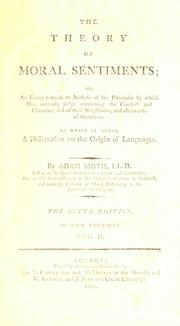
by Adam Smith
“Economist Adam Smith's concept mirrors the Cato framework: place an imagined neutral observer in the room before acting. This external perspective breaks the self-justifying logic that arises when personal impulses, convenience, or short-term thinking dominate decision-making.”
More from The Daily Stoic
We summarize every new episode. Want them in your inbox?
This is the Main Thing | Ask Daily Stoic
BONUS | Books You Can Finish In One Sitting (And Actually Remember)
How Can This Improve Your Life? | The Color of Your Thoughts
The Perspective Shift I Had in Australia (A Stoic Lesson)
Live Now, While You Still Can
Similar Episodes
Related episodes from other podcasts

The Diary of a CEO
Jan 2
Most Replayed Moment: Make 2026 Your Best Year Yet! 5 Daily Practices For Health And Happiness

10% Happier with Dan Harris
Feb 11
Stoic Practices for Getting Rid of Mental Junk, Your Morning Routine, and Talking to the Dead | Ryan Holiday

The Rich Roll Podcast
Aug 3
Stoic Lessons From The Odyssey w/ Ryan Holiday

The School of Greatness
Apr 27
How to Stop Reacting and Start Winning with Difficult People | Ryan Leak
10% Happier with Dan Harris
Apr 17
Trudging Through Your Own Life? Here's the Stoic Fix | Maria Semple
Explore Related Topics
This podcast is featured in Best Philosophy Podcasts (2026) — ranked and reviewed with AI summaries.
Read this week's Software Engineering Podcast Insights — cross-podcast analysis updated weekly.
You're clearly into The Daily Stoic.
Every Monday, we deliver AI summaries of the latest episodes from The Daily Stoic and 192+ other podcasts. Free for one show.
Start My Monday DigestNo credit card · Unsubscribe anytime