The Day Control Was Taken From Us
Episode
37 min
Read time
2 min
Topics
Career Growth, Productivity, Health & Wellness
AI-Generated Summary
Key Takeaways
- ✓Forced disruption as reset: When external circumstances eliminate the option to maintain existing habits, change happens faster and more completely than any self-directed improvement plan. Dalton, a decade-long UK political adviser, discovered an entirely different relationship with time, nature, and creativity only because the pandemic removed every alternative. Voluntary change rarely matches the depth of involuntary transformation.
- ✓Sustained presence reveals natural cycles: Living continuously in one location for an extended period — rather than moving in and out via travel — exposes seasonal patterns invisible to urban or mobile lifestyles. Dalton observed a full year of countryside seasons for the first time, including winter's role in renewal, reframing what had previously felt like a period to endure as a necessary phase of restoration.
- ✓Narrowing attention reduces anxiety: Focusing sustained attention on a single subject — in Dalton's case, monitoring a wild hare's minute behavioral signals — produces measurable physiological calm: slower pulse, steadier heart rate, reduced mental noise. This functions as an unintentional mindfulness practice accessible without formal meditation training, achievable by directing deep attention toward any living creature or natural environment.
- ✓Wilderness years carry hidden value: Holiday draws a parallel to Churchill's decade of political exile, during which painting and reading appeared unproductive but built reserves for later demands. Periods that look like career stagnation from the outside can function as restoration for sustained future effort. Resisting the urge to fill every lull with productivity-signaling activity preserves energy for what follows.
- ✓Urban success narratives obscure rooted living: Cultural frameworks in politics, journalism, and media equate success with geographic mobility, global exposure, and career acceleration. Dalton argues this conditioning causes people to undervalue place-based living, lasting community relationships, and ecological connection — resources that demonstrably support psychological stability and creative output, as her own book's origin and reception confirm.
What It Covers
Ryan Holiday marks the six-year anniversary of COVID-19 by speaking with British author Chloe Dalton about her memoir *Raising Hare*, exploring how the pandemic forced a radical slowdown, reconnection with nature, and rediscovery of what constitutes a meaningful life rooted in place and presence.
Key Questions Answered
- •Forced disruption as reset: When external circumstances eliminate the option to maintain existing habits, change happens faster and more completely than any self-directed improvement plan. Dalton, a decade-long UK political adviser, discovered an entirely different relationship with time, nature, and creativity only because the pandemic removed every alternative. Voluntary change rarely matches the depth of involuntary transformation.
- •Sustained presence reveals natural cycles: Living continuously in one location for an extended period — rather than moving in and out via travel — exposes seasonal patterns invisible to urban or mobile lifestyles. Dalton observed a full year of countryside seasons for the first time, including winter's role in renewal, reframing what had previously felt like a period to endure as a necessary phase of restoration.
- •Narrowing attention reduces anxiety: Focusing sustained attention on a single subject — in Dalton's case, monitoring a wild hare's minute behavioral signals — produces measurable physiological calm: slower pulse, steadier heart rate, reduced mental noise. This functions as an unintentional mindfulness practice accessible without formal meditation training, achievable by directing deep attention toward any living creature or natural environment.
- •Wilderness years carry hidden value: Holiday draws a parallel to Churchill's decade of political exile, during which painting and reading appeared unproductive but built reserves for later demands. Periods that look like career stagnation from the outside can function as restoration for sustained future effort. Resisting the urge to fill every lull with productivity-signaling activity preserves energy for what follows.
- •Urban success narratives obscure rooted living: Cultural frameworks in politics, journalism, and media equate success with geographic mobility, global exposure, and career acceleration. Dalton argues this conditioning causes people to undervalue place-based living, lasting community relationships, and ecological connection — resources that demonstrably support psychological stability and creative output, as her own book's origin and reception confirm.
Notable Moment
Dalton describes how, before the pandemic, she would have insisted she loved every aspect of her existing life and wanted nothing changed — yet two years of enforced stillness and one wild animal produced a complete worldview transformation she never would have chosen voluntarily.
Episode Transcript
Shopping at Whole Foods is one of the things I do on our family. Like, the grocery shopping is my job, so I was glad to be able to do that even on vacation. And then, you know, being here in Hawaii, it was the same Whole Foods experience we're thinking about, but then also a bunch of regional stuff too that they only have at this Whole Foods. We love shopping at Whole Foods because there's always new flavors and foods to choose from whichever Whole Foods you are like, whichever Whole Foods you happen to be at. So save on regional flavors at Whole Foods Market, and, maybe I'll see you at the Whole Foods in Austin sometime. Work moves fast. From emails and reports to proposals and updates, you're expected to think clearly, write confidently, and get it right the first time, and every message counts. That's where Grammarly comes in. It gives you everything you need to think, write, and finish in one place or anywhere you type in text. You'll never have to switch tools or tabs. Grammarly's AI agents are built for how you work and where you work so you can find the right words, adjust your tone, and predict how your message might land before you hit send. Your ideas will get a boost while still sounding natural, credible, and just the way you want. For nearly seventeen years, Grammarly has been the standard for responsible AI. It's the premier writing tool that 93% of users trust to get more work done. In a world of generic AI, don't sound like everyone else. With Grammarly, you never will. Download Grammarly for free at grammarly.com. That's grammarly.com. Welcome to the daily stoic podcast. Designed to help bring those four key stoic virtues, courage, discipline, justice, and wisdom into the real world. Hey. It's Ryan. Welcome to another episode of the Daily Stoic Podcast. I I tell the story of how Samantha and I started the painted porch that construction basically began the March 2020. And all I have to do is say those words and people start laughing because it it just takes them back. Like, they know where they were March 2020. And I was actually saying that on stage. It was a couple days ago, and, like, I got hit by it. I mean, obviously, I I feel it every time I say this story, but I was like, oh, wait. Six years ago, that all went down. Right? On 03/11/2020, the World Health Organization declared COVID this pandemic. And on the thirteenth, the president declared a nationwide emergency. I remember going and picking my son up for school thinking, I don't know when I'm gonna do this again, and I didn't do it again for a long time. Maybe you remember exactly where you were that week, what was happening, what you were doing, what got sort of frozen in time. You know, there was those little boards that you …
Get the full transcript (8,750 words) + summary by email — free
One-time email with the complete transcript and AI summary of this episode. No account needed.
One email, no spam. We’ll also show you what SignalCast does.

You just read a 3-minute summary of a 34-minute episode.
Get The Daily Stoic summarized like this every Monday — plus up to 2 more podcasts, free.
Pick Your Podcasts — FreeKeep Reading
More from The Daily Stoic
This is the Main Thing | Ask Daily Stoic
Apr 2 · 13 min

Modern Wisdom
#1067 - Cal Newport - The collapse of modern attention (and how to get it back)
Mar 5
More from The Daily Stoic
BONUS | Books You Can Finish In One Sitting (And Actually Remember)
Apr 1 · 8 min

The Vergecast
How Claude Code Claude Codes
Feb 24
Books, tools, and gear mentioned in this episode
SignalCast may earn commission on purchases via these links. As an Amazon Associate, SignalCast earns from qualifying purchases.
Books
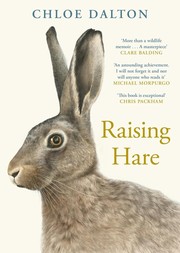
by Chloe Dalton
“Ryan Holiday marks the six-year anniversary of COVID-19 by speaking with British author Chloe Dalton about her memoir *Raising Hare*, exploring how the pandemic forced a radical slowdown, reconnection with nature, and rediscovery of what constitutes a meaningful life rooted in place and presence.”
More from The Daily Stoic
We summarize every new episode. Want them in your inbox?
This is the Main Thing | Ask Daily Stoic
BONUS | Books You Can Finish In One Sitting (And Actually Remember)
How Can This Improve Your Life? | The Color of Your Thoughts
The Perspective Shift I Had in Australia (A Stoic Lesson)
Live Now, While You Still Can
Similar Episodes
Related episodes from other podcasts

Modern Wisdom
Mar 5
#1067 - Cal Newport - The collapse of modern attention (and how to get it back)

The Vergecast
Feb 24
How Claude Code Claude Codes

Techmeme Ride Home
Feb 11
The “Covid Moment” For AI?

The Craig Groeschel Leadership Podcast
Jan 1
5 Times I Was Wrong and What It Taught Me | 10-Year Anniversary Edition

a16z Podcast
Oct 18
Why Real-World AI Is Harder Than the Benchmark | EliseAI’s Mario Martone
Explore Related Topics
This podcast is featured in Best Philosophy Podcasts (2026) — ranked and reviewed with AI summaries.
Read this week's Health & Longevity Podcast Insights — cross-podcast analysis updated weekly.
You're clearly into The Daily Stoic.
Every Monday, we deliver AI summaries of the latest episodes from The Daily Stoic and 192+ other podcasts. Free for one show.
Start My Monday DigestNo credit card · Unsubscribe anytime