Jordan Klepper's Reading List (From Ryan Holiday)
Episode
12 min
Read time
2 min
Topics
Career Growth, Investing, Fundraising & VC
AI-Generated Summary
Key Takeaways
- ✓Propaganda mechanics: Effective misinformation rarely inserts false beliefs — it supplies intellectual justification for beliefs people already hold. Understanding this reframes how to evaluate media ecosystems, from prestige outlets down to partisan blogs, as a single coordinated rationalization infrastructure.
- ✓Buckley as ideological template: Reading a thousand-page Buckley biography (likely Sam Tanenhaus's work) reveals a repeating pattern: a billionaire-funded writer intellectualizes tribal prejudices into respectable conservatism. Recognizing this template helps identify when modern figures like Peterson follow the same recruitment and funding pipeline.
- ✓Montaigne's crisis philosophy: Stefan Zweig's biography of Montaigne, written during his own wartime exile, shows that Montaigne developed radical intellectual humility specifically during the sixteenth-century religious wars — a model for maintaining reasoned thinking when social pressure demands ideological certainty.
- ✓Camus's plague metaphor: Re-reading *The Plague* reveals Camus's core argument: the destructive force the novel depicts — originally a Nazi metaphor — never disappears but migrates to new targets across eras. This framework helps identify recurring cycles of collective fear and scapegoating across different historical moments.
What It Covers
Ryan Holiday and Jordan Klepper exchange reading recommendations across history, philosophy, and biography, tracing how intellectual frameworks get co-opted by ideological movements, drawing on Buckley, Camus, Kafka, Stefan Zweig, and Montaigne as reference points.
Key Questions Answered
- •Propaganda mechanics: Effective misinformation rarely inserts false beliefs — it supplies intellectual justification for beliefs people already hold. Understanding this reframes how to evaluate media ecosystems, from prestige outlets down to partisan blogs, as a single coordinated rationalization infrastructure.
- •Buckley as ideological template: Reading a thousand-page Buckley biography (likely Sam Tanenhaus's work) reveals a repeating pattern: a billionaire-funded writer intellectualizes tribal prejudices into respectable conservatism. Recognizing this template helps identify when modern figures like Peterson follow the same recruitment and funding pipeline.
- •Montaigne's crisis philosophy: Stefan Zweig's biography of Montaigne, written during his own wartime exile, shows that Montaigne developed radical intellectual humility specifically during the sixteenth-century religious wars — a model for maintaining reasoned thinking when social pressure demands ideological certainty.
- •Camus's plague metaphor: Re-reading *The Plague* reveals Camus's core argument: the destructive force the novel depicts — originally a Nazi metaphor — never disappears but migrates to new targets across eras. This framework helps identify recurring cycles of collective fear and scapegoating across different historical moments.
Notable Moment
Holiday recounts contacting the Melville estate and receiving permission to write at Herman Melville's actual desk for two days in the Berkshires — an environment so charged he avoided his phone entirely and sustained unbroken productivity throughout.
Episode Transcript
Welcome to the Daily Stoic Podcast, designed to help bring those four key stoic virtues, courage, discipline, justice, and wisdom into the real world. You would not think that a thousand page biography of William F. Buckley would be would be fucking with me? Yeah. You're fucking with him. Thousand page. It's incredible. Really? Incredible. Yeah? Yes. Like, first off, just because it's like this arc of, history that's fascinating. Mhmm. And he all these different, like, James Baldwin's in there. He I mean, he was the first person to publish Joan Didion. Right. I guess he wrote for the National Review. But, yeah. So it's this arc of American history that I think is fascinating. So, basically, he fondly recounts he was not invited, but his brothers at the direction of their father go burn a cross on somebody's lawn. Like, they his father's, like, profoundly anti Semitic Mhmm. Profoundly racist, just a reactionary bigot. Mhmm. And then so when you understand that, then when you understand when you understand William Buckley, you're like, oh, he's he's actually doing this thing that's kind of endemic to the conservative movement, which is, like, people have these opinions, these instincts. How do we intellectualize that? It's a way of creating, like, an intellectual cover for these sort of, like, primal, like, emotional prejudiced ideas. Like so there's the arc of that in his life. Mhmm. And then he starts by writing a book about liberal overreach on college campuses that his dad pays for. Is that right? Yeah. His dad was a, like, an oil speculator. Okay. Then he is a speech writer and adviser to McCarthy. Mhmm. And the next he's this sort of Machiavellian genius behind Mhmm. Like, all these pivotal moments. It's it's fascinating. Really? You will realize, like, oh, if you just change a couple of these names Yeah. It's the same thing's happening Yeah. Again. Yeah. But but, like, I I I think the the free press, which I like for some stuff, is it similar role where it's like part of what it does, though, is is create kind of intellectual cover Mhmm. For things that people want to believe. Like, realizing that, like, we tend to think of propaganda and misinformation as, like, inserting false ideas. And, actually, its job is to give you reasons to believe what you already believe. Yes. Give you give you a way to not look like an asshole in conversation. Yes. Yes. And kinda gives you this it's like, okay. So the Wall Street Journal is this part of the hierarchy, and then all the way down to, like, you know, Charlie Kirk was in there somewhere, and then the gateway pundit is down here. But they're all doing this thing, and they have various levels of funding. And it was it was interesting to me to watch, like, how people sought him out just like char like, Charlie Curtis is this average kid who wants to go …
Get the full transcript (2,862 words) + summary by email — free
One-time email with the complete transcript and AI summary of this episode. No account needed.
One email, no spam. We’ll also show you what SignalCast does.

You just read a 3-minute summary of a 9-minute episode.
Get The Daily Stoic summarized like this every Monday — plus up to 2 more podcasts, free.
Pick Your Podcasts — FreeKeep Reading
More from The Daily Stoic
This is the Main Thing | Ask Daily Stoic
Apr 2 · 13 min

10% Happier with Dan Harris
Stoic Practices for Getting Rid of Mental Junk, Your Morning Routine, and Talking to the Dead | Ryan Holiday
Feb 11
More from The Daily Stoic
BONUS | Books You Can Finish In One Sitting (And Actually Remember)
Apr 1 · 8 min

The Jordan Harbinger Show
1258: Ryan Holiday | Wisdom Takes Work
Dec 16
Books, tools, and gear mentioned in this episode
SignalCast may earn commission on purchases via these links. As an Amazon Associate, SignalCast earns from qualifying purchases.
Books
 William F. Buckley Jr.: A LifeRecommended
by Sam Tanenhaus
“Reading a thousand-page Buckley biography (likely Sam Tanenhaus's work) reveals a repeating pattern: a billionaire-funded writer intellectualizes tribal prejudices into respectable conservatism.”
- Montaigne: A LifeRecommended
by Stefan Zweig
“Stefan Zweig's biography of Montaigne, written during his own wartime exile, shows that Montaigne developed radical intellectual humility specifically during the sixteenth-century religious wars”
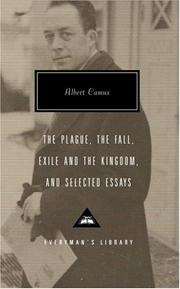 The PlagueRecommended
by Albert Camus
“Re-reading *The Plague* reveals Camus's core argument: the destructive force the novel depicts — originally a Nazi metaphor — never disappears but migrates to new targets across eras.”
More from The Daily Stoic
We summarize every new episode. Want them in your inbox?
This is the Main Thing | Ask Daily Stoic
BONUS | Books You Can Finish In One Sitting (And Actually Remember)
How Can This Improve Your Life? | The Color of Your Thoughts
The Perspective Shift I Had in Australia (A Stoic Lesson)
Live Now, While You Still Can
Similar Episodes
Related episodes from other podcasts

10% Happier with Dan Harris
Feb 11
Stoic Practices for Getting Rid of Mental Junk, Your Morning Routine, and Talking to the Dead | Ryan Holiday

The Jordan Harbinger Show
Dec 16
1258: Ryan Holiday | Wisdom Takes Work

Syntax
Nov 26
958: 2025 Holiday Gift Guide

Masters of Scale
Oct 30
When ‘genius’ becomes a trap, with author Ryan Holiday

Deep Questions with Cal Newport
Oct 6
Ep. 373: The Internet’s Best Advice for Reinventing Your Life
Explore Related Topics
This podcast is featured in Best Philosophy Podcasts (2026) — ranked and reviewed with AI summaries.
Read this week's Investing & Markets Podcast Insights — cross-podcast analysis updated weekly.
You're clearly into The Daily Stoic.
Every Monday, we deliver AI summaries of the latest episodes from The Daily Stoic and 192+ other podcasts. Free for one show.
Start My Monday DigestNo credit card · Unsubscribe anytime