How To Stop Complaining & Start Making Progress
Episode
18 min
Read time
2 min
Topics
Psychology & Behavior
AI-Generated Summary
Key Takeaways
- ✓Complaint-to-Action Rule: Establish a non-negotiable rule that every complaint triggers immediate action as a debt to pay. This makes complaining expensive and inconvenient, transforming victimhood into automatic responsibility. The system works by making progress the easiest option, creating natural momentum rather than relying on willpower or motivation alone.
- ✓Three-Bucket Categorization: Sort every complaint into control, influence, or no-control categories. Drop no-control complaints immediately to conserve energy. For situations you control or influence, you owe yourself an action with no exceptions. Replace complaint statements with curious questions like what's one move I can make in the next ten minutes.
- ✓Weekly Complaint Tracking: Write down every complaint for seven days to build awareness without shame. Most people discover they complain frequently but act rarely. The writing requirement itself creates friction that reduces complaining behavior. Track complaints from all situations including traffic, customer service interactions, and pricing reactions to identify patterns.
- ✓Daily Win Documentation: End each day by completing the sentence today was a win because I did X. Track progress through concrete actions rather than feelings, which lie about actual forward movement. Stack small wins daily through micro-actions like writing one paragraph, sending one feedback email, or exercising fifteen minutes to build consistency over intensity.
What It Covers
Omar Zenholm explains why complaining blocks progress and presents a structured system to eliminate complaints through categorization, action-taking rules, and progress tracking. He argues that complaining stems from insecurity rather than awareness and provides specific daily practices to replace complaints with forward momentum.
Key Questions Answered
- •Complaint-to-Action Rule: Establish a non-negotiable rule that every complaint triggers immediate action as a debt to pay. This makes complaining expensive and inconvenient, transforming victimhood into automatic responsibility. The system works by making progress the easiest option, creating natural momentum rather than relying on willpower or motivation alone.
- •Three-Bucket Categorization: Sort every complaint into control, influence, or no-control categories. Drop no-control complaints immediately to conserve energy. For situations you control or influence, you owe yourself an action with no exceptions. Replace complaint statements with curious questions like what's one move I can make in the next ten minutes.
- •Weekly Complaint Tracking: Write down every complaint for seven days to build awareness without shame. Most people discover they complain frequently but act rarely. The writing requirement itself creates friction that reduces complaining behavior. Track complaints from all situations including traffic, customer service interactions, and pricing reactions to identify patterns.
- •Daily Win Documentation: End each day by completing the sentence today was a win because I did X. Track progress through concrete actions rather than feelings, which lie about actual forward movement. Stack small wins daily through micro-actions like writing one paragraph, sending one feedback email, or exercising fifteen minutes to build consistency over intensity.
Notable Moment
Zenholm references Ben Horowitz's concept from The Hard Thing About Hard Things that everything in business is your fault, including employee departures, technical failures, and external circumstances. This realization shifted his mindset from blame to empowerment, enabling him to generate solutions rather than excuses.
Episode Transcript
Let me ask you an honest question. Why do you complain? Seriously, answer the question. Figure out and think. Why do you feel like complaining when things happen? When things don't go your way? The truth is that I find that complaining feels productive, but it's actually the reason why you're stuck. Not your lack of talent, not the economy, not the algorithm, not your circumstances. Complaining is like a drug. It's like a drug that convinces you you're doing something that actually guarantees that nothing changes. Here is the honest truth. You can have excuses or you can have results. You just can't have both. Welcome back to the $100 MBA show. I'm your host, Omar Zenholm, where I deliver practical business lessons three times a week, Monday, Wednesday, and Friday to help you start, grow, and scale your business. If this show has helped in any way, it would be amazing if you could drop us a quick review on whatever app you're using to listen to this podcast right now. It helps me and my team bring new episodes every week, and more importantly, more entrepreneurs will be able to discover our podcast so you can help someone else start their journey. Thanks so much. Today's episode might be a splash of cold water on your face or even a gut punch, but it's also a way out of this cycle that you might be going through where things don't go your way, you complain, you get frustrated, you get angry, and nothing changes. Complaining doesn't actually come from intelligence. It doesn't come from awareness. It actually comes from insecurity. When you complain, you're subconsciously doing a few things in your mind. You're protecting your ego. You're explaining away inaction, and you're actually outsourcing responsibility. You're saying that this is not my fault. And in the moment when you're complaining, it somehow feels good, so to speak. In that moment, it feels cathartic. What no one really tells you, and what I had to figure out the hard way, is that complaining actually has zero upside. Like, there is no positives to complaining. It doesn't solve the problem. It doesn't make you feel better long term. It doesn't move you any closer to where you wanna go. It doesn't build your confidence. It doesn't earn you respect or by your peers or the people around you. Actually, you become, like, an annoying person in their life. In fact, it trains your brain to look for what's wrong instead of what's possible, And that is a killer because when you're always looking for what's wrong, you really don't give yourself a chance to succeed. And once it becomes your default mode to complain anytime something doesn't go the way you want it, progress starts to feel really heavy, feels slow. It feels overwhelming. And it's kind of a loop that you get into. So wanna break that loop today. And if you are brave enough to admit that …
Get the full transcript (3,509 words) + summary by email — free
One-time email with the complete transcript and AI summary of this episode. No account needed.
One email, no spam. We’ll also show you what SignalCast does.

You just read a 3-minute summary of a 15-minute episode.
Get The $100 MBA summarized like this every Monday — plus up to 2 more podcasts, free.
Pick Your Podcasts — FreeKeep Reading
More from The $100 MBA
If I Wanted To Turn $100 Into My First $100K In 2026, I'd Do This
Apr 1 · 17 min

Beyond Biotech
Gain Therapeutics: a first-in-class, disease-modifying therapy for Parkinson's
Jul 31
More from The $100 MBA
Personal Style Expert: How To Dress To Earn More! (Stop Making These Style Mistakes)
Mar 30 · 52 min

The Diary of a CEO
Fatty Liver Expert: Your Liver Is Filling With Fat Right Now - Dr David Unwin
May 18
Books, tools, and gear mentioned in this episode
SignalCast may earn commission on purchases via these links. As an Amazon Associate, SignalCast earns from qualifying purchases.
Books
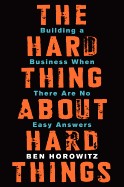 The Hard Thing About Hard ThingsRecommended
by Ben Horowitz
“Zenholm references Ben Horowitz's concept from The Hard Thing About Hard Things that everything in business is your fault, including employee departures, technical failures, and external circumstances.”
More from The $100 MBA
We summarize every new episode. Want them in your inbox?
If I Wanted To Turn $100 Into My First $100K In 2026, I'd Do This
Personal Style Expert: How To Dress To Earn More! (Stop Making These Style Mistakes)
The REAL Reason CEOs Hate Remote Work/Want Everyone Back In The Office And Why I Am Doing The Same!
The Ultimate Guide To AI For Normal People
Doing This For 28 Days Could Fix Your Anxiety! The Secret to Stopping Anxiety & Overwhelm (That Actually Works)
Similar Episodes
Related episodes from other podcasts

Beyond Biotech
Jul 31
Gain Therapeutics: a first-in-class, disease-modifying therapy for Parkinson's

The Diary of a CEO
May 18
Fatty Liver Expert: Your Liver Is Filling With Fat Right Now - Dr David Unwin

Feel Better, Live More
Feb 25
Born To Walk: How To Reclaim Your Feet, Fix Your Pain & Transform Your Health with Dr Courtney Conley #629

Hidden Brain
Jan 12
You 2.0: How to Get Out of a Rut

Machine Learning Street Talk
Dec 31
We Invented Momentum Because Math is Hard [Dr. Jeff Beck]
Explore Related Topics
This podcast is featured in Best Business Podcasts (2026) — ranked and reviewed with AI summaries.
You're clearly into The $100 MBA.
Every Monday, we deliver AI summaries of the latest episodes from The $100 MBA and 192+ other podcasts. Free for one show.
Start My Monday DigestNo credit card · Unsubscribe anytime