Short Stuff: History of Spring Break
Episode
14 min
Read time
2 min
Topics
Productivity, Leadership, Science & Discovery
AI-Generated Summary
Key Takeaways
- ✓Origin point: Fort Lauderdale's spring break culture began in 1928 when Colgate University's swim coach brought his team south to train in Florida's first Olympic-sized pool, accidentally establishing the warm-weather student migration pattern that would attract 400,000 visitors by the mid-1980s.
- ✓Media amplification: The 1960 MGM film adaptation of Glendon Swarthout's novel "Where the Boys Are" — originally titled "Unholy Spring," based on his 1958 field research with Michigan State students — drove tens of thousands of students annually to Fort Lauderdale within years of release.
- ✓Freaknik model: In 1983, Atlanta HBCU students created Freaknik as an on-campus picnic alternative to traveling elsewhere, which scaled into a nationally attended event drawing hundreds of thousands before cruising ordinances effectively ended it roughly a decade later.
- ✓Regulation pattern: Recurring cycles of overcrowding and criminal incidents consistently end spring break concentrations through targeted local laws. Panama City banned beach drinking in March after 2015 incidents, and Fort Lauderdale's mayor publicly redirected crowds after violence peaked in the 1980s.
What It Covers
Spring break's origins trace from 1920s college road trips through Fort Lauderdale's 1928 Olympic pool, the 1960 MGM film "Where the Boys Are," MTV's 1986 Daytona broadcasts, and Atlanta's Freaknik gatherings to modern regulated beach policies.
Key Questions Answered
- •Origin point: Fort Lauderdale's spring break culture began in 1928 when Colgate University's swim coach brought his team south to train in Florida's first Olympic-sized pool, accidentally establishing the warm-weather student migration pattern that would attract 400,000 visitors by the mid-1980s.
- •Media amplification: The 1960 MGM film adaptation of Glendon Swarthout's novel "Where the Boys Are" — originally titled "Unholy Spring," based on his 1958 field research with Michigan State students — drove tens of thousands of students annually to Fort Lauderdale within years of release.
- •Freaknik model: In 1983, Atlanta HBCU students created Freaknik as an on-campus picnic alternative to traveling elsewhere, which scaled into a nationally attended event drawing hundreds of thousands before cruising ordinances effectively ended it roughly a decade later.
- •Regulation pattern: Recurring cycles of overcrowding and criminal incidents consistently end spring break concentrations through targeted local laws. Panama City banned beach drinking in March after 2015 incidents, and Fort Lauderdale's mayor publicly redirected crowds after violence peaked in the 1980s.
Notable Moment
Panama City's spring break era ended after a 2015 incident involving a filmed sexual assault of an unconscious woman and eight people shot at a single house prompted officials to ban beach alcohol consumption during March.
Episode Transcript
This is an iHeart podcast, guaranteed human. 2%. That's the number of people who take the stairs when there is also an escalator available. I'm Michael Easter, and on my podcast, Two Percent, I I break down the science of mental toughness, fitness, and building resilience in our strange modern world. Put yourself through some hardships, and you will come out on the other side a happier, more fulfilled, healthier person. Listen to 2%. That's t w o percent on the iHeartRadio app, Apple Podcasts, or wherever you get your podcasts. You know the famous author Roald Dahl. He thought of Willy Wonka and the BFG, but did you know he was a spy? Neither did I. You can hear all about his wildlife story in the podcast, The Secret World of Roald Dahl. All episodes are out now. Was this before you wrote his stories? It must have been. What? Okay. I don't think that's true. I'm telling you because I was a spy. Binge all 10 episodes of The Secret World of Roald Dahl now on the iHeartRadio app, Apple Podcasts, or wherever you get your podcasts. Hey, and welcome to the Short Stuff. I'm Josh, and there's Chuck. And everybody else is present in spirit, and this is stuff you should know, Short Stuff. Where the Boys Are. Is that the song? I think so. Oh, I always think of that, book of love song. I wanna be where the boys are. Well, wait. Wait. So you you say yours. I wanna hear it. Oh, I wanna be where the boys are, but I'm not, loud. You've not heard that song? I didn't know Lou Reed sang a song like that. Do I sound like Lou Reed? I'll take that. You kinda speak singing, which is Lou Reed's deal. Yeah. I do speak sing. I I can't put my all into it. Like Hey, man. A lot of people have made great careers out of speak singing. No shame. That's right. Alright. I might take you up on that and become a speak singer. That's right. But, I mean, that's the gateway to being a a white male rapper. So just be careful. Okay. I will be careful. If you see me with, like, three lines cut into my side, the side of my hair, maybe take me, out for some drinks and give me some the talking to. I've done that accidentally. Oh, I have too. Well, Yumi did it accidentally to me, but not I I'm talking intentional. Oh, okay. Yeah. Alright. So we're talking spring break. That's why you're saying can you sing it again, please? Where the boys are. That was lovely. That is actually, they think, where spring break, the American institution of going to warm places in the spring, usually from northern universities and getting plastered for a week, came from a book called what's it called, Chuck? Where the Boys Are. Not bad. But okay. No. Speak singing. You gotta …
Get the full transcript (2,991 words) + summary by email — free
One-time email with the complete transcript and AI summary of this episode. No account needed.
One email, no spam. We’ll also show you what SignalCast does.

You just read a 3-minute summary of a 11-minute episode.
Get Stuff You Should Know summarized like this every Monday — plus up to 2 more podcasts, free.
Pick Your Podcasts — FreeKeep Reading
More from Stuff You Should Know
Short Stuff: The Style Cycle
Oct 7 · 13 min

The Peter Attia Drive
#401 ‒ How curiosity transforms medicine: extraordinary discoveries that changed modern healthcare
Jul 27
More from Stuff You Should Know
Stand-Up Comedy Pt I
Oct 6 · 45 min

The Jordan Harbinger Show
1359: Breakfast Cereal | Skeptical Sunday
Jul 19
Books, tools, and gear mentioned in this episode
SignalCast may earn commission on purchases via these links. As an Amazon Associate, SignalCast earns from qualifying purchases.
Books
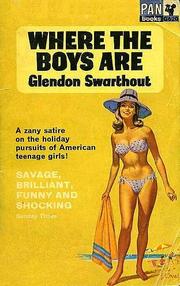
by Glendon Swarthout
“The 1960 MGM film adaptation of Glendon Swarthout's novel "Where the Boys Are" — originally titled "Unholy Spring," based on his 1958 field research with Michigan State students — drove tens of thousands of students annually to Fort Lauderdale within years of release.”
More from Stuff You Should Know
We summarize every new episode. Want them in your inbox?
Similar Episodes
Related episodes from other podcasts

The Peter Attia Drive
Jul 27
#401 ‒ How curiosity transforms medicine: extraordinary discoveries that changed modern healthcare

The Jordan Harbinger Show
Jul 19
1359: Breakfast Cereal | Skeptical Sunday

Acquired
Jun 22
The Walt Disney Company

The Knowledge Project
Apr 22
Greg Brockman: Inside the 72 Hours That Almost Killed OpenAI

How to Take Over the World
Dec 5
Andrew Carnegie (Part 1)
Explore Related Topics
This podcast is featured in Best Science Podcasts (2026) — ranked and reviewed with AI summaries.
You're clearly into Stuff You Should Know.
Every Monday, we deliver AI summaries of the latest episodes from Stuff You Should Know and 192+ other podcasts. Free for one show.
Start My Monday DigestNo credit card · Unsubscribe anytime