Let's All Go to the World's Fair
Episode
52 min
Read time
2 min
Topics
Productivity, Leadership, Software Development
AI-Generated Summary
Key Takeaways
- ✓World's Fair Origins: England's Society for Arts launched the first national exhibitions in 1754, showcasing industrial technology. The format evolved into the 1851 Crystal Palace Exhibition in Hyde Park — 18 acres of glass and iron housing 14,000 exhibits across 8 miles of display space — establishing the template every subsequent World's Fair followed for showcasing national technological progress.
- ✓Landmark Inventions Debuted at Fairs: Tracking which technologies premiered at specific fairs reveals their cultural moment. The 1876 Philadelphia Centennial introduced the telephone and typewriter. Chicago 1893 gave the world Cracker Jacks, the dishwasher, the zipper, and the first Ferris wheel at 264 feet tall with 36 cars offering 20-minute rides for 50 cents, equivalent to roughly $18 today.
- ✓Regulatory Framework: The Bureau International des Expositions, established in Paris in 1928 and operational by 1931, imposed enforceable standards: official sanctioning required, maximum six-month duration, and mandatory thematic focus. Since then, only 50 World's Fairs have been officially recognized globally, transforming a chaotic proliferation of competing events into a structured, credentialed international institution.
- ✓W.E.B. Du Bois's Data Visualization: At the 1900 Paris Exposition, Du Bois and Booker T. Washington presented an exhibit documenting Black American progress since emancipation using inventions, art, photographs, and Du Bois's pioneering infographics. These single-page visual data displays showed rising literacy rates, taxable property ownership, and comparative literacy rankings against countries including Romania and Russia — worth searching online today.
- ✓Attendance Decline Pattern: American World's Fair attendance collapsed after 1964. Seattle's 1962 Century 21 Expo drew 10 million visitors while New York's 1964 fair drew 56 million — then New Orleans 1984 drew under 10 million, lost over $120 million, and creditors recovered roughly 8 cents per dollar. The global center shifted east, with Shanghai's 2010 Expo setting the all-time attendance record at 73 million visitors.
What It Covers
Josh and Chuck trace the full history of World's Fairs from England's 1754 national exhibitions through the 1851 Crystal Palace, major Paris expositions, landmark American fairs in Philadelphia, Chicago, and St. Louis, and the modern shift toward Asian and Middle Eastern host cities, examining how these events shaped technology, architecture, and culture.
Key Questions Answered
- •World's Fair Origins: England's Society for Arts launched the first national exhibitions in 1754, showcasing industrial technology. The format evolved into the 1851 Crystal Palace Exhibition in Hyde Park — 18 acres of glass and iron housing 14,000 exhibits across 8 miles of display space — establishing the template every subsequent World's Fair followed for showcasing national technological progress.
- •Landmark Inventions Debuted at Fairs: Tracking which technologies premiered at specific fairs reveals their cultural moment. The 1876 Philadelphia Centennial introduced the telephone and typewriter. Chicago 1893 gave the world Cracker Jacks, the dishwasher, the zipper, and the first Ferris wheel at 264 feet tall with 36 cars offering 20-minute rides for 50 cents, equivalent to roughly $18 today.
- •Regulatory Framework: The Bureau International des Expositions, established in Paris in 1928 and operational by 1931, imposed enforceable standards: official sanctioning required, maximum six-month duration, and mandatory thematic focus. Since then, only 50 World's Fairs have been officially recognized globally, transforming a chaotic proliferation of competing events into a structured, credentialed international institution.
- •W.E.B. Du Bois's Data Visualization: At the 1900 Paris Exposition, Du Bois and Booker T. Washington presented an exhibit documenting Black American progress since emancipation using inventions, art, photographs, and Du Bois's pioneering infographics. These single-page visual data displays showed rising literacy rates, taxable property ownership, and comparative literacy rankings against countries including Romania and Russia — worth searching online today.
- •Attendance Decline Pattern: American World's Fair attendance collapsed after 1964. Seattle's 1962 Century 21 Expo drew 10 million visitors while New York's 1964 fair drew 56 million — then New Orleans 1984 drew under 10 million, lost over $120 million, and creditors recovered roughly 8 cents per dollar. The global center shifted east, with Shanghai's 2010 Expo setting the all-time attendance record at 73 million visitors.
Notable Moment
Isaac Asimov, writing in 1964, correctly predicted that robots would exist but remain limited by 2014, and that technology would cause serious psychological and social harm — but he assumed the damage would come from enforced leisure as robots eliminated all human work, not from social media and information overload.
Episode Transcript
This is an iHeart podcast. Guaranteed human. If you were to try two zero sugar colas with their labels removed and make the decision based on taste alone, do you know which one you'd choose? Well, last year, Pepsi put that to the test for tens of thousands of people across the country in a revival of the iconic Pepsi challenge. And the results were clear. 66% of people preferred the taste of Pepsi zero sugar over Coke zero sugar. That's the idea behind the Pepsi paradox. That when labels and bias disappear, people prefer the taste of Pepsi zero sugar. It really makes you wonder, are you choosing the zero sugar cola that you actually prefer? Or are you settling for the label that you think you prefer? Go out and try Pepsi zero sugar today. You deserve taste. You deserve Pepsi. We're always talking about how things work, and one thing that keeps your car running smoothly is regular oil changes. But life's busy, and the oil light always comes on at the worst time. Well, that's why there's take five oil change. It doesn't just save time. It gives you control of your day back. You pull in, stay in your car, check something off your to do list. No waiting room, no pressure, you're in and you're out in about ten minutes. Oil changes include tire pressure checks and fluid top offs, and the friendly staff explain everything and welcome you with a free water. Take five fitting into your busy schedule is something you should know. Find your nearest shop at take5.com. With no fees or minimums on checking accounts, it's no wonder the Capital One bank guy is so passionate about banking with Capital One. If he were here, he wouldn't just tell you about no fees or minimums. He'd also talk about how most Capital One cafes are open seven days a week to assist with your banking needs. Yep. Even on weekends. It's pretty much all he talks about in a good way. What's in your wallet? Terms apply. See capital1.com/bank. Capital One, n a, member, FDIC. Welcome to Stuff You Should Know, a production of iHeartRadio. Hey, and welcome to the podcast. I'm Josh, and there's Chuck. And this is just us today. Jerry's out on vacation. I mean, she's at a conference, and, this is stuff you should know. That's right. This was your idea, and that something about it just smacks of kind of classic stuff you should know, where we talk about a bygone era in a way. Mhmm. Mhmm. And so, yeah, we're talking about world's fairs today. Depending on where you are in the world, you might call them international expositions, universal expositions. You might just call them expos if you're pressed for time. Sure. And I thought maybe, Chuck, we would just do this entire episode in gibberish that only you and I can understand. Yeah. That's a great idea. This is the one. We're …
Get the full transcript (11,496 words) + summary by email — free
One-time email with the complete transcript and AI summary of this episode. No account needed.
One email, no spam. We’ll also show you what SignalCast does.

You just read a 3-minute summary of a 49-minute episode.
Get Stuff You Should Know summarized like this every Monday — plus up to 2 more podcasts, free.
Pick Your Podcasts — FreeKeep Reading


Books, tools, and gear mentioned in this episode
SignalCast may earn commission on purchases via these links. As an Amazon Associate, SignalCast earns from qualifying purchases.
Books
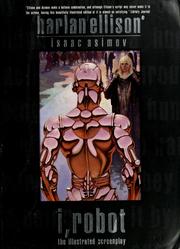
by Isaac Asimov
“Isaac Asimov, writing in 1964, correctly predicted that robots would exist but remain limited by 2014, and that technology would cause serious psychological and social harm — but he assumed the damage would come from enforced leisure as robots eliminated all human work, not from social media and information overload.”
More from Stuff You Should Know
We summarize every new episode. Want them in your inbox?
Similar Episodes
Related episodes from other podcasts

The Jordan Harbinger Show
Jul 12
1356: Tipflation | Skeptical Sunday

Everything Everywhere Daily
Jun 24
The 1986 World Cup

Freakonomics Radio
Jun 12
677. Can Backgammon Save Us from Ourselves?

How to Take Over the World
Dec 12
Andrew Carnegie (Part 2)

The Rich Roll Podcast
Sep 3
From Drinking Every Morning to Running 340 Miles: Tommie Runz on Recovery, Running & Redemption
Explore Related Topics
This podcast is featured in Best Science Podcasts (2026) — ranked and reviewed with AI summaries.
Read this week's Software Engineering Podcast Insights — cross-podcast analysis updated weekly.
You're clearly into Stuff You Should Know.
Every Monday, we deliver AI summaries of the latest episodes from Stuff You Should Know and 192+ other podcasts. Free for one show.
Start My Monday DigestNo credit card · Unsubscribe anytime