"RE-RELEASE: Paul Thomas Anderson"
Episode
62 min
Read time
2 min
Topics
Productivity, Design & UX, Software Development
AI-Generated Summary
Key Takeaways
- ✓Script Development Through Iteration: Anderson spent ten years adapting the Dirk Diggler story from a fake documentary format into Boogie Nights, rewriting it multiple times in different formats. This practice of telling the same story through various approaches became his method for learning screenplay structure and character development.
- ✓Location Strategy for Creative Freedom: Production designer Jack Fisk taught Anderson to keep filming locations geographically close together. This proximity allows filmmakers to reshoot scenes that aren't working without major logistical challenges, creating a self-contained universe that enables spontaneous creative decisions and maintains production flexibility throughout the shoot.
- ✓Writing Without Predetermined Themes: Anderson focuses on factual story progression rather than writing toward specific themes. He lets thematic elements emerge naturally during writing and editing rather than forcing messages, believing films that overtly communicate their themes become annoying and boring for audiences who prefer discovering meaning organically.
- ✓Simplifying Technical Research: When creating period-accurate oil derricks for There Will Be Blood, Jack Fisk recommended starting with children's books rather than dense technical manuals. Simple illustrated guides provide clearer foundational understanding than complex reference materials, making specialized knowledge more accessible and applicable to visual storytelling.
- ✓Theater Distribution Reality Check: Anderson notes that while massive multiplexes sit empty, specialty theaters programming quality films consistently fill their four hundred seat venues with multiple daily showings. The problem isn't audience interest in theatrical experiences but rather the quality and presentation standards of mainstream theater chains.
What It Covers
Filmmaker Paul Thomas Anderson discusses his creative process, collaboration methods with production designers and composers, the evolution of Boogie Nights from a short film, and his views on theatrical versus streaming distribution.
Key Questions Answered
- •Script Development Through Iteration: Anderson spent ten years adapting the Dirk Diggler story from a fake documentary format into Boogie Nights, rewriting it multiple times in different formats. This practice of telling the same story through various approaches became his method for learning screenplay structure and character development.
- •Location Strategy for Creative Freedom: Production designer Jack Fisk taught Anderson to keep filming locations geographically close together. This proximity allows filmmakers to reshoot scenes that aren't working without major logistical challenges, creating a self-contained universe that enables spontaneous creative decisions and maintains production flexibility throughout the shoot.
- •Writing Without Predetermined Themes: Anderson focuses on factual story progression rather than writing toward specific themes. He lets thematic elements emerge naturally during writing and editing rather than forcing messages, believing films that overtly communicate their themes become annoying and boring for audiences who prefer discovering meaning organically.
- •Simplifying Technical Research: When creating period-accurate oil derricks for There Will Be Blood, Jack Fisk recommended starting with children's books rather than dense technical manuals. Simple illustrated guides provide clearer foundational understanding than complex reference materials, making specialized knowledge more accessible and applicable to visual storytelling.
- •Theater Distribution Reality Check: Anderson notes that while massive multiplexes sit empty, specialty theaters programming quality films consistently fill their four hundred seat venues with multiple daily showings. The problem isn't audience interest in theatrical experiences but rather the quality and presentation standards of mainstream theater chains.
Notable Moment
Anderson describes seeing Maya Rudolph's name on paper for the first time at Saturday Night Live and experiencing an immediate, inexplicable certainty that his life had changed, prompting him to return from London specifically to meet her.
Episode Transcript
Okay. Here we go. This is gonna be a Smartless episode. Let's tune up the ears, get the wax out. What what are you doing? The papers are getting set. The prep is done. Okay. Ready? Here we go. You guys ready to ready to talk? Guys. Guys. What do you guys What? It's an all new Smartless. Oh, god. Smart. Less. Okay. Hey, guys. Look. Wait. Check this out. Oh, sure. Yeah. Yeah. Start right away. Yeah. Start. Wait. Have you been preparing, Chuck? See that look at the sign. Instruction? No. That sign right where my finger is. Chicago City. Wow. Wow. Wow. Did you know that a week ago that you were gonna be staying in that apartment? I knew I knew where the name of it, but I didn't know where it was. Yeah. Sean, for the for the listener, Sean, started his stay there. What is it gonna be like a multi month stay in Chicago? Right? Yeah. Pretty much. Yeah. The first night he was there was, was Valentine's, and, appropriately, he and Scotty, saw a couple, consummating Valentine's right across the street. And and, like, in in kind of, like it wasn't even, like, roll it was all the lights were on. It was somewhat impromptu. We won't get into the the graphic details of it, but it was clearly an office building. Not a planned, consummation. No. All all parties were upright is the point. And It was it was half a wobbly h. Okay. Isn't that wild? And Scott is like I go, what are you looking at? And he's like, come over to this window. Wait. How long was he looking out the window before you noticed he was tearing it away? It was a minute. And he kept saying and he kept saying, come look at these people in love. Right? He kept saying, look at these people in love. She they were going to have it. Love. In case you didn't know, it's Valentine's Day. Love is. Okay? Now do you think they wanted to be seen that's why the shades were up? Yeah. No. I think people are just used to living. Well, Will, you can speak to this. You've lived in New York City. Do you just get used to the fact that people might be watching you, or do you, well, that? I I think you go back and forth. I think that you you have moments where you're like, oh my god. And then you also have moments where you're like, Sure. You just live your life and you don't think about it. You can't you can't think about it all the time. I mean, you could pull the shades down. Oh, sure. I will I would suggest that those people who are engaged in that in that moment, didn't care. And and in fact, that that probably was there to heighten their experience. Now, Shani, you're you're you're back out on the road. …
Get the full transcript (12,280 words) + summary by email — free
One-time email with the complete transcript and AI summary of this episode. No account needed.
One email, no spam. We’ll also show you what SignalCast does.

You just read a 3-minute summary of a 59-minute episode.
Get SmartLess summarized like this every Monday — plus up to 2 more podcasts, free.
Pick Your Podcasts — FreeKeep Reading


Books, tools, and gear mentioned in this episode
SignalCast may earn commission on purchases via these links. As an Amazon Associate, SignalCast earns from qualifying purchases.
Books
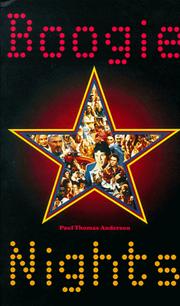
“Anderson spent ten years adapting the Dirk Diggler story from a fake documentary format into Boogie Nights, rewriting it multiple times in different formats.”
“When creating period-accurate oil derricks for There Will Be Blood, Jack Fisk recommended starting with children's books rather than dense technical manuals.”
More from SmartLess
We summarize every new episode. Want them in your inbox?
Similar Episodes
Related episodes from other podcasts

The Partially Examined Life
Nov 20
PEL Presents NEM#242: Marshall Crenshaw Subtracts

Up First (NPR)
Feb 22
Hollywood’s Love Affair with VistaVision

Design Matters
Dec 30
20th Anniversary Celebration with acclaimed directors Brian Koppelman, Thomas Kail, Mike Mills, Sarah Polley, and Siân Heder

On Purpose with Jay Shetty
Dec 22
JAMES CAMERON: Inside the Mind of One of the Most Iconic Filmmakers in History (Greatest Risks, Biggest Failures, & His KEY Principles to Success)

Freakonomics Radio
May 2
632. When Did We All Start Watching Documentaries?
Explore Related Topics
Read this week's Software Engineering Podcast Insights — cross-podcast analysis updated weekly.
You're clearly into SmartLess.
Every Monday, we deliver AI summaries of the latest episodes from SmartLess and 192+ other podcasts. Free for one show.
Start My Monday DigestNo credit card · Unsubscribe anytime