323 | Jacob Barandes on Indivisible Stochastic Quantum Mechanics
Episode
178 min
Read time
2 min
Topics
Career Growth, Product & Tech Trends, Psychology & Behavior
AI-Generated Summary
Key Takeaways
- ✓Non-Markovian dynamics foundation: Barandes' theory abandons the Markov assumption that dominated physics since Newton—where knowing present state predicts future behavior. Instead, particles follow stochastic laws requiring knowledge of entire past trajectories to make probabilistic predictions, fundamentally breaking from three centuries of physical law formulation while maintaining empirical adequacy with standard quantum predictions.
- ✓Wave function elimination strategy: The theory operates without wave functions as fundamental entities, treating electrons and particles as localized objects moving discontinuously through space via indivisible stochastic processes. These processes cannot be subdivided into smaller time intervals while maintaining predictive power, representing a complete departure from Hilbert space formalism introduced by Dirac and von Neumann in 1930-1932.
- ✓Decoherence origins traced: David Bohm introduced decoherence in his 1951 textbook "Quantum Theory" section 22.8, showing measurement interactions create non-interfering branches—decades before the concept became central to quantum computing and information theory. This foundational contribution went largely unrecognized, with Bohm facing career exile rather than receiving credit for work now essential to quantum technology development.
- ✓Many Worlds probability problem: Everett's approach requires increasingly complex proofs to derive Born rule probabilities—from Everett's one-page argument to Deutsch's fifteen pages to Wallace's eighty-three pages in "The Emergent Multiverse." This escalating complexity raises concerns about circular reasoning, where assumptions equivalent to conclusions may hide within intricate mathematical formalism requiring numerous metaphysical premises about personal identity across branches.
- ✓Relativistic quantum field challenges: Bohmian mechanics works elegantly for non-relativistic spinless particles but becomes severely complicated or potentially unworkable for relativistic quantum field theories with fermions and interactions. After seventy years of development since Bohm's 1952 papers, the approach still cannot adequately explain phenomena like Rayleigh scattering responsible for blue sky color, suggesting fundamental limitations beyond mere technical difficulty.
What It Covers
Jacob Barandes presents indivisible stochastic quantum mechanics, a radical alternative to standard quantum theory that eliminates wave functions entirely, replacing them with particles following non-Markovian stochastic laws where future behavior depends on complete past history, not just present state.
Key Questions Answered
- •Non-Markovian dynamics foundation: Barandes' theory abandons the Markov assumption that dominated physics since Newton—where knowing present state predicts future behavior. Instead, particles follow stochastic laws requiring knowledge of entire past trajectories to make probabilistic predictions, fundamentally breaking from three centuries of physical law formulation while maintaining empirical adequacy with standard quantum predictions.
- •Wave function elimination strategy: The theory operates without wave functions as fundamental entities, treating electrons and particles as localized objects moving discontinuously through space via indivisible stochastic processes. These processes cannot be subdivided into smaller time intervals while maintaining predictive power, representing a complete departure from Hilbert space formalism introduced by Dirac and von Neumann in 1930-1932.
- •Decoherence origins traced: David Bohm introduced decoherence in his 1951 textbook "Quantum Theory" section 22.8, showing measurement interactions create non-interfering branches—decades before the concept became central to quantum computing and information theory. This foundational contribution went largely unrecognized, with Bohm facing career exile rather than receiving credit for work now essential to quantum technology development.
- •Many Worlds probability problem: Everett's approach requires increasingly complex proofs to derive Born rule probabilities—from Everett's one-page argument to Deutsch's fifteen pages to Wallace's eighty-three pages in "The Emergent Multiverse." This escalating complexity raises concerns about circular reasoning, where assumptions equivalent to conclusions may hide within intricate mathematical formalism requiring numerous metaphysical premises about personal identity across branches.
- •Relativistic quantum field challenges: Bohmian mechanics works elegantly for non-relativistic spinless particles but becomes severely complicated or potentially unworkable for relativistic quantum field theories with fermions and interactions. After seventy years of development since Bohm's 1952 papers, the approach still cannot adequately explain phenomena like Rayleigh scattering responsible for blue sky color, suggesting fundamental limitations beyond mere technical difficulty.
Notable Moment
Barandes describes stumbling upon his theory while preparing a 2022 class, attempting to make quantum mechanics look more like classical stochastic processes for pedagogical clarity. He inadvertently discovered that abandoning the Markov assumption—without intending to—produced quantum theory directly from classical probability and particles, revealing an unexplored theoretical pathway available since the 1960s that nobody seriously investigated.
Episode Transcript
Hello, everyone. Welcome to the Mindscape podcast. I'm your host, Sean Carroll. Quantum mechanics, one of our favorite topics here at Mindscape, continues to be in this weird situation where it's a wonderful theory that fits all the data. We can do spectacularly good calculations, compare them against experiment, achieve agreement to many significant figures, and yet it is very, very easy to ask questions about quantum mechanics that we don't know the answer to, not just what would happen questions, but what does the theory say questions. And so we have the whole sub discipline of foundations of quantum mechanics, trying to figure out what the true theory is behind the successful quantum mechanical predictions. And as many of you know, there are different approaches here. Ordinarily, in quantum mechanics, you have a wave function, and then the first question you ask is, does the wave function represent reality or is it merely epistemic? Is it merely something about our ability to make predictions about things? But then if you do think that the wave function represents reality, then you still have choices. Is it the sole representative of reality, or are there hidden variables or something like that? And if it is the sole representative of reality, does it always obey the famous Schrodinger equation, in which case you get the many worlds theory, Or does it sometimes change stochastically, at different moments depending on what model you have? Then you have objective collapse models of various sorts. And all of these theories are truly different theories. They're not different interpretations of quantum mechanics. They potentially have different experimental consequences. In some cases, we know clearly what those different experimental predictions are. In other cases, we're less sure. But still, we don't have a consensus that one of these approaches is on the right track, and therefore, it's useful, very, very important, in fact, I would say, to develop entirely new alternatives to these famous models of quantum mechanics because who knows? Maybe we just need to be shaken out of our dogmatic slumbers, and then we'll find the right answer. Today's guest, Jacob Barandas, is a physicist and philosopher at Harvard University, and he has a proposal for a brand new way of thinking about quantum mechanics. When I say brand new, it's, you know, brand new is always a questionable thing in science or academia because everyone always has predecessors. So great. Jacob's idea of quantum mechanics lives in a tradition of what is called stochastic models of quantum mechanics. There have been some stochastic models of quantum mechanics, but he has a different one. Okay? So his particular approach is distinct from anything that's been tried before. And I'll tell you the basic idea of it now because, spoiler alert, this podcast is very long. It takes us a while to get to what Jacob is actually proposing in his new theory because we spent a lot of time preparing groundwork for understanding the issues …
Get the full transcript (30,762 words) + summary by email — free
One-time email with the complete transcript and AI summary of this episode. No account needed.
One email, no spam. We’ll also show you what SignalCast does.

You just read a 3-minute summary of a 175-minute episode.
Get Sean Carroll's Mindscape summarized like this every Monday — plus up to 2 more podcasts, free.
Pick Your Podcasts — FreeKeep Reading
More from Sean Carroll's Mindscape
367 | Jared Diamond on the Course of History and the Role of leaders
Sep 7 · 77 min

This Week in Startups
Bittensor creator Const on Affine, dTAO, "mining reasoning," and more | E2326
Aug 17
More from Sean Carroll's Mindscape
366 | Jim Al-Khalili on Time, Quantum, Biology, and Cosmology
Aug 31 · 75 min

Odd Lots
A Historic El Niño Is Coming That Could Cost the World Trillions
Aug 14
Books, tools, and gear mentioned in this episode
SignalCast may earn commission on purchases via these links. As an Amazon Associate, SignalCast earns from qualifying purchases.
Books
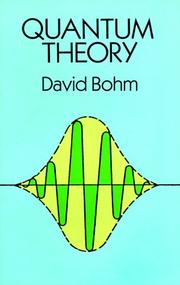 Quantum TheoryBy guest
by David Bohm
“David Bohm introduced decoherence in his 1951 textbook "Quantum Theory" section 22.8, showing measurement interactions create non-interfering branches—decades before the concept became central to quantum computing and information theory.”
 The Emergent MultiverseBy guest
by David Wallace
“Everett's approach requires increasingly complex proofs to derive Born rule probabilities—from Everett's one-page argument to Deutsch's fifteen pages to Wallace's eighty-three pages in "The Emergent Multiverse."”
More from Sean Carroll's Mindscape
We summarize every new episode. Want them in your inbox?
367 | Jared Diamond on the Course of History and the Role of leaders
366 | Jim Al-Khalili on Time, Quantum, Biology, and Cosmology
365 | Vitor Cardoso on Why Black Holes Are Special
364 | Stuart Firestein on How Science Relies on Ignorance and Failure
363 | Chandra Sripada on How LLMs and Humans are Cognitive Cousins
Similar Episodes
Related episodes from other podcasts

This Week in Startups
Aug 17
Bittensor creator Const on Affine, dTAO, "mining reasoning," and more | E2326

Odd Lots
Aug 14
A Historic El Niño Is Coming That Could Cost the World Trillions

David Senra
Jul 26
David Heinemeier Hansson (DHH), Co-founder of 37signals

Modern Wisdom
Jul 23
The Secret Government Playbook For A Bioweapon Attack - Annie Jacobsen - #1127
Modern Wisdom
Jun 25
Why You Don’t Feel Loved (even when you are) - Sonja Lyubomirsky - #1115
Explore Related Topics
This podcast is featured in Best Science Podcasts (2026) — ranked and reviewed with AI summaries.
You're clearly into Sean Carroll's Mindscape.
Every Monday, we deliver AI summaries of the latest episodes from Sean Carroll's Mindscape and 192+ other podcasts. Free for one show.
Start My Monday DigestNo credit card · Unsubscribe anytime