Lost in the Woods
Episode
22 min
Read time
2 min
Topics
Health & Wellness, Fundraising & VC, Leadership
AI-Generated Summary
Key Takeaways
- ✓Staying Put (Escalate, Don't Wander): Teams operating in IT-execution mode — told what to build with no discovery capability — should stop and escalate rather than improvise. Attempting self-directed fixes in that context risks greater damage. The correct move is raising the alarm to experienced leaders or an advisory board, not wandering further off-path.
- ✓Shortcut Risk and Validation: Pursuing a strategic shortcut, like Spotify shifting from low-margin music licensing toward podcasts, is only sound if tested before full commitment. Shortcuts reflect overconfidence when taken without validation. Engineering teams are an underused resource here — they frequently surface faster paths to outcomes that product managers never consider during discovery.
- ✓Opportunity Mapping Over First-Path Bias: Following the first visible path is a trap. Frameworks like opportunity solution trees and KPI trees exist specifically to surface multiple paths before committing to one. The discipline is making more options visible first, then selecting directionally — not defaulting to whatever solution appears earliest in the process.
- ✓Intuition Requires Data Inputs, Not Replacement: Product sense and taste are legitimate factors in decision-making, but applying them means exercising judgment across all available inputs — customer data, metrics, and observation — not ignoring instruments. Teams still operating on the product manager's opinion or sales requests alone are navigating without a compass.
- ✓Retracing Steps to Restore Principles: When bugs pile up or outcomes drift, the fix is not faster iteration — it is pausing to revisit the quality assurance rules or product principles that eroded. In continuous discovery, each forward habit creates a feedback loop on the previous one, signaling when to step back and correct the foundation before proceeding.
What It Covers
Petra Villa and Theresa Schwartz use Robert Koester's book *Lost Person Behavior* — a study of how people navigate being physically lost in the woods — to examine five behavioral patterns that mirror how product teams and organizations lose direction and attempt recovery.
Key Questions Answered
- •Staying Put (Escalate, Don't Wander): Teams operating in IT-execution mode — told what to build with no discovery capability — should stop and escalate rather than improvise. Attempting self-directed fixes in that context risks greater damage. The correct move is raising the alarm to experienced leaders or an advisory board, not wandering further off-path.
- •Shortcut Risk and Validation: Pursuing a strategic shortcut, like Spotify shifting from low-margin music licensing toward podcasts, is only sound if tested before full commitment. Shortcuts reflect overconfidence when taken without validation. Engineering teams are an underused resource here — they frequently surface faster paths to outcomes that product managers never consider during discovery.
- •Opportunity Mapping Over First-Path Bias: Following the first visible path is a trap. Frameworks like opportunity solution trees and KPI trees exist specifically to surface multiple paths before committing to one. The discipline is making more options visible first, then selecting directionally — not defaulting to whatever solution appears earliest in the process.
- •Intuition Requires Data Inputs, Not Replacement: Product sense and taste are legitimate factors in decision-making, but applying them means exercising judgment across all available inputs — customer data, metrics, and observation — not ignoring instruments. Teams still operating on the product manager's opinion or sales requests alone are navigating without a compass.
- •Retracing Steps to Restore Principles: When bugs pile up or outcomes drift, the fix is not faster iteration — it is pausing to revisit the quality assurance rules or product principles that eroded. In continuous discovery, each forward habit creates a feedback loop on the previous one, signaling when to step back and correct the foundation before proceeding.
Notable Moment
Theresa pushes back on a trending industry argument that design process should be abandoned in favor of taste and intuition alone. She reframes taste not as a replacement for process but as the judgment applied to reconcile conflicting data points — the compass versus the setting sun.
Episode Transcript
Hi, folks. This is All Things Product with Petra Villa And Theresa Schwartz. And we're so happy you're here. Petra, I understand that you recently read an article about a book called Lost in the Woods, which already sounds fascinating. I wanna read that book. Hopefully, it's in English and not in German. It's in English. Or I can get it translated. And, it was literally about people getting lost in the woods, but you saw a lot of analogies to product teams. And this resonates already because I see a lot of product teams lost in the woods. So let's get into this. Tell me a little bit about the article that you read or the book. Yeah. Actually, the book is called Lost Person Behavior. The author is Robert Kester. I I don't know how how you pronounce him properly. I don't know if he's a German or or not, but in Germany, it will be Robert Koester. And what and he was reading the book is all about how people get lost and how they can, recover from that. So how do they get back? And literally, when they're hiking. Right? How do they find back to the original path? And it was super fascinating to read because while I was reading that, I thought about, hey. There's so much it has so much to do with how product teams sometimes get lost and how product organizations sometimes get lost and where companies, entire companies sometimes get lost. So I thought I bring this five things he was talking about, the different ways how one could react to getting lost. And then we see if we can find similarities and stories, that we could share, with our audience. So that's, that's, that's my idea. If you're ready, I share what he said people usually do if they get lost. Are you ready? Yeah. Why don't we do one at a time? Okay. We yeah. But maybe then it's hard to find good examples, and the people are still like, what would be next? Okay. But we can we can drive. So the first one is, and that's usually what he describes kids are doing, that's the tendency that kids are having when they get lost, is they settle in place. So it's basically they do nothing. They realize that they got lost and then they like the frightened rabbit rabbit, they just, like, stay where they are. So is that something that you sometimes observe in product teams? At a story. Yeah. You know what's funny is if I think about a kid being lost in the woods, that's probably not bad behavior. No. It's good to see. Opinion on that? Yeah. The thing is Right? Like, you're just sort of capability to baby basically orient themselves. They know nothing about that the sun is basically shining from south or north depending on the hemisphere. You add all these kind of things. They don't know any of …
Get the full transcript (3,797 words) + summary by email — free
One-time email with the complete transcript and AI summary of this episode. No account needed.
One email, no spam. We’ll also show you what SignalCast does.

You just read a 3-minute summary of a 19-minute episode.
Get Product Talk summarized like this every Monday — plus up to 2 more podcasts, free.
Pick Your Podcasts — FreeKeep Reading
More from Product Talk
Mind-Bending Experiences
Oct 20 · 17 min

Modern Wisdom
Why Life Feels So Dull All The Time (and how to fix it) - Robert Greene - #1162
Oct 12
More from Product Talk
Training Expectations
Oct 13 · 17 min
Modern Wisdom
Is AI The Next Stage Of Human Evolution? - Robert Wright - #1122
Jul 11
Books, tools, and gear mentioned in this episode
SignalCast may earn commission on purchases via these links. As an Amazon Associate, SignalCast earns from qualifying purchases.
Books
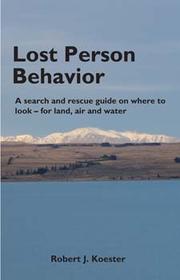 Lost Person BehaviorRecommended
by Robert Koester
“Petra Villa and Theresa Schwartz use Robert Koester's book *Lost Person Behavior* — a study of how people navigate being physically lost in the woods — to examine five behavioral patterns that mirror how product teams and organizations lose direction and attempt recovery.”
More from Product Talk
We summarize every new episode. Want them in your inbox?
Similar Episodes
Related episodes from other podcasts

Modern Wisdom
Oct 12
Why Life Feels So Dull All The Time (and how to fix it) - Robert Greene - #1162
Modern Wisdom
Jul 11
Is AI The Next Stage Of Human Evolution? - Robert Wright - #1122

Investing for Beginners
Jun 8
The Truth About Market Timing, Crashes, and Long-Term Investing with Ben Carlson

The Ezra Klein Show
May 5
The Book That Changed How I Think About Liberalism

Morning Brew Daily
Mar 11
AI Code Breaks Amazon From Inside & This Startup Wants to Abolish Night
Explore Related Topics
This podcast is featured in Best Product Management Podcasts (2026) — ranked and reviewed with AI summaries.
Read this week's Health & Longevity Podcast Insights — cross-podcast analysis updated weekly.
You're clearly into Product Talk.
Every Monday, we deliver AI summaries of the latest episodes from Product Talk and 192+ other podcasts. Free for one show.
Start My Monday DigestNo credit card · Unsubscribe anytime