Shutdown for What? (Schumer's Version)
Episode
76 min
Read time
3 min
Topics
Health & Wellness, Leadership, Economics & Policy
AI-Generated Summary
Key Takeaways
- ✓Shutdown Strategy Failure: Democrats pursued a government shutdown to force Republicans to extend ACA subsidies for 20 million Americans, but eight senators (including retiring members Jean Shaheen, Dick Durbin, and those not up until 2028-2030) ended the standoff after just one missed federal paycheck. The deal only secured a symbolic Senate vote on health care rather than actual policy concessions, demonstrating the fundamental weakness of shutdown leverage against opponents willing to inflict maximum pain on constituents through SNAP cuts and federal worker furloughs.
- ✓Republican Cruelty Calculus: Trump administration weaponized the shutdown by implementing targeted cruelty—freezing SNAP benefits for hungry families, denying heating assistance in winter, and threatening air travel safety during Thanksgiving. This strategy exploited Democratic unwillingness to match Republican ruthlessness, with senators citing constituent pleas from federal workers missing rent payments as the breaking point. The approach reveals how authoritarian tactics can neutralize traditional legislative leverage when one party refuses to acknowledge human suffering as politically costly.
- ✓Leadership Vacuum Problem: Chuck Schumer voted against the reopening deal but orchestrated it behind the scenes, using retiring senators as political cover while avoiding public accountability. House Democrats including Ro Khanna, Seth Moulton, and Mark Pocan called for his removal, citing poor communication skills and inability to maintain caucus unity. The incident exposes how weak leadership in an era requiring strong public messaging creates strategic confusion and undermines party cohesion during critical negotiations.
- ✓2026 Electoral Implications: Republicans will face voters in midterm elections after blocking health care subsidies that would prevent premium increases for 20 million Americans, creating a clear affordability contrast. Democrats avoided giving Trump a political win by extending subsidies, which would have allowed Republicans to claim bipartisan cooperation on lowering costs. The shutdown drew sustained attention to Republican health care cuts in their reconciliation bill, establishing a campaign narrative around which party fights for affordable coverage versus which party raises costs.
- ✓Filibuster Preservation Trap: Democrats could have forced Republicans to eliminate the Senate filibuster to reopen government, but institutionalist senators prioritized preserving the procedural rule over gaining leverage. This decision signals to Republicans that Democrats will cave before allowing maximum shutdown pain, undermining future negotiating positions including the January funding deadline. The episode demonstrates how reverence for Senate norms empowers the party willing to break them while constraining the party trying to preserve democratic guardrails.
What It Covers
Eight Democratic senators cut a deal with Republicans to reopen the federal government after the longest shutdown in history, securing back pay for workers and SNAP funding but only obtaining a symbolic vote on Affordable Care Act subsidies. The capitulation sparked internal Democratic conflict, with many calling the deal premature and questioning Senate Majority Leader Chuck Schumer's leadership effectiveness.
Key Questions Answered
- •Shutdown Strategy Failure: Democrats pursued a government shutdown to force Republicans to extend ACA subsidies for 20 million Americans, but eight senators (including retiring members Jean Shaheen, Dick Durbin, and those not up until 2028-2030) ended the standoff after just one missed federal paycheck. The deal only secured a symbolic Senate vote on health care rather than actual policy concessions, demonstrating the fundamental weakness of shutdown leverage against opponents willing to inflict maximum pain on constituents through SNAP cuts and federal worker furloughs.
- •Republican Cruelty Calculus: Trump administration weaponized the shutdown by implementing targeted cruelty—freezing SNAP benefits for hungry families, denying heating assistance in winter, and threatening air travel safety during Thanksgiving. This strategy exploited Democratic unwillingness to match Republican ruthlessness, with senators citing constituent pleas from federal workers missing rent payments as the breaking point. The approach reveals how authoritarian tactics can neutralize traditional legislative leverage when one party refuses to acknowledge human suffering as politically costly.
- •Leadership Vacuum Problem: Chuck Schumer voted against the reopening deal but orchestrated it behind the scenes, using retiring senators as political cover while avoiding public accountability. House Democrats including Ro Khanna, Seth Moulton, and Mark Pocan called for his removal, citing poor communication skills and inability to maintain caucus unity. The incident exposes how weak leadership in an era requiring strong public messaging creates strategic confusion and undermines party cohesion during critical negotiations.
- •2026 Electoral Implications: Republicans will face voters in midterm elections after blocking health care subsidies that would prevent premium increases for 20 million Americans, creating a clear affordability contrast. Democrats avoided giving Trump a political win by extending subsidies, which would have allowed Republicans to claim bipartisan cooperation on lowering costs. The shutdown drew sustained attention to Republican health care cuts in their reconciliation bill, establishing a campaign narrative around which party fights for affordable coverage versus which party raises costs.
- •Filibuster Preservation Trap: Democrats could have forced Republicans to eliminate the Senate filibuster to reopen government, but institutionalist senators prioritized preserving the procedural rule over gaining leverage. This decision signals to Republicans that Democrats will cave before allowing maximum shutdown pain, undermining future negotiating positions including the January funding deadline. The episode demonstrates how reverence for Senate norms empowers the party willing to break them while constraining the party trying to preserve democratic guardrails.
- •MAGA Coalition Fractures: Tucker Carlson's friendly interview with white supremacist Nick Fuentes (who advocates death penalties for Jews and says blacks should be imprisoned) triggered Republican infighting, with Ben Shapiro condemning the platforming and Heritage Foundation severing anti-Semitism task force ties. The controversy reveals growing tensions between establishment conservatives and the violent extremist wing gaining influence through figures like Fuentes, whose audience now includes fraternity members at SEC schools, not just fringe rally attendees.
Notable Moment
Trump attended his first regular season NFL game as president at the Washington Commanders stadium, complete with Air Force One flyover and halftime military swearing-in ceremony designed to prevent crowd booing. The overwhelmingly negative reception from the stadium—including a fan directly below his box giving double middle fingers—demonstrated that even elaborate patriotic staging cannot overcome deep unpopularity in the heavily Democratic Washington DC area filled with furloughed federal workers.
Episode Transcript
Today's presenting sponsor is SimpliSafe home security. Is your home actually safe if you have old school home security? No. Traditional security systems respond after someone breaks in. SimpliSafe is different because it can stop crimes before they happen with its active guard outdoor protection. High-tech cameras detect threats while they're still outside your home and alert real security agents. This is a game changer. The agents take action while the intruder is still outside. They confront the intruder, letting them know they're being watched on camera and that police are on their way. And even sounding a loud siren and triggering a spotlight if needed, this is how you stop crime before it starts. Other systems have cameras that let you talk to intruders, but they require you to see the alert yourself. SimpliSafe's monitoring agents have your back and talk to intruders even if you aren't there. There are no long term contracts or hidden fees. You can cancel anytime. It's named the best home security systems by US News and World Report for five years running. Sixty day money back guarantee so you can try it and see the difference for yourself. John Lovett set up his own SimpliSafe. Great, please. Thanks. Yeah. I don't even think I need the applause, which is shocking. The it's easy to do. You set it up. You customize it for your home, then you can install it yourself. They'll help you, but you don't really need it. You can just install the sensors everywhere they're meant to be, and then the system is completely reliable, completely easy to use. The app is great. The customer support is great. Highly recommend it. Don't miss out on SimpliSafe's biggest sale of the year, 60% off. Right now, our listeners can save 60% off on a SimpliSafe home security system at simplisafe.com/crooked. That's simplisafe.com/crooked. There's no safe like SimpliSafe. Remember when Wall Street broke the economy back in 2008? A few unlikely geniuses saw it coming and bet against the system. Bestselling author Michael Lewis, who's joined us on the show before, turned their story into The Big Short, the blockbuster book that became an Oscar award winning movie. And now in an era of meme stocks, crypto chaos, and housing prices that make you wanna scream, it's the perfect time to revisit The Big Short. It's the ultimate playbook for understanding how markets really work and who really pays when they don't. And for the first time ever, The Big Short is available as an audiobook narrated by Michael Lewis himself. He brings his wit, signature storytelling, and insights straight to your ears, giving you a front row seat to the financial disaster that reshaped the world. Get the big short audiobook at Audible, Spotify, pushkin.fm/audiobooks, or wherever you get your audiobooks. Welcome to Pod Save America. I'm Jon Favreau. I'm Jon Lovitt. Tommy Vietore. Sorry. I lost my voice at Crooked Con chanting for Robert Mueller and the rule of law. …
Get the full transcript (16,026 words) + summary by email — free
One-time email with the complete transcript and AI summary of this episode. No account needed.
One email, no spam. We’ll also show you what SignalCast does.

You just read a 3-minute summary of a 73-minute episode.
Get Pod Save America summarized like this every Monday — plus up to 2 more podcasts, free.
Pick Your Podcasts — FreeKeep Reading


Books, tools, and gear mentioned in this episode
SignalCast may earn commission on purchases via these links. As an Amazon Associate, SignalCast earns from qualifying purchases.
Books
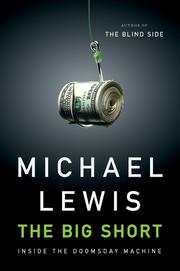
“The Big Short Audiobook listed as podcast sponsor available through pushkin.fm/audiobooks”
Tools
by Squarespace
“Squarespace listed as podcast sponsor with promotional URL squarespace.com/crooked”
by BetterHelp
“BetterHelp listed as podcast sponsor with promotional URL betterhelp.com/psa”
Products
by SimpliSafe
“SimpliSafe listed as podcast sponsor with promotional URL simplisafe.com/crooked”
More from Pod Save America
We summarize every new episode. Want them in your inbox?
Similar Episodes
Related episodes from other podcasts

The Daily (NYT)
Nov 11
The Messy Politics of the Democratic Shutdown Deal

The Ezra Klein Show
Oct 8
What the Shutdown Is Really About

The Jordan Harbinger Show
Sep 1
1376: Sean Hemeon | The Good Little Drug Lord

The Prof G Pod
Jun 18
America at 250 — with Heather Cox Richardson

Up First (NPR)
May 6
Project Freedom Paused, Ohio & Indiana Primary Results, Poll Shows Dems Advantage
Explore Related Topics
This podcast is featured in Best Politics Podcasts (2026) — ranked and reviewed with AI summaries.
Read this week's Health & Longevity Podcast Insights — cross-podcast analysis updated weekly.
You're clearly into Pod Save America.
Every Monday, we deliver AI summaries of the latest episodes from Pod Save America and 192+ other podcasts. Free for one show.
Start My Monday DigestNo credit card · Unsubscribe anytime