Inside a BOOK auction
Episode
43 min
Read time
2 min
Topics
Relationships, Investing, Fundraising & VC
AI-Generated Summary
Key Takeaways
- ✓Publishing gatekeeping funnel: Literary agents receive and filter proposals before editors ever see them. Executive editor Tom Mayer at W.W. Norton receives roughly 500 vetted proposals annually, gets excited about 30–40, and acquires only 10–12 — a 2% conversion rate. Authors without agent representation are effectively invisible to major publishers, making agent relationships the critical first gate to clear.
- ✓Book proposal as sales document: A nonfiction book proposal functions as both a writing sample and a business case. It must include sample chapters, a full chapter outline, comparable titles with sales data, and a platform argument showing why the author's existing audience will purchase the book. Publishers use proposals to model revenue projections before committing any advance dollars.
- ✓Comparable titles drive advance valuations: Publishers calculate bids using "comps" — 10 or more similar books in the same category — to estimate market size. Norton referenced books from prominent podcasts, including the 99% Invisible book, which became a New York Times bestseller. A single comp is anecdotal; a cluster of 10 paints a defensible revenue picture for internal approval meetings.
- ✓Wedding cake auction mechanics: Agents structured the Planet Money auction as a two-round best-bid format. Round one produced 16 bids from 23 potential publishers; the top 10 advanced. Round two narrowed to two finalists. The final stage — the "beauty contest" — decided the winner on editorial vision and strategy when monetary offers converged, meaning relationship quality and publishing plan differentiate bids at the margin.
- ✓Winner's curse in book auctions: The publisher who bids highest in round one sets the price floor for round two, creating psychological and financial pressure. This dynamic, known as the winner's curse, means auction winners frequently overpay relative to rational valuation. Norton's Tom Mayer acknowledged this risk explicitly, noting that employee-owned publishers face harder constraints than Big Five conglomerates backed by German media corporations or private equity.
What It Covers
Planet Money traces the complete journey of its own book deal, from initial agent outreach through a 23-publisher speed-dating process, a multi-round email auction, and a final "beauty contest" that resulted in a seven-figure advance from W.W. Norton over a Big Five competitor.
Key Questions Answered
- •Publishing gatekeeping funnel: Literary agents receive and filter proposals before editors ever see them. Executive editor Tom Mayer at W.W. Norton receives roughly 500 vetted proposals annually, gets excited about 30–40, and acquires only 10–12 — a 2% conversion rate. Authors without agent representation are effectively invisible to major publishers, making agent relationships the critical first gate to clear.
- •Book proposal as sales document: A nonfiction book proposal functions as both a writing sample and a business case. It must include sample chapters, a full chapter outline, comparable titles with sales data, and a platform argument showing why the author's existing audience will purchase the book. Publishers use proposals to model revenue projections before committing any advance dollars.
- •Comparable titles drive advance valuations: Publishers calculate bids using "comps" — 10 or more similar books in the same category — to estimate market size. Norton referenced books from prominent podcasts, including the 99% Invisible book, which became a New York Times bestseller. A single comp is anecdotal; a cluster of 10 paints a defensible revenue picture for internal approval meetings.
- •Wedding cake auction mechanics: Agents structured the Planet Money auction as a two-round best-bid format. Round one produced 16 bids from 23 potential publishers; the top 10 advanced. Round two narrowed to two finalists. The final stage — the "beauty contest" — decided the winner on editorial vision and strategy when monetary offers converged, meaning relationship quality and publishing plan differentiate bids at the margin.
- •Winner's curse in book auctions: The publisher who bids highest in round one sets the price floor for round two, creating psychological and financial pressure. This dynamic, known as the winner's curse, means auction winners frequently overpay relative to rational valuation. Norton's Tom Mayer acknowledged this risk explicitly, noting that employee-owned publishers face harder constraints than Big Five conglomerates backed by German media corporations or private equity.
Notable Moment
When the first-round bids closed, several editors were genuinely shocked to learn they had not advanced — believing their offers were substantial. This revealed that 23 competing publishers had simultaneously concluded the Planet Money brand justified aggressive spending, compressing the competitive range far tighter than anyone anticipated.
Episode Transcript
This is Planet Money from NPR. For a long time, whenever I entered the cozy refuge of an independent bookstore, I couldn't help but suspect that there was this whole hidden world, this whole economy lurking behind the bookshelves. And I know in the era of TikTok and polymarket and video podcasting, it can be easy to overlook the humble book. But it is undeniable. Books are one of the most influential technologies ever. From The Wealth of Nations and Das Kapital to The Art of the Deal or Dreams for My Father, books can make us all lean in one day, or suddenly everyone you know is finding life changing magic and tidying up. Even if you haven't picked up a book in years, the forces that shape the marketplace for books have the power to shape everything else in your life. They shape the ideas that make it to the masses. So last year, when my boss informed the team in an editorial meeting that the Planet Money book, which had been in the works for a while, was now hurtling toward publication, I found myself leaning in. The question on my boss's mind was this, would anyone on the team like to report out how the book got made to see what it might tell us about the business of books? Would anyone raise their hand? And when I heard the call to tell the tale of the Planet Money book, what do you think I did? Reader, I raised it. Hello, and welcome to Planet Money. I'm Alexei Horwitz Ghazi. We live in a world built by books, and yet the economic machine that produces them is shrouded in mystery. The ways in which the invisible hand determines what books actually get made. Today on the show, the first episode in our series. Planet Money sets out to land a book deal and gets to go backstage to see everything that happens behind the shadowy curtain of the publishing industry. And we see what happens when lofty artistic ideals meet the cold logic of the market. There will be whale fights, corporate speed dating, and a literary shotgun wedding. Okay. So I'd accepted the mission to tell the tale of the Planet Money book. And in order to figure out where it came from, I started with the man who keeps the Planet Money solar system spinning every week. I am Alex Goldmark. I am the executive producer of Planet Money. And in that role, it is my job to decide on the structure of the big projects we do, the business side of Planet Money. And I guess for disclosure's sake, we should also say you are my boss. That is true. Or you're actually you're my boss's boss. You're kinda my grand boss. Oh, ouch. But okay. Yeah. Sure. I think it's cool. Longtime listeners may recall Planet Money's habit for participatory projects. We made a t shirt and followed all the underlying economic …
Get the full transcript (8,289 words) + summary by email — free
One-time email with the complete transcript and AI summary of this episode. No account needed.
One email, no spam. We’ll also show you what SignalCast does.

You just read a 3-minute summary of a 40-minute episode.
Get Planet Money summarized like this every Monday — plus up to 2 more podcasts, free.
Pick Your Podcasts — FreeKeep Reading
More from Planet Money
The Domino’s Pizza Tracker Theory of Everything
Sep 18 · 32 min

The Vergecast
Schools are catching onto tech’s playbook
Sep 10
More from Planet Money
How investing is getting riskier (Two Indicators)
Sep 16 · 18 min

Odd Lots
Planet Money Turned Everyday Annoyances Into an Economics Book
Apr 17
Books, tools, and gear mentioned in this episode
SignalCast may earn commission on purchases via these links. As an Amazon Associate, SignalCast earns from qualifying purchases.
Books
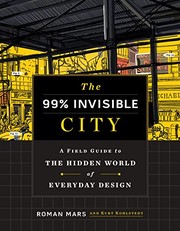
“Publishers use proposals to model revenue projections before committing any advance dollars. Norton referenced books from prominent podcasts, including the 99% Invisible book, which became a New York Times bestseller.”
More from Planet Money
We summarize every new episode. Want them in your inbox?
The Domino’s Pizza Tracker Theory of Everything
How investing is getting riskier (Two Indicators)
The loan at the heart of a new foreclosure crisis
Cost-cutting, quiet guilt and the inflation generation
Trump drinks Venezuela’s milkshake
Similar Episodes
Related episodes from other podcasts

The Vergecast
Sep 10
Schools are catching onto tech’s playbook

Odd Lots
Apr 17
Planet Money Turned Everyday Annoyances Into an Economics Book

The Daily (NYT)
Sep 12
Naomi Klein and Astra Taylor Say the End of the World is Now on the Table

The Jordan Harbinger Show
Sep 1
1376: Sean Hemeon | The Good Little Drug Lord

Deep Questions with Cal Newport
Aug 31
Rethinking the Deep Life Stack (Again!) | Monday Advice
Explore Related Topics
This podcast is featured in Best Finance Podcasts (2026) — ranked and reviewed with AI summaries.
Read this week's Investing & Markets Podcast Insights — cross-podcast analysis updated weekly.
You're clearly into Planet Money.
Every Monday, we deliver AI summaries of the latest episodes from Planet Money and 192+ other podcasts. Free for one show.
Start My Monday DigestNo credit card · Unsubscribe anytime