How to make a BOOK into a bestseller
Episode
46 min
Read time
2 min
Topics
Career Growth, Marketing, Sales & Revenue
AI-Generated Summary
Key Takeaways
- ✓Bestseller List Mechanics: The NYT bestseller list is legally classified as editorial content protected under the First Amendment, not a transparent sales accounting. A 1983 lawsuit by Exorcist author William Peter Blatty established this precedent, meaning the Times can exclude books that outsell listed titles without legal consequence, using an undisclosed weighting methodology.
- ✓First-Week Sales Strategy: All preorders count toward a book's opening week sales total, making a six-month preorder window critical. Publishers structure incentives — merchandise, exclusive content — to drive early purchases. The required threshold to crack the list fluctuates weekly based on competition, sometimes requiring only a few thousand copies sold.
- ✓Bulk-Buying and the Scarlet Dagger: Authors in the business thought-leader space spend tens to hundreds of thousands of dollars hiring firms to launder bulk book purchases across reporting bookstores in small batches. The NYT flags detected bulk purchases with a dagger symbol on the list — a public mark of shame that signals inorganic sales to readers and industry insiders.
- ✓Reporting Bookstore Targeting: Since Jacqueline Suzanne's 1966 Valley of the Dolls campaign, authors have identified which specific bookstores report sales data to the NYT and directed purchases there. A legitimate version of this strategy involves structuring live event tickets to include a book purchase through independent bookstores that report to the list, converting audiences directly into counted sales.
- ✓Bestseller Snowball Effect: Appearing on the NYT list triggers a self-reinforcing cycle — premium bookstore placement, free advertising, higher speaker fees for nonfiction authors, stronger negotiating leverage for future book advances, and extended shelf life. Norton used the Planet Money number-three debut to renegotiate retailer placement and relaunch advertising campaigns targeting new buyer segments.
What It Covers
Planet Money documents its first book launch while investigating how the New York Times bestseller list actually works — revealing a system built on secret methodology, historical manipulation tactics, bulk-buying schemes, scarlet dagger penalties, and a live tour strategy that landed the book at number three on the nonfiction list.
Key Questions Answered
- •Bestseller List Mechanics: The NYT bestseller list is legally classified as editorial content protected under the First Amendment, not a transparent sales accounting. A 1983 lawsuit by Exorcist author William Peter Blatty established this precedent, meaning the Times can exclude books that outsell listed titles without legal consequence, using an undisclosed weighting methodology.
- •First-Week Sales Strategy: All preorders count toward a book's opening week sales total, making a six-month preorder window critical. Publishers structure incentives — merchandise, exclusive content — to drive early purchases. The required threshold to crack the list fluctuates weekly based on competition, sometimes requiring only a few thousand copies sold.
- •Bulk-Buying and the Scarlet Dagger: Authors in the business thought-leader space spend tens to hundreds of thousands of dollars hiring firms to launder bulk book purchases across reporting bookstores in small batches. The NYT flags detected bulk purchases with a dagger symbol on the list — a public mark of shame that signals inorganic sales to readers and industry insiders.
- •Reporting Bookstore Targeting: Since Jacqueline Suzanne's 1966 Valley of the Dolls campaign, authors have identified which specific bookstores report sales data to the NYT and directed purchases there. A legitimate version of this strategy involves structuring live event tickets to include a book purchase through independent bookstores that report to the list, converting audiences directly into counted sales.
- •Bestseller Snowball Effect: Appearing on the NYT list triggers a self-reinforcing cycle — premium bookstore placement, free advertising, higher speaker fees for nonfiction authors, stronger negotiating leverage for future book advances, and extended shelf life. Norton used the Planet Money number-three debut to renegotiate retailer placement and relaunch advertising campaigns targeting new buyer segments.
Notable Moment
The 1950s radio host Jean Shepherd orchestrated a hoax by convincing listeners to request a completely fabricated book nationwide. The manufactured demand grew so convincing that booksellers in London, Paris, and Rome sought copies — and a publisher eventually contracted Shepherd to write the fake book into existence.
Episode Transcript
This message comes from Apple Business. Now you can control how your business shows up across Apple apps. And starting this summer in The US and Canada, you'll have a new way to show up to an even wider audience of potential customers with ads on Apple Maps. This is Planet Money from NPR. If somehow, given everything that's going on in the world these days, you missed it, let me be the first to tell you. PLANET MONEY just published its first ever book. It was the culmination of years of work. We navigated the world of agents and editors and auctions, figured out how to manufacture a book during a trade war and get it to stores around the world from airports to cruise ships. And throughout that process, my boss's boss, my grand boss, Alex Goldmark, he and everyone else involved in the book had harbored this secret fantasy that if we played our cards right, maybe someday this book could reach the holy grail of commercial publishing. Maybe this book could make the New York Times bestseller list. So it was carrying all those dreams from my grand boss that I recently walked into the office of Planet Money's book editor, Tom Mayer, at the publishing house, w w Norton in New York. I was there about a week after the book launched to witness the moment of truth. Today is a big day. Today is the day when the bestseller lists are released. That's kind of as big as it gets in a way. Yeah. No. It's sort of scary in part because you have no idea if you're gonna get anything at all. And we're gonna find out today what the result is. I've got butterflies. I'm very nervous. Over the last week, bookstores from chains like Barnes and Noble down to independents like Carmichael's Bookstore in Louisville, Kentucky, they've been logging their sales and reporting them through some mysterious process to an anonymous department inside The New York Times. All day, Tom has been trying to get a sense of how close the book might be to cracking The New York Times bestseller list by nervously checking the sales numbers he has access to. I sort of feel like on election night when you're counting the votes in, you know, the various counties across the state. Tom's checking how many copies we sold in independent stores or on Amazon or Barnes and Noble. You sort of have this constellation of data, but you don't know what else was sold this week. I know what my book did, but there were several other very good books published the same day that the Planet Money book was published. How well did they sell? We have no idea. The Planet Money book, Tom explains, is facing some extremely steep competition. It's up against New Yorker writer Patrick Radden Keefe's new book, which has been everywhere in the press this week. It's up against a divorce memoir …
Get the full transcript (9,334 words) + summary by email — free
One-time email with the complete transcript and AI summary of this episode. No account needed.
One email, no spam. We’ll also show you what SignalCast does.

You just read a 3-minute summary of a 43-minute episode.
Get Planet Money summarized like this every Monday — plus up to 2 more podcasts, free.
Pick Your Podcasts — FreeKeep Reading
More from Planet Money
The loan at the heart of a new foreclosure crisis
Sep 11 · 29 min

So Money with Farnoosh Torabi
1955: Senator Cory Booker on Taxes, Childcare and Big Ideas to Fix Our Economy
Mar 11
More from Planet Money
Cost-cutting, quiet guilt and the inflation generation
Sep 9 · 24 min

Morning Brew Daily
Big Tech Picks Up Data Center Bills? & Apple Intros Low-Cost Laptop
Mar 5
Books, tools, and gear mentioned in this episode
SignalCast may earn commission on purchases via these links. As an Amazon Associate, SignalCast earns from qualifying purchases.
Books
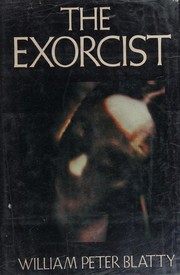
by William Peter Blatty
“A 1983 lawsuit by Exorcist author William Peter Blatty established this precedent, meaning the Times can exclude books that outsell listed titles without legal consequence.”
by Jacqueline Suzanne
“Since Jacqueline Suzanne's 1966 Valley of the Dolls campaign, authors have identified which specific bookstores report sales data to the NYT and directed purchases there.”
More from Planet Money
We summarize every new episode. Want them in your inbox?
The loan at the heart of a new foreclosure crisis
Cost-cutting, quiet guilt and the inflation generation
Trump drinks Venezuela’s milkshake
Love in the time of Palantir
Dolly Parton’s “9 to 5,” the true story behind the anthem (bonus)
Similar Episodes
Related episodes from other podcasts

So Money with Farnoosh Torabi
Mar 11
1955: Senator Cory Booker on Taxes, Childcare and Big Ideas to Fix Our Economy

Morning Brew Daily
Mar 5
Big Tech Picks Up Data Center Bills? & Apple Intros Low-Cost Laptop

Freakonomics Radio
Jul 24
682. Should A.I. Move to Space?

My First Million
Jul 10
Brainstorming business ideas with a billion-dollar founder

Odd Lots
Apr 17
Planet Money Turned Everyday Annoyances Into an Economics Book
Explore Related Topics
This podcast is featured in Best Finance Podcasts (2026) — ranked and reviewed with AI summaries.
You're clearly into Planet Money.
Every Monday, we deliver AI summaries of the latest episodes from Planet Money and 192+ other podcasts. Free for one show.
Start My Monday DigestNo credit card · Unsubscribe anytime