Jamee Moudud on the Intellectual Roots of Zohranomics
Episode
55 min
Read time
2 min
Topics
Investing, Fundraising & VC, Leadership
AI-Generated Summary
Key Takeaways
- ✓Classical vs. Neoclassical Origins: Adam Smith is not the intellectual ancestor of neoclassical economics — that label belongs to late 19th-century thinkers who stripped politics from political economy. Smith's actual work, including his Glasgow University lectures, explicitly acknowledged power imbalances between property owners and workers, making him closer to an institutionalist than a free-market theorist.
- ✓Market Failure Reframe: Treating pollution and social costs as "market failures" is analytically misleading because they are endemic to all production, not exceptions. The more useful lens is that property rights law determines who bears social costs. Before the 1969 National Environmental Policy Act, industry legally externalized far more damage — a political, not market, outcome.
- ✓Post-War Mathematization: Philip Mirowski's book *Machine Dreams* documents how Cold War defense funding drove economists trained in weapons optimization to model the economy as a machine populated by perfectly rational actors. A 1985 National Science Foundation symposium and subsequent Journal of Economic Literature survey concluded top graduate programs were producing what they called "idiot savants" — technically skilled but unable to engage social reality.
- ✓Progressive Taxation Historical Precedent: Claims that billionaire taxes or progressive fiscal policy destroy capitalist economies contradict the historical record. The 16th Amendment legalizing federal income tax, combined with high marginal rates through the 1950s and 60s, coincided with what many economists describe as capitalism's golden age — suggesting tax progressivity and economic growth are not inherently incompatible.
- ✓Targeted Policy Design for Rent Stabilization: Rent caps need not harm smaller landlords if paired with differentiated fiscal tools. Moudud proposes that large real estate corporations with strong cash flow absorb cost increases, while smaller landlords with constrained margins receive tax credits or public subsidies to cover maintenance — a structure that addresses the supply-side critique without abandoning affordability goals.
What It Covers
Economist Jamee Moudud of Sarah Lawrence College traces the intellectual roots of New York Mayor Zohran Mamdani's economic agenda, contrasting neoclassical orthodoxy with classical political economy to reframe debates around rent stabilization, progressive taxation, and state intervention in housing markets.
Key Questions Answered
- •Classical vs. Neoclassical Origins: Adam Smith is not the intellectual ancestor of neoclassical economics — that label belongs to late 19th-century thinkers who stripped politics from political economy. Smith's actual work, including his Glasgow University lectures, explicitly acknowledged power imbalances between property owners and workers, making him closer to an institutionalist than a free-market theorist.
- •Market Failure Reframe: Treating pollution and social costs as "market failures" is analytically misleading because they are endemic to all production, not exceptions. The more useful lens is that property rights law determines who bears social costs. Before the 1969 National Environmental Policy Act, industry legally externalized far more damage — a political, not market, outcome.
- •Post-War Mathematization: Philip Mirowski's book *Machine Dreams* documents how Cold War defense funding drove economists trained in weapons optimization to model the economy as a machine populated by perfectly rational actors. A 1985 National Science Foundation symposium and subsequent Journal of Economic Literature survey concluded top graduate programs were producing what they called "idiot savants" — technically skilled but unable to engage social reality.
- •Progressive Taxation Historical Precedent: Claims that billionaire taxes or progressive fiscal policy destroy capitalist economies contradict the historical record. The 16th Amendment legalizing federal income tax, combined with high marginal rates through the 1950s and 60s, coincided with what many economists describe as capitalism's golden age — suggesting tax progressivity and economic growth are not inherently incompatible.
- •Targeted Policy Design for Rent Stabilization: Rent caps need not harm smaller landlords if paired with differentiated fiscal tools. Moudud proposes that large real estate corporations with strong cash flow absorb cost increases, while smaller landlords with constrained margins receive tax credits or public subsidies to cover maintenance — a structure that addresses the supply-side critique without abandoning affordability goals.
Notable Moment
Moudud challenges the entire framing of government intervention debates by arguing that allowing housing prices to rise unchecked is itself a political act — one that benefits specific parties. The choice is never between political and apolitical outcomes, only between whose interests the policy structure serves.
Episode Transcript
UKG. Their HR, pay, and workforce management tools help business leaders empower their people. Because when work works, everything works. Learn more at ukg.com/work. You need to make a huge presentation in an hour. Luckily, Adobe Acrobat Studio uses AI to take all your documents and generate a presentation with a single click, building slides faster than ever before. So if you need a last minute pitch deck? Do that with Acrobat. Need to level up your presentation design? Do that with Acrobat. You have 30 plus documents that need to be simplified into a proposal? Do that with Acrobat. Learn more at adobe.com slash do that with Acrobat. Support for the show comes from Public. Public is an investing platform that offers access to stocks, options, bonds, and crypto, and they've also integrated AI with tools that can assist investors in building customized portfolios. One of these tools is called generated assets. It allows you to turn your ideas into investable indexes. So let's say you're interested in something specific like biotech companies with high r and d spend, small cap stocks with improving operating margins, or the S and P 500 minus high debt companies. Chances are there isn't an ETF that fits your exact criteria. But on public, you just type in a prompt and their AI screens thousands of stocks and build a one of a kind index. You can even back test it against the S and P 500, then you can invest in a few clicks. Go to public.com/market and earn an uncapped 1% bonus when you transfer your portfolio. That's public.com/market. And paid for by Public Holdings, brokered services by Public Investing member FINRA SIPC, advisory services by Public Advisors, SEC registered adviser, crypto services by Zero Hash. Sample props are for illustrative purposes only, not investment advice. All investing involves risk of loss. See complete disclosures at public.com/disclosures. Bloomberg Audio Studios, podcasts, radio, news. Hello, and welcome to another episode of the Odd Lots podcast. I'm Joe Weisenthal. And I'm Tracy Alloway. Tracy, it's, January 28. I think our new mayor in here in New York City, I mean, he hasn't done much, but the snowstorm seemed to go fairly well. Not too many big disruptions. I wasn't here, but you were able to walk around, get out of your apartment. There have been several mayors whose, like, entire reputation failed because they couldn't handle a snowstorm. And so he seems to have passed the first test. So I would It feels like a low bar for New York mayors, I gotta say. My guess is if we looked at, I agree. It is a low bar, but on the other hand, it's like, okay. First big test of the new administration seems to be doing well. I don't think, however, ultimately, the Zoran Mamdani administration will be judged on snow removal. Like, this is not gonna be how history probably remembers how well No. And he certainly wasn't elected on his …
Get the full transcript (10,908 words) + summary by email — free
One-time email with the complete transcript and AI summary of this episode. No account needed.
One email, no spam. We’ll also show you what SignalCast does.

You just read a 3-minute summary of a 52-minute episode.
Get Odd Lots summarized like this every Monday — plus up to 2 more podcasts, free.
Pick Your Podcasts — FreeKeep Reading
More from Odd Lots
The Forgotten Godmother of Economic Literature
Oct 23 · 43 min

a16z Podcast
Amjad Masad on Rethinking College for the AI Era
Sep 23
More from Odd Lots
Bhaskar Sunkara Thinks the Market Has a Place Under Socialism
Oct 22 · 53 min

The Rich Roll Podcast
What Are You Actually Capable Of? Mark Dowdle On Winning A 306 Mile Backyard Ultra
Jul 20
Books, tools, and gear mentioned in this episode
SignalCast may earn commission on purchases via these links. As an Amazon Associate, SignalCast earns from qualifying purchases.
Books
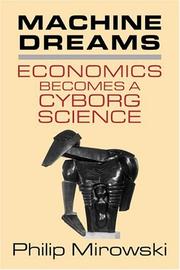
by Philip Mirowski
“Philip Mirowski's book *Machine Dreams* documents how Cold War defense funding drove economists trained in weapons optimization to model the economy as a machine populated by perfectly rational actors.”
More from Odd Lots
We summarize every new episode. Want them in your inbox?
The Forgotten Godmother of Economic Literature
Bhaskar Sunkara Thinks the Market Has a Place Under Socialism
James Robinson on What It Looks Like When a State is Failing
CME's Terry Duffy on the Disconcerting State of Finance Regulation
Don Wilson on the GPU Market's Trillion Dollar Question
Similar Episodes
Related episodes from other podcasts

a16z Podcast
Sep 23
Amjad Masad on Rethinking College for the AI Era

The Rich Roll Podcast
Jul 20
What Are You Actually Capable Of? Mark Dowdle On Winning A 306 Mile Backyard Ultra

Acquired
Jun 22
The Walt Disney Company

The Daily (NYT)
Jun 11
The Young Economic Populists Reshaping the Left

Deep Questions with Cal Newport
Apr 9
AI Reality Check: Is AI Stealing Entry-Level Jobs?
Explore Related Topics
This podcast is featured in Best Finance Podcasts (2026) — ranked and reviewed with AI summaries.
Read this week's Investing & Markets Podcast Insights — cross-podcast analysis updated weekly.
You're clearly into Odd Lots.
Every Monday, we deliver AI summaries of the latest episodes from Odd Lots and 192+ other podcasts. Free for one show.
Start My Monday DigestNo credit card · Unsubscribe anytime