Daniel Yergin Sees a 'Different World' Emerging After the Hormuz Crisis
Episode
45 min
Read time
2 min
Topics
Productivity, Health & Wellness, Investing
AI-Generated Summary
Key Takeaways
- ✓Physical vs. Futures Market Divergence: During the Hormuz crisis, dated Brent (physical delivery price) and front-month futures diverged at an unprecedented scale — futures markets priced a swift resolution while physical markets reflected acute shortages. Energy investors should monitor physical spot premiums as a more reliable real-time stress indicator than futures during geopolitical supply disruptions.
- ✓Hormuz Recovery Timeline: Even after a ceasefire, full oil market normalization takes roughly two months minimum, with broader petrochemical and refinery disruption recovery extending up to two-thirds of a year. Investors and procurement managers should build extended supply buffers and avoid assuming rapid normalization when pricing post-conflict commodity exposure.
- ✓LNG Strategic Repositioning: US LNG now represents 75% of the value of all US semiconductor exports and twice Hollywood's export value. With Qatar's output damaged for years, US LNG faces structurally higher demand. Energy planners should treat US LNG capacity expansion — projected to grow the global LNG market 50% by 2040 — as a core infrastructure investment thesis.
- ✓Drone Warfare as Energy Security Variable: Iran's use of low-cost drones to effectively control the Strait of Hormuz — even against superior US military force — establishes a new threat model for energy infrastructure. Energy security planners should now price in drone-enabled chokepoint risk across all major maritime oil transit routes, not just the Strait of Hormuz.
- ✓Inflationary Structural Shift: The post-2020 energy environment reverses decades of efficiency-driven supply chain cost reduction. Defense spending increases, production localization, and resource nationalism all add structural cost floors. Portfolio managers should embed a persistent energy security risk premium into long-duration commodity, infrastructure, and sovereign debt positions across Gulf-exposed markets.
What It Covers
Daniel Yergin, vice chairman of S&P Global and author of *The Prize*, analyzes the structural energy shifts triggered by the 2026 Strait of Hormuz closure, covering physical versus futures market divergence, LNG supply chains, drone warfare as a geopolitical equalizer, AI electricity demand, and a permanently elevated global energy security risk premium.
Key Questions Answered
- •Physical vs. Futures Market Divergence: During the Hormuz crisis, dated Brent (physical delivery price) and front-month futures diverged at an unprecedented scale — futures markets priced a swift resolution while physical markets reflected acute shortages. Energy investors should monitor physical spot premiums as a more reliable real-time stress indicator than futures during geopolitical supply disruptions.
- •Hormuz Recovery Timeline: Even after a ceasefire, full oil market normalization takes roughly two months minimum, with broader petrochemical and refinery disruption recovery extending up to two-thirds of a year. Investors and procurement managers should build extended supply buffers and avoid assuming rapid normalization when pricing post-conflict commodity exposure.
- •LNG Strategic Repositioning: US LNG now represents 75% of the value of all US semiconductor exports and twice Hollywood's export value. With Qatar's output damaged for years, US LNG faces structurally higher demand. Energy planners should treat US LNG capacity expansion — projected to grow the global LNG market 50% by 2040 — as a core infrastructure investment thesis.
- •Drone Warfare as Energy Security Variable: Iran's use of low-cost drones to effectively control the Strait of Hormuz — even against superior US military force — establishes a new threat model for energy infrastructure. Energy security planners should now price in drone-enabled chokepoint risk across all major maritime oil transit routes, not just the Strait of Hormuz.
- •Inflationary Structural Shift: The post-2020 energy environment reverses decades of efficiency-driven supply chain cost reduction. Defense spending increases, production localization, and resource nationalism all add structural cost floors. Portfolio managers should embed a persistent energy security risk premium into long-duration commodity, infrastructure, and sovereign debt positions across Gulf-exposed markets.
Notable Moment
Yergin notes that Iran's ability to close the world's most critical oil chokepoint — handling 20% of global oil and gas — was likely enabled by drone technology potentially reverse-engineered from a US surveillance drone captured in 2011, making that incident a quietly pivotal moment in modern energy geopolitics.
Episode Transcript
Hey, Fidelity. What's it cost to invest with the Fidelity app? Start with as little as $1 with no account fees or trade commissions on US stocks and ETFs. That's music to my ears. I can only talk. Investing involves risk including risk of loss. Zero account fees apply to retail brokerage accounts only. Seller assessment fee not included. A limited number of ETFs are subject to a transaction based service fee of $100. See full list at fidelity.com/commissions. Fidelity Broker Services LLC, member NYC SIPC. Support for the show comes from Public. Public is an investing platform that offers access to stocks, options, bonds, and crypto. And they've also integrated AI with tools that can assist investors in building customized portfolios. One of these tools is called generated assets. It allows you to turn your ideas into investable indexes. So let's say you're interested in something specific like biotech companies with high r and d spend, small cap stocks with improving operating margins, or the S and P 500 minus high debt companies. Chances are there isn't an ETF that fits your exact criteria. But on Public, you just type in a prompt, and their AI screens thousands of stocks and build a one of a kind index. You can even back test it against the S and P 500, then you can invest in a few clicks. Go to public.com/market and earn an uncapped one percent bonus when you transfer your portfolio. That's public.com/market. And paid for by Public Holdings, brokered services by Public Investing member FINRA SIPC, advisory services by Public Advisors, SEC registered adviser, crypto services by Xero Hash. Sample prompts are for illustrative purposes only, not investment advice. All investing involves risk of loss. See complete disclosures at public.com/disclosures. Small businesses are the pulse of every community. They bring people together, create opportunities, and drive growth. Chase for business helps business owners like you with personalized guidance and convenient digital tools all in one place. With that guidance and your determination, you can take your business farther and help build a brighter future for your community. Learn more at chase.com/business. Chase for business. Make more of what's yours. The Chase mobile app is available for select mobile devices. Message and data rates may apply. JPMorgan Chase Bank, NA. Member, FDIC. Copyright, 2026. JPMorgan Chase and Company. Hey there, All About listeners. Joe and I are very excited to announce that we will be holding our first ever live show in London. That's right. We've done, shows around the country, around The US a fair amount. Always a lot of fun. Made guests, record live episodes on stage, fans of the podcast, get to meet other fans of the podcast, and so forth. But this is our first time doing one of these outside The US in London, as you said. So if you wanna come hear some live recordings of Odd Thoughts episodes, if you wanna hang out with me and Joe, if you wanna …
Get the full transcript (9,934 words) + summary by email — free
One-time email with the complete transcript and AI summary of this episode. No account needed.
One email, no spam. We’ll also show you what SignalCast does.

You just read a 3-minute summary of a 42-minute episode.
Get Odd Lots summarized like this every Monday — plus up to 2 more podcasts, free.
Pick Your Podcasts — FreeKeep Reading
More from Odd Lots
James Robinson on What It Looks Like When a State is Failing
Oct 21 · 37 min

The Prof G Pod
The New Playbook for Resisting Authoritarianism — with Julia Angwin & Ami Fields-Meyer
Jul 16
More from Odd Lots
CME's Terry Duffy on the Disconcerting State of Finance Regulation
Oct 20 · 29 min
The Prof G Pod
Raging Moderates: A Year of Trump 2.0; A Decade of the War on Truth (ft. Heather Cox Richardson)
Jan 21
Books, tools, and gear mentioned in this episode
SignalCast may earn commission on purchases via these links. As an Amazon Associate, SignalCast earns from qualifying purchases.
Books
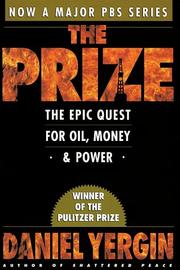 The PrizeBy guest
by Daniel Yergin
“Daniel Yergin, vice chairman of S&P Global and author of *The Prize*, analyzes the structural energy shifts triggered by the 2026 Strait of Hormuz closure”
More from Odd Lots
We summarize every new episode. Want them in your inbox?
James Robinson on What It Looks Like When a State is Failing
CME's Terry Duffy on the Disconcerting State of Finance Regulation
Don Wilson on the GPU Market's Trillion Dollar Question
David Byrne Explains How Forgotten Ideas Come Back to Life
The French Political Crisis That's Turning Into a Debt Crisis
Similar Episodes
Related episodes from other podcasts

The Prof G Pod
Jul 16
The New Playbook for Resisting Authoritarianism — with Julia Angwin & Ami Fields-Meyer
The Prof G Pod
Jan 21
Raging Moderates: A Year of Trump 2.0; A Decade of the War on Truth (ft. Heather Cox Richardson)

Freakonomics Radio
Jan 2
Are Personal Finance Gurus Giving You Bad Advice? (Update)

The Daily (NYT)
Oct 22
The Election That Will Define Israel’s Future

Huberman Lab
Oct 19
What Makes Great Leaders & How to Live an Extraordinary Life | Dr. Jared Diamond
Explore Related Topics
This podcast is featured in Best Finance Podcasts (2026) — ranked and reviewed with AI summaries.
Read this week's Health & Longevity Podcast Insights — cross-podcast analysis updated weekly.
You're clearly into Odd Lots.
Every Monday, we deliver AI summaries of the latest episodes from Odd Lots and 192+ other podcasts. Free for one show.
Start My Monday DigestNo credit card · Unsubscribe anytime