‘Think and Grow Rich’ Is a Lie. (But The Advice Still Works)
Episode
50 min
Read time
2 min
Topics
Productivity, Remote Work, Fundraising & VC
AI-Generated Summary
Key Takeaways
- ✓Separating Art from Artist: Napoleon Hill was arrested 15–20 times for fraud, fake checks, car theft, and MLM schemes, yet Think and Grow Rich sold 100 million copies and still hits the NYT bestseller list. Evaluate advice on its proven outcomes, not the credibility of its source, since the underlying principles can be independently verified.
- ✓Goal-Setting Science: Hill's advice to write down a specific goal and repeat it twice daily is backed by research showing people are roughly two times more likely to achieve written, verbally reinforced goals. Pair this with Angela Duckworth's finding that grit predicts success more reliably than IQ to build a compounding personal performance system.
- ✓Quantity Produces Quality: A classroom experiment split students into quality-focused and quantity-focused pottery groups. The quantity group produced both more pots and the highest-rated pots. Christina Cacioppo of Vanta applied this by building 25 projects before creating a spreadsheet-based SOC 2 tool that became a company now valued near $5–10 billion.
- ✓Prolific Output as Strategy: Peter Levels built 70+ projects with a 5% success rate, generating roughly $2 million annually from four hits: Nomad List, Remote OK, Rebase, and a YouTube network. Pete from OpenClaw shipped 40–50 tools before building the fastest-growing GitHub project of its era, leading to an acquihire by OpenAI reportedly worth up to $1 billion.
- ✓Legitimacy Test for Self-Help Gurus: Evaluate self-help figures on two criteria: whether their advice represents the most effective method available, and whether they fabricate their backstory. Embellishing timelines is distinct from outright lying. Gary Vaynerchuk and Jesse Itzler are cited as examples where public persona and private behavior, verified through employee accounts and direct interaction, consistently align.
What It Covers
Sam and Sean expose Napoleon Hill as a serial fraudster whose entire backstory in Think and Grow Rich — including meetings with Andrew Carnegie, FDR, and Woodrow Wilson — was fabricated. Despite the deception, the book's core principles on goal-setting, persistence, and affirmations hold up under modern research.
Key Questions Answered
- •Separating Art from Artist: Napoleon Hill was arrested 15–20 times for fraud, fake checks, car theft, and MLM schemes, yet Think and Grow Rich sold 100 million copies and still hits the NYT bestseller list. Evaluate advice on its proven outcomes, not the credibility of its source, since the underlying principles can be independently verified.
- •Goal-Setting Science: Hill's advice to write down a specific goal and repeat it twice daily is backed by research showing people are roughly two times more likely to achieve written, verbally reinforced goals. Pair this with Angela Duckworth's finding that grit predicts success more reliably than IQ to build a compounding personal performance system.
- •Quantity Produces Quality: A classroom experiment split students into quality-focused and quantity-focused pottery groups. The quantity group produced both more pots and the highest-rated pots. Christina Cacioppo of Vanta applied this by building 25 projects before creating a spreadsheet-based SOC 2 tool that became a company now valued near $5–10 billion.
- •Prolific Output as Strategy: Peter Levels built 70+ projects with a 5% success rate, generating roughly $2 million annually from four hits: Nomad List, Remote OK, Rebase, and a YouTube network. Pete from OpenClaw shipped 40–50 tools before building the fastest-growing GitHub project of its era, leading to an acquihire by OpenAI reportedly worth up to $1 billion.
- •Legitimacy Test for Self-Help Gurus: Evaluate self-help figures on two criteria: whether their advice represents the most effective method available, and whether they fabricate their backstory. Embellishing timelines is distinct from outright lying. Gary Vaynerchuk and Jesse Itzler are cited as examples where public persona and private behavior, verified through employee accounts and direct interaction, consistently align.
Notable Moment
Hill's book contains an extended tease about a secret to success, but never reveals it — instead directing readers to a separate 14-volume course sold at high cost. This makes Think and Grow Rich one of the earliest documented examples of a deliberate open-loop marketing funnel.
Episode Transcript
Fake and Grow Rich, amazing book. One of the best selling books of all time. But the whole backstory, completely fake, and he's a total con man. What? What do you mean none of it's true? I have to tell you this story. So I'm rereading a bunch of old books because I like rereading old books. And I started reading, Dale Carnegie, How to Win Friends and Influence People. Have you read that one? I love that book, Sam. Rule number one. Rule number one. The, a person's name is the, is the most beautiful one. English language. The golden rule. I love that book. I just I the reason I like these old books is because some of them, the the the rules have stood the test of time, and the writing is always, like, older writing, for some reason, it's, like, cute. There's something about it. Tell you something stupid I did. I took the book, and you know how people wear, like, you're you're a denim guy. You know this. Distressed jeans. Oh, yeah. I distressed the book. I roughed it up a little bit. I made it look like this is an heirloom that's been passed down from Napoleon himself. Did you, like, dog ear certain pages even though you didn't didn't even read the thing? Tattered. Tattered, folded. Folded like a baseball hat. First 30 pages, but, like, I made this book look like it has already won Friends and Influence people. Yeah. Go on. You just put it in the back of your pocket and just walk around with it. Wait. For people who don't know the or, you know, people have heard of the book, but if you if it's been one of those things like, you know, like The Wire, it's like, I heard it's a great show, but it's kinda old now, and I just I guess I'm out on that. Like, if you know of the book, but you haven't actually cracked into it, could tell the quick story of it? Dale Carnegie, he originally was a public speaker, and he taught public speaking classes, then he created a book called How to Win Friends and Influence People, and I think it's, like, 15 or 20 rules on how to basically make friends and make people like you. So it could be saying their name. It could be asking them questions, so they do most of the talking. It's, never arguing with someone, because there's no one wins an argument when you guys fight. And there's, like, how many 15 or 20 rules. And it's just like an old timer book. It was released in the nineteen thirties, so it's almost a 100 years old, and it probably has sold 50 to a 100,000,000 copies. And to this day, there's the Dale Carnegie Institute, which is a public speaking classes. And, a lot of amazing people, including Warren Buffett, have said that, that book influenced them and helped them. …
Get the full transcript (10,851 words) + summary by email — free
One-time email with the complete transcript and AI summary of this episode. No account needed.
One email, no spam. We’ll also show you what SignalCast does.

You just read a 3-minute summary of a 47-minute episode.
Get My First Million summarized like this every Monday — plus up to 2 more podcasts, free.
Pick Your Podcasts — FreeKeep Reading
More from My First Million
Decoding Tony Hawk’s mindset in 72 minutes
Sep 9 · 73 min

The Daily (NYT)
How a Teenager Found Undiagnosed Brain Injuries in the Military
Sep 1
More from My First Million
How we scaled to $100M in under a year (ft. IM8 co-founder Danny Yeung)
Sep 7 · 54 min
The Daily (NYT)
How Flock Cameras Took Over America
Aug 31
Books, tools, and gear mentioned in this episode
SignalCast may earn commission on purchases via these links. As an Amazon Associate, SignalCast earns from qualifying purchases.
Books
by Angela Duckworth
“Pair this with Angela Duckworth's finding that grit predicts success more reliably than IQ to build a compounding personal performance system.”
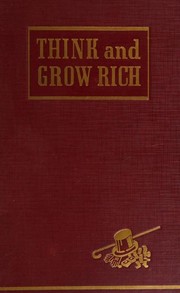
by Napoleon Hill
“Napoleon Hill was arrested 15–20 times for fraud, fake checks, car theft, and MLM schemes, yet Think and Grow Rich sold 100 million copies and still hits the NYT bestseller list.”
Tools
by Peter Levels
“Peter Levels built 70+ projects with a 5% success rate, generating roughly $2 million annually from four hits: Nomad List, Remote OK, Rebase, and a YouTube network.”
by Peter Levels
“Peter Levels built 70+ projects with a 5% success rate, generating roughly $2 million annually from four hits: Nomad List, Remote OK, Rebase, and a YouTube network.”
by Peter Levels
“Peter Levels built 70+ projects with a 5% success rate, generating roughly $2 million annually from four hits: Nomad List, Remote OK, Rebase, and a YouTube network.”
Products
by Vanta
“Christina Cacioppo of Vanta applied this by building 25 projects before creating a spreadsheet-based SOC 2 tool that became a company now valued near $5–10 billion.”
More from My First Million
We summarize every new episode. Want them in your inbox?
Decoding Tony Hawk’s mindset in 72 minutes
How we scaled to $100M in under a year (ft. IM8 co-founder Danny Yeung)
How to naturally monetize what you love
7 things MrBeast, Bezos & Thiel do that you don’t
How a $5B founder is using AI (3 tutorials)
Similar Episodes
Related episodes from other podcasts

The Daily (NYT)
Sep 1
How a Teenager Found Undiagnosed Brain Injuries in the Military
The Daily (NYT)
Aug 31
How Flock Cameras Took Over America

The Jordan Harbinger Show
Jul 24
1361: Creep's Snaps Turn Tide on Body Positivity Ride | Feedback Friday

All-In with Chamath, Jason, Sacks & Friedberg
Apr 6
The Companies Changing Warfare Forever: Palantir & Anduril Execs on Drones, AI & the Future of War
The Jordan Harbinger Show
Mar 13
1296: Saving Bro's Soul from Alt-Right Rabbit Hole | Feedback Friday
Explore Related Topics
This podcast is featured in Best Startup Podcasts (2026) — ranked and reviewed with AI summaries.
You're clearly into My First Million.
Every Monday, we deliver AI summaries of the latest episodes from My First Million and 192+ other podcasts. Free for one show.
Start My Monday DigestNo credit card · Unsubscribe anytime