The Skill That Made Steve Jobs Exceptional (and how to learn it)
Episode
21 min
Read time
2 min
Topics
Design & UX, Marketing, Sales & Revenue
AI-Generated Summary
Key Takeaways
- ✓Step 1 — Define Your Message: Before copying anyone, identify what identity you want to project and to whom. Author David Marx defines good taste as proposing a valued identity within a chosen community and communicating it congruently. Skipping this step means copying without purpose, which produces inconsistent output that fails to resonate with any specific audience or community.
- ✓Step 2 — Blind Copying via Copywork: Spend months copying admired work verbatim — word for word, pixel by pixel. Sam Parr copied David Ogilvy ads by hand daily for six to eight months. For web design, print out 30–40 sites you admire, then redraw them element by element in Figma to physically absorb the texture of what makes them effective.
- ✓Step 3 — Learn the Underlying Rules: After copying, research why the work functions. Books like *Dressing the Man* codify rules such as the jacket-length rule of thirds. Web design rules trace to Gutenberg's 1500s typographic principles and 1950s Swiss neutrality theory. Reading these frameworks converts intuitive preference into repeatable, transferable skill applicable across new projects.
- ✓Step 4 — Study History to Build Constraints: Tracing lineage — Bauhaus minimalism to Dieter Rams' 1953 Braun T3 radio to the iPod — reveals why design decisions carry meaning. Steve Jobs studied this exact lineage. Knowing historical context creates a framework of constraints within which to operate, and those constraints are what separate coherent aesthetic choices from arbitrary ones.
- ✓Taste as an Economic Moat in the AI Era: As AI commoditizes building and coding, the competitive advantage shifts to emotional appeal — making someone feel drawn to a product, brand, or website before reading a word. Products like David Protein Bars and the Swiffer mop succeeded largely through naming and branding, not technical differentiation, demonstrating taste's direct revenue impact.
What It Covers
Host Sam Parr outlines a four-step framework for developing good taste — decide what to say, blindly copy admired creators, learn the underlying rules, and study history — using Steve Jobs, Dieter Rams, Bauhaus design, and Doctor Dre as case studies to show how taste drives commercial success in an AI-dominated era.
Key Questions Answered
- •Step 1 — Define Your Message: Before copying anyone, identify what identity you want to project and to whom. Author David Marx defines good taste as proposing a valued identity within a chosen community and communicating it congruently. Skipping this step means copying without purpose, which produces inconsistent output that fails to resonate with any specific audience or community.
- •Step 2 — Blind Copying via Copywork: Spend months copying admired work verbatim — word for word, pixel by pixel. Sam Parr copied David Ogilvy ads by hand daily for six to eight months. For web design, print out 30–40 sites you admire, then redraw them element by element in Figma to physically absorb the texture of what makes them effective.
- •Step 3 — Learn the Underlying Rules: After copying, research why the work functions. Books like *Dressing the Man* codify rules such as the jacket-length rule of thirds. Web design rules trace to Gutenberg's 1500s typographic principles and 1950s Swiss neutrality theory. Reading these frameworks converts intuitive preference into repeatable, transferable skill applicable across new projects.
- •Step 4 — Study History to Build Constraints: Tracing lineage — Bauhaus minimalism to Dieter Rams' 1953 Braun T3 radio to the iPod — reveals why design decisions carry meaning. Steve Jobs studied this exact lineage. Knowing historical context creates a framework of constraints within which to operate, and those constraints are what separate coherent aesthetic choices from arbitrary ones.
- •Taste as an Economic Moat in the AI Era: As AI commoditizes building and coding, the competitive advantage shifts to emotional appeal — making someone feel drawn to a product, brand, or website before reading a word. Products like David Protein Bars and the Swiffer mop succeeded largely through naming and branding, not technical differentiation, demonstrating taste's direct revenue impact.
Notable Moment
Sam Parr traces a direct lineage from 1970s Parliament funk through Doctor Dre's G-Funk to modern hip-hop sampling, arguing that Dre's genius was mastering Motown's rules through George Clinton before breaking them — illustrating how rule-breaking only produces great taste after deep rule-learning.
Episode Transcript
Alright, guys. Here's the deal. With the rise of AI, taste is gonna be one of the biggest motes that you could possibly have. Previously, it was about who can build stuff, who could either raise the most money to hire the most engineers to make something good. That's not really the hard part anymore. The hard part now is going to be appealing to people. Someone going to your website or talking to you or meeting you and thinking there's something special here. I'm drawn to this. I want to give them money. I want to follow them. I want to do something because they seem interesting. And at the end of this episode, you are gonna know the four step process to develop good taste. And if you follow exactly what I say, I promise you, you are gonna feel, a, richer in the soul, but, b, you're gonna be richer in the wallet because you will know how to make stuff that appeals to people's emotions and gets them to move and buy and follow and do what you say. Alright, Alright, everyone. This podcast is gonna be on how to develop good taste. And I'm telling you, this is probably the most important thing that you can learn about right now. There is actually a process to develop good taste. I'm gonna start by explaining some things that seem a little foo foo and a little academic, but I promise I'm gonna make these incredibly tactical so you can actually, today, after listening to this, go and apply them immediately. Now the question is not whether you have taste or not. The question is what is good taste? And good taste, it's defined by this guy named David Marks. I read his book called Status and Culture. It's pretty amazing. He says good taste, it requires two things. One is proposing an identity that matters to be valued in the community of your choice. And the second thing is using your lifestyle choices to clearly, congruently, and authentically communicate that identity. That's a very academic definition, but basically what I think it means, good taste is determining what do you want to say and in what language do you want to say it, and then learning how to speak that language effectively. The question then is how do I develop good taste? And there is, in fact, a process. This is a process that I've stolen from a bunch of books that I've read. And so it's a four step process. The first is to decide what you wanna say. The second one is to blindly copy the people who you like and who are already saying what you also want to say. The third is learning the rules underneath what they are saying. And the fourth is studying history. And I'm gonna explain all of this. But first, I wanna show you an example. Have you ever seen this radio? It's called a T3 radio. …
Get the full transcript (4,690 words) + summary by email — free
One-time email with the complete transcript and AI summary of this episode. No account needed.
One email, no spam. We’ll also show you what SignalCast does.

You just read a 3-minute summary of a 18-minute episode.
Get My First Million summarized like this every Monday — plus up to 2 more podcasts, free.
Pick Your Podcasts — FreeKeep Reading
More from My First Million
Whatnot founder: This is the future of e-commerce
Sep 21 · 62 min

WorkLife with Adam Grant
How to find your way when you feel lost with Ify Walker
Jul 7
More from My First Million
Coach for SpaceX & OpenAI destroys your limiting beliefs for 88 minutes straight
Sep 18 · 88 min

The Diary of a CEO
Women’s Fitness Expert: What You NEED To Know About Dieting & Exercise | Dr. Stephanie Estima
Jun 29
Books, tools, and gear mentioned in this episode
SignalCast may earn commission on purchases via these links. As an Amazon Associate, SignalCast earns from qualifying purchases.
Books
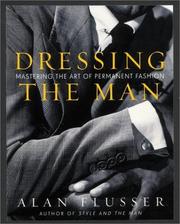 Dressing the ManRecommended
“Books like *Dressing the Man* codify rules such as the jacket-length rule of thirds.”
More from My First Million
We summarize every new episode. Want them in your inbox?
Whatnot founder: This is the future of e-commerce
Coach for SpaceX & OpenAI destroys your limiting beliefs for 88 minutes straight
i got internet famous... if i started again from scratch, here's what I'd do this time
David Rubenstein: We took $5M and turned it into $500B
Decoding Tony Hawk’s mindset in 72 minutes
Similar Episodes
Related episodes from other podcasts

WorkLife with Adam Grant
Jul 7
How to find your way when you feel lost with Ify Walker

The Diary of a CEO
Jun 29
Women’s Fitness Expert: What You NEED To Know About Dieting & Exercise | Dr. Stephanie Estima

Investing for Beginners
Jun 9
AAR53-Stop Ballparking It: A Real Plan for Saving Toward a Goal

Deep Questions with Cal Newport
Mar 9
Ep. 395: Should I Try a “Social Media Pause”?

The Amy Porterfield Show
Mar 4
It’s Time To Quit: 4 Steps To Quit Your Job & Be Your Own Boss
Explore Related Topics
This podcast is featured in Best Startup Podcasts (2026) — ranked and reviewed with AI summaries.
You're clearly into My First Million.
Every Monday, we deliver AI summaries of the latest episodes from My First Million and 192+ other podcasts. Free for one show.
Start My Monday DigestNo credit card · Unsubscribe anytime