Bill Gurley: 6 Out of 10 People Are Making This Mistake
Episode
53 min
Read time
2 min
Topics
Career Growth, Productivity, Remote Work
AI-Generated Summary
Key Takeaways
- ✓Career Regret Framework: A Wharton People Analytics study confirmed 6 in 10 people would restart their careers differently. Regrets of inaction — paths never taken — weigh heavier over time than mistakes made. Use Bezos's regret minimization framework: ask what your 80-year-old self would advise, since that version of you is more risk-tolerant and focused on avoiding lifelong regret.
- ✓30-Year Test for Career Clarity: When evaluating any job or career path, ask one question: "Do I want to be doing this 30 years from now?" Gurley used this at age 23 as an engineer and again on Wall Street, leaving both roles despite performing well. Spotting a "lifer" in the room makes the question more concrete and easier to answer honestly.
- ✓Passion vs. Curiosity Distinction: Angela Duckworth, author of Grit, later revised her 50/50 passion-perseverance formula, saying passion deserved more weight and that grinding without genuine love leads to burnout. Replace the word "passion" with "obsession" or "curiosity" — the better question is: what topic can you not ignore and always want to know more about?
- ✓Peer Groups Over Mentors: A small group of 4–6 peers outside your organization, tracked via a shared Slack or WhatsApp channel, accelerates learning, expands networks, and provides perspective on whether your workplace is normal or dysfunctional. Nobel Prize-winning scientists are 22 times more likely to have broad hobbies, suggesting breadth of exposure compounds career differentiation over time.
- ✓Financial Runway as Career Freedom: Lifestyle inflation — spending up to or beyond income — eliminates the flexibility needed to take career risks. Tracking months of living expenses saved (targeting 6+ months as a baseline "FU number") creates the optionality to experiment, pivot, or walk away from misaligned work. College debt and fixed expenses are the primary structural barriers to career agency.
What It Covers
Bill Gurley, veteran venture capitalist, joins My First Million to discuss his new book on career excellence. A Gallup-backed survey found 6 in 10 people would restart their careers differently. The conversation covers finding passion, peer groups, continuous learning, AI as a career accelerator, and building financial flexibility to pursue meaningful work.
Key Questions Answered
- •Career Regret Framework: A Wharton People Analytics study confirmed 6 in 10 people would restart their careers differently. Regrets of inaction — paths never taken — weigh heavier over time than mistakes made. Use Bezos's regret minimization framework: ask what your 80-year-old self would advise, since that version of you is more risk-tolerant and focused on avoiding lifelong regret.
- •30-Year Test for Career Clarity: When evaluating any job or career path, ask one question: "Do I want to be doing this 30 years from now?" Gurley used this at age 23 as an engineer and again on Wall Street, leaving both roles despite performing well. Spotting a "lifer" in the room makes the question more concrete and easier to answer honestly.
- •Passion vs. Curiosity Distinction: Angela Duckworth, author of Grit, later revised her 50/50 passion-perseverance formula, saying passion deserved more weight and that grinding without genuine love leads to burnout. Replace the word "passion" with "obsession" or "curiosity" — the better question is: what topic can you not ignore and always want to know more about?
- •Peer Groups Over Mentors: A small group of 4–6 peers outside your organization, tracked via a shared Slack or WhatsApp channel, accelerates learning, expands networks, and provides perspective on whether your workplace is normal or dysfunctional. Nobel Prize-winning scientists are 22 times more likely to have broad hobbies, suggesting breadth of exposure compounds career differentiation over time.
- •Financial Runway as Career Freedom: Lifestyle inflation — spending up to or beyond income — eliminates the flexibility needed to take career risks. Tracking months of living expenses saved (targeting 6+ months as a baseline "FU number") creates the optionality to experiment, pivot, or walk away from misaligned work. College debt and fixed expenses are the primary structural barriers to career agency.
Notable Moment
Gurley revealed he never once wanted to quit during his venture capital career — a stark contrast to the host's experience of regularly lying on the floor during his successful company exit. Gurley attributed this to genuinely loving intellectual breadth and the variety the VC role provided.
Episode Transcript
If you're crafting your own personal career and you're high agency, AI is like a jack pack. We've taught children, young adults, how to grind. We've taught them to persevere for the sake of perseverance. And if you're stuck, you're stuck. In order to, like, do these exercises of finding your passion, you sort of have to be like a ruthless asshole, you think? Unless you're trying to find that edge, somebody else maybe. You have to understand the difference between risk and uncertainty. People most at threat by AI are the ones that aren't continuously learning that are just doing the same thing they did ten years ago. How many times when you're doing it did you wanna quit? I don't ever remember wanting to quit. Really? Really. What did the voice say when it was like I found my calling? I wanna talk about the book because there was this there's a bunch of crazy stats in the book. I wanna talk about the Nobel laureate thing. That was interesting. But the craziest like, one of the craziest things early in the book, I think did you run this survey? And it said that, like, six or seven out of 10 people hate their job. Yeah. So I had a cowriter, cowresearcher on the book, and we spent a ton of time together on Zoom calls. And someone encouraged us to dive into a bunch of academic literature. We came across this Gallup poll that said 53% of people aren't engaged at work. And so we had this idea to ask, like, a thousand people if you could start your career over again, would you do it differently? And and seven out of 10 said yes. And then we we took that to to Wharton People Analytics to do the official academic version so you make sure you get all the statistical data correct. And their their number came back six out of 10, so still a really big number. And Crazy. There's a great book by Daniel Pink called The Power of Regrets. And he has a somewhat similar survey data of longitudinal through people's lives. And as you get older, you your regrets of inaction start to really weigh on you and ruminate in your brain. And a regret of inaction is is Tuesday actively not doing something versus a regret of action is I made a mistake. And humans are really good at allowing themselves to make a mistake, but the path I never traveled, the door I never opened is heavier in their mind. And it the survey might have been getting at that, like, people thinking, wow, what if I had done something differently? Well the reason I was asking is like I kind of want this whole like I'm kind of obsessed with this idea of finding your passion not just because of your book but like one of my favorite books is mastery by robert green yes I've never heard which …
Get the full transcript (10,706 words) + summary by email — free
One-time email with the complete transcript and AI summary of this episode. No account needed.
One email, no spam. We’ll also show you what SignalCast does.

You just read a 3-minute summary of a 50-minute episode.
Get My First Million summarized like this every Monday — plus up to 2 more podcasts, free.
Pick Your Podcasts — FreeKeep Reading
More from My First Million
We spent 8 hours finding the best stuff on X. Here it is.
Oct 23 · 50 min

All-In with Chamath, Jason, Sacks & Friedberg
Bill Gurley: Searching for Feynman
Sep 19
More from My First Million
This 3-hour Elizabeth Holmes doc broke our brains
Oct 20 · 55 min

Afford Anything
Bill Gurley: The Biggest Career Regret Most People Have
Mar 13
Books, tools, and gear mentioned in this episode
SignalCast may earn commission on purchases via these links. As an Amazon Associate, SignalCast earns from qualifying purchases.
Books
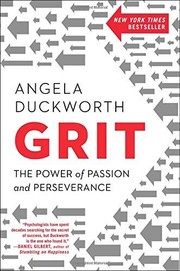
by Angela Duckworth
“Angela Duckworth, author of Grit, later revised her 50/50 passion-perseverance formula, saying passion deserved more weight and that grinding without genuine love leads to burnout.”
More from My First Million
We summarize every new episode. Want them in your inbox?
We spent 8 hours finding the best stuff on X. Here it is.
This 3-hour Elizabeth Holmes doc broke our brains
We put a multimillionaire’s portfolio into Claude (the results shocked us)
the 6 traits of people who can’t stop making money
3 embarrassing moments that changed my life
Similar Episodes
Related episodes from other podcasts

All-In with Chamath, Jason, Sacks & Friedberg
Sep 19
Bill Gurley: Searching for Feynman

Afford Anything
Mar 13
Bill Gurley: The Biggest Career Regret Most People Have

WorkLife with Adam Grant
Aug 25
How to find a peer group that lifts you up with Bill Gurley

The Knowledge Project
Jun 9
Mental Models That Change How You Think | Bill Gurley

Modern Wisdom
Mar 14
#1071 - Bill Gurley - If You Hate Your Job, This is How to Start Over
Explore Related Topics
This podcast is featured in Best Startup Podcasts (2026) — ranked and reviewed with AI summaries.
You're clearly into My First Million.
Every Monday, we deliver AI summaries of the latest episodes from My First Million and 192+ other podcasts. Free for one show.
Start My Monday DigestNo credit card · Unsubscribe anytime